Cleaning and Restoring Vintage Silk: A Step-by-Step Guide
Last Updated: November 5, 2026
Quick Summary
Clean vintage silk by hand in cool water with a mild pH-neutral soap, soaking for five minutes and pressing gently without wringing. Lay it flat on a mesh rack away from direct sun, and leave lined, beaded, or dry-clean-only pieces to a professional.
- Gather supplies first and set aside a full hour, since most of the time is waiting, not scrubbing.
- Skip all-purpose or enzyme cleaners, bleach, vinegar, and the washing machine, even on delicate.
- Blot fresh stains with cool water and mild soap, and never rub, which pushes stains deeper.
- Store restored pieces flat, dark, dry, and breathable in acid-free tissue and cotton garment bags.
- Call a textile conservator for shattered fibers, heavy beading, dye bleeding, or heirloom pieces.
Table of Contents
- What You'll Need Before You Begin
- How to Clean Vintage Silk Safely at Home
- How to Remove Stains from Silk Clothing
- Vintage Silk Garment Care: Restoring Yellowing and Fading
- How to Store Vintage Clothing to Prevent Damage
- Common Mistakes That Damage Vintage Silk
- When to Call a Professional Conservator
- Building a Wardrobe That Lasts: Choosing Pieces Worth Restoring
- Frequently Asked Questions
What You'll Need Before You Begin
Cleaning and restoring vintage silk garments starts with a simple truth: silk rewards patience and punishes speed. A rushed wash can ruin a piece you have owned for years.
Silk is a natural protein fiber. Harsh chemicals, hot water, and rough handling break down those fibers fast. So gather your supplies before you touch the garment.
Here is what you need on hand:
- A clean basin or bathtub
- Mild pH-neutral soap or silk-specific wash
- Two or three white cotton towels
- A drying rack with a flat mesh surface
- Distilled water if your tap water is hard
- A spray bottle for rinsing
- Acid-free tissue paper for storage
Skip anything labeled "all-purpose" or "enzyme" cleaner. Those formulas strip silk's natural luster. Also skip the washing machine, even on a delicate cycle.
Set aside a full hour. Most of that time is waiting, not scrubbing. The Smithsonian Museum Conservation Institute's textile care guidance makes the same point: slow, gentle handling protects fragile fibers better than any product.
How to Clean Vintage Silk Safely at Home
How do you clean vintage silk without damage? The answer is cool water, mild soap, and almost no agitation. Hand washing works for many pieces, but some vintage silk is better left to a professional.
Hand Washing vs. Dry Cleaning
Hand washing suits sturdy silk with no lining, beading, or fragile seams.
Here is how the two compare:
| Factor | Hand Washing | Professional Dry Cleaning |
|---|---|---|
| Best for | Simple, unlined silk | Lined, beaded, or structured pieces |
| Cost | Low | Higher, varies by shop |
| Risk | Low if done gently | Low, but solvents vary |
| Control | Full | Limited |
A common mistake is assuming all vintage silk can be hand washed. If the label says "dry clean only," respect it. If there is no label, test a hidden seam first.
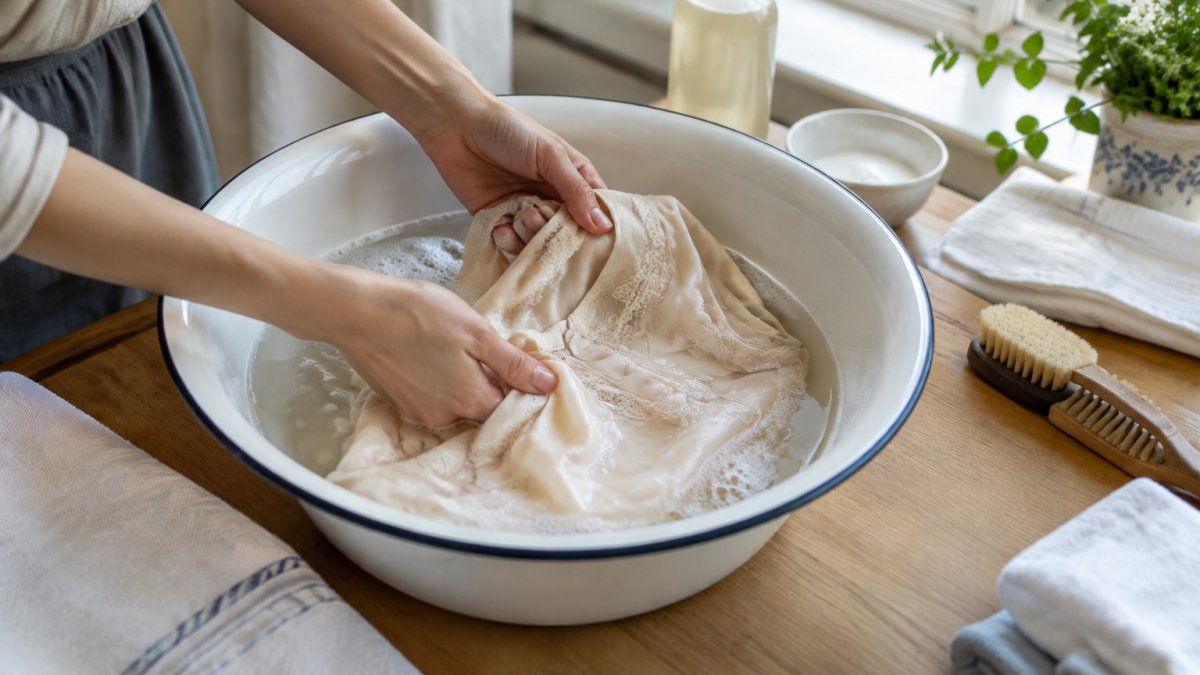
The Gentle Hand-Wash Method
Follow these steps in order:
- Fill a basin with cool water, never warm.
- Add a capful of mild soap and swirl gently.
- Submerge the garment and soak for five minutes.
- Press the fabric softly with your palms. Do not wring or twist.
- Lift the piece out and rinse in fresh cool water.
- Roll it in a white towel to blot excess water.
- Lay flat on a mesh rack, away from direct sun.
Watch out: hanging wet silk stretches the fibers and leaves shoulder marks that never come out.
For more at-home care techniques on similar knits and delicates, see our guide on how to care for men's knitwear at home.
How to Remove Stains from Silk Clothing
How do you remove stains from silk clothing? Treat fresh stains promptly with cool water and a mild soap dab. Set-in stains need a longer, gentler approach.
Fresh vs. Set-In Stains
Fresh stains respond well to quick action. Blot, never rub. Rubbing pushes the stain deeper into the weave.
Set-in stains are tougher. They have bonded with the fiber. Soak the area in cool water with a drop of mild soap for up to thirty minutes. Then blot and rinse.
Match your method to the stain:
- Oil or grease: sprinkle cornstarch, wait, then brush off gently.
- Protein stains: cold water only, never hot.
- Ink: dab with a cotton swab and mild soap, test first.
- Water marks: dampen the whole panel evenly and air dry flat.
Never use bleach, vinegar, or enzyme cleaners on silk. Each one can weaken the fiber or shift the dye.
If a stain survives two gentle attempts, stop. More scrubbing does more harm than the stain itself.
Vintage Silk Garment Care: Restoring Yellowing and Fading
Yellowing comes from age, light exposure, and leftover body oils. Fading comes from sun and repeated washing. Both are common in vintage silk garment care, and both need a soft touch.
A common mistake is reaching for chlorine bleach to brighten yellowed silk. That yellows it further and weakens the fibers permanently.
Store restored pieces away from sunlight. UV light is the biggest cause of fading, and the National Park Service's guidance on caring for textiles recommends limiting light exposure to protect fragile fabrics.
How to Store Vintage Clothing to Prevent Damage
How should you store vintage clothing? Flat, dark, dry, and breathable. Good storage prevents creasing, yellowing, and pest damage.
Follow these storage rules:
- Use a padded hanger for structured pieces, never wire.
- Fold knits and heavy silk flat to avoid stretch.
- Wrap pieces in acid-free tissue paper.
- Store in a cotton garment bag, not plastic.
- Keep the space cool and dry, away from sunlight.
- Check pieces every few months for pests or moisture.
Plastic bags can trap moisture, so breathable cotton bags are generally preferred.
Common Mistakes That Damage Vintage Silk
Most silk damage comes from a handful of avoidable errors. Here are the ones we see most:
- Using hot water, which shrinks and dulls silk.
- Wringing or twisting wet fabric.
- Hanging wet garments to dry.
- Applying perfume or deodorant directly to silk.
- Storing in plastic or direct sunlight.
- Using bleach, vinegar, or enzyme detergents.
- Ironing on high heat without a cloth barrier.
If you iron silk, use the lowest setting and press through a clean cotton cloth. Steam gently from a distance.
When to Call a Professional Conservator
Some pieces need expert hands. Call a textile conservator when you see:
- Shattered or split silk fibers
- Heavy beading or embroidery
- Significant dye bleeding
- Museum-quality or heirloom pieces
- Structural damage to seams or lining
A conservator can stabilize fragile fabric and slow further decay. Ask for a written assessment before any work starts.
If restoring a piece costs more than replacing it, weigh your options. A fresh silk piece may serve you better. You can browse our premium silk polo shirt or a premium silk shirt as a modern alternative.


Building a Wardrobe That Lasts: Choosing Pieces Worth Restoring
Not every garment deserves restoration. The best candidates share a few traits: strong fabric, simple construction, and timeless design.
When you shop, look for:
- Dense, weighty silk that holds its shape
- French seams and clean finishing
- Classic cuts that survive trend cycles
- Neutral colors that hide minor wear
A capsule approach helps here. Fewer, better pieces mean less clutter and more wear. Our guide on how to build a capsule wardrobe walks through the framework, and our roundup of the best vintage fabrics for everyday wear shows which materials hold up over time.
At Vinthentic, we design pieces meant to be worn for years. As Stephen H. puts it, "the quality is top-notch."
Frequently Asked Questions
Can you wash vintage silk garments at home?
In many cases, yes, provided the silk is in sound condition. Hand-wash in cool water with a pH-neutral soap made for delicates, never wring or twist, and roll in a towel to remove moisture before drying flat away from sunlight. Skip home washing if the fabric is brittle, has active dye bleeding, or shows heavy yellowing. Those pieces need a professional conservator who can assess fiber strength first.
How do you remove stains from old silk clothing?
Blot fresh stains immediately with a clean white cloth, working from the outside in so the stain does not spread. For oil-based marks, apply a small amount of mild dish soap and let it sit for a few minutes before rinsing in cool water. Never rub, and never use chlorine bleach or enzyme detergents on silk, since both break down the protein fibers permanently.
How can you tell if vintage silk is too fragile to clean?
Test a hidden seam allowance by gently tugging the fabric between two fingers. If fibers separate easily, the silk has lost tensile strength and home cleaning will likely cause splitting. Look also for shattering along fold lines, powdery residue, or a musty smell that persists after airing. Pieces with these signs should go to a textile conservator rather than a basin of water.
How should vintage silk garments be stored long-term?
Store clean silk on padded hangers or folded flat in acid-free tissue inside a breathable cotton bag. Keep pieces out of direct sunlight and away from damp basements, since both accelerate yellowing and fiber breakdown. Avoid plastic garment bags, which trap moisture and can cause mildew. Rotate folded pieces every few months to prevent permanent creases along fold lines.
Restoring vintage silk takes patience, the right supplies, and a willingness to stop before you do harm. When a piece is beyond saving, replace it with something built to last. Vinthentic offers handcrafted silk shirts and timeless wardrobe staples made for everyday comfort and lasting style. Explore our collection and step into a wardrobe you will keep for years. Get started with Vinthentic and dress with confidence.

Read more
Can You Repair Worn Out Leather Boot Heels Yourself?
Repairing worn out leather boot heels starts with knowing the damage. Learn DIY steps, leather filler for boots, and cobbler heel replacement cost.
Read more
How to Choose the Right Leather Boot Polish
Pick the right leather boot polish by matching formula, color and finish to your boots, then see how cream and wax differ and which one protects best.
Read more