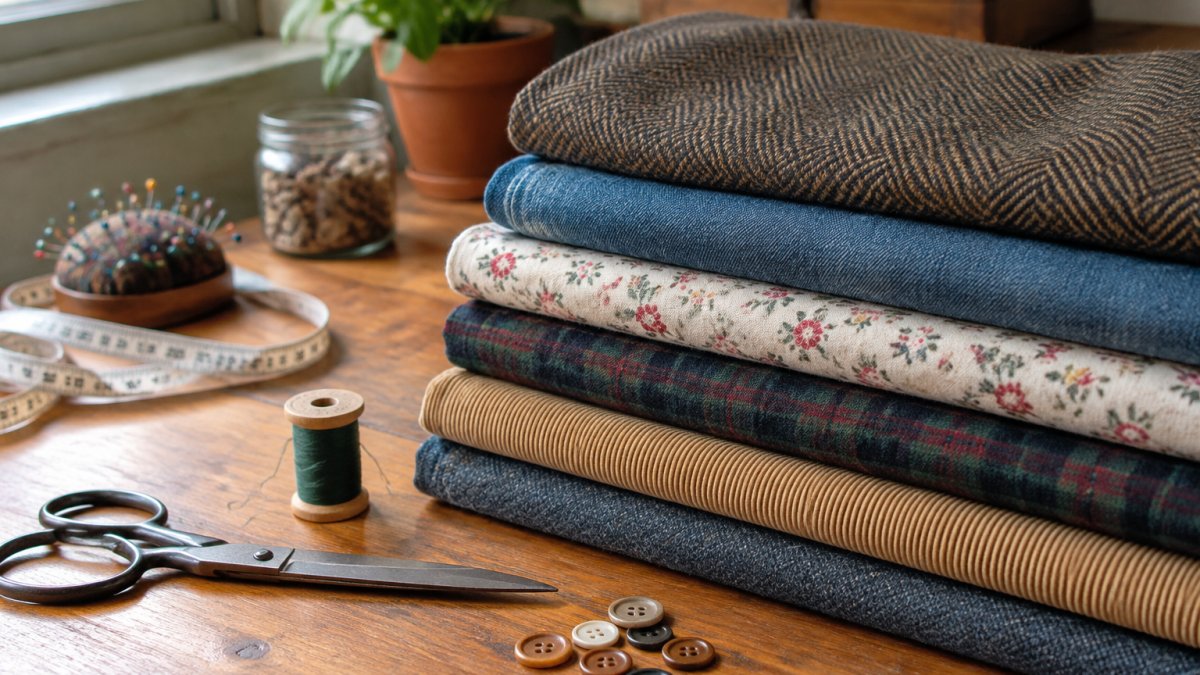
Best Vintage Fabrics for Everyday Wear That Last
Last Updated: November 4, 2026
Quick Summary
The best vintage fabrics for everyday wear are cotton for easy daily shirts, linen for warm weather, and wool for cooler conditions. Choose based on the garment’s composition, weight, weave, fit, condition, and care needs, since a fabric name alone cannot guarantee comfort or longevity.
- Cotton twill’s diagonal weave gives it more structure than plain-weave cotton.
- Rayon is a manufactured cellulosic fiber, not a synthetic fiber in the same sense as polyester or nylon.
- Inspect elbows, underarms, seat, and cuffs for thinning, and check seams for loose stitching.
- Before buying, sit, reach, and walk in the garment to check for pulling, clinging, warmth, or rubbing.
Table of Contents
- Best Vintage Fabrics for Everyday Wear: Quick Comparison
- 1. Cotton and Cotton Twill for Breathable Daily Shirts
- 2. Linen, Wool, Rayon, and Blends: Match Fabric to Climate
- 3. Vintage Cotton vs Synthetic Fabrics for Comfort and Longevity
- 4. Thrifted Clothing Fabric Quality Check: What to Inspect
- 5. How to Care for Vintage Clothing Without Wearing It Out
- Choose Everyday Vintage Fabrics and Shop Vinthentic
- Frequently Asked Questions
Best Vintage Fabrics for Everyday Wear: Quick Comparison
The best vintage fabrics for everyday wear balance comfort, care needs, and how well a garment suits your routine. This guide compares common fabric types and shows what to inspect, so you can choose pieces that feel good and earn a regular place in your wardrobe.
Vintage fabric is a textile used in older clothing or selected for clothing inspired by past styles. For daily wear, the fabric’s actual composition and condition matter more than a vintage look alone. The Federal Trade Commission’s clothing and textile labeling guidance explains how fiber information appears on many textile products.
| Fabric | Everyday strength | Main trade-off | Best fit |
|---|---|---|---|
| Cotton | Breathable, familiar feel | Can wrinkle | Shirts and casual wear |
| Cotton twill | Structured, durable weave | Heavier hand-feel | Button-ups and trousers |
| Linen | Airy texture | Creases easily | Warm-weather outfits |
| Wool | Warm, resilient feel | Needs careful care | Cooler days |
| Rayon or blends | Soft drape | Composition varies | Fluid vintage styles |
For a quick choice, start with cotton for easy daily shirts, linen for warm weather, and wool for cooler conditions. Fabric names alone do not guarantee comfort: weave density, weight, fit, and personal skin sensitivity all matter.
1. Cotton and Cotton Twill for Breathable Daily Shirts
Cotton can be a practical choice for an everyday shirt because it pairs easily. Cotton twill has a diagonal weave that gives the fabric more structure than a plain weave. Both can suit regular wear, but the garment’s weight and fit affect comfort.
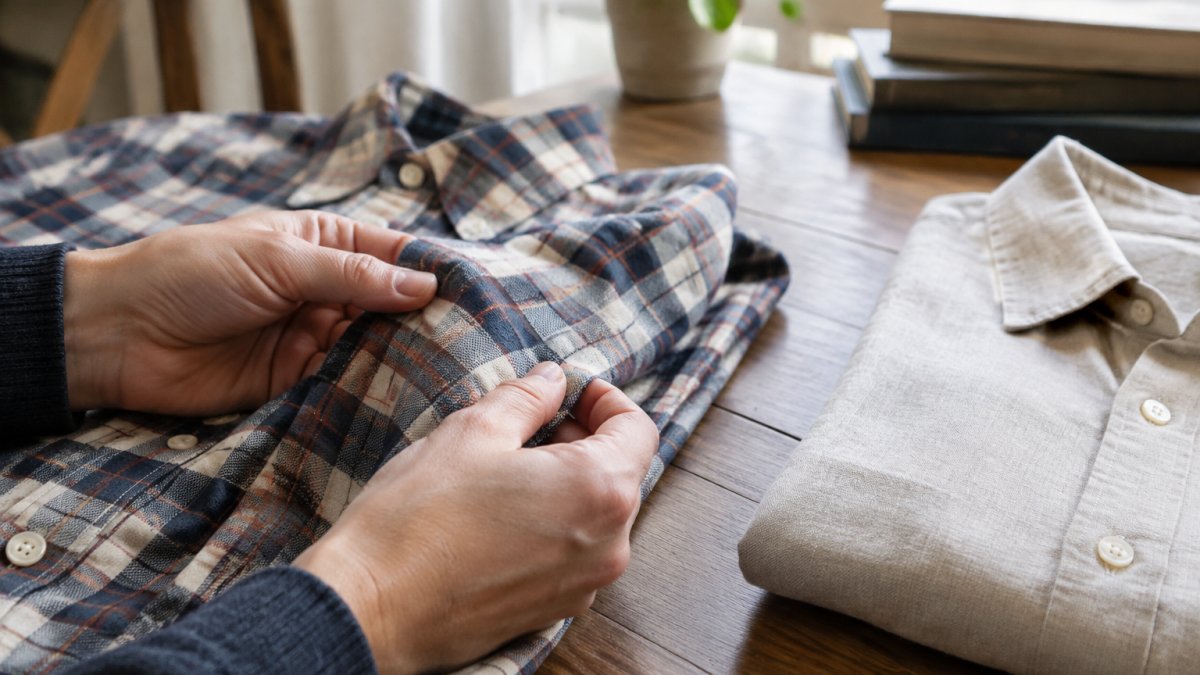
Pros: Cotton is easy to style, while twill adds a firmer drape for a more polished shirt. Trade-off: Cotton can wrinkle, and a dense weave may feel warm in hot weather. A common mistake is buying by pattern alone; check the fiber content and fabric feel first.
Our Vinthentic Premium Cotton Button Up Shirt is a useful option to browse when comparing cotton shirts. The cotton button-up shirt gives you a specific garment to assess for style and everyday use.

2. Linen, Wool, Rayon, and Blends: Match Fabric to Climate
Choose a fabric by considering temperature, humidity, activity, and how much care you can give it, not by season alone. A lightweight, open-weave fabric can feel very different from a dense version of the same fiber. For everyday wear, check the garment’s weight and weave as well as its fiber content.
- Hot, humid conditions: Start with lightweight cotton or linen in a relatively open weave. These fabrics can feel less clingy than dense cloth, but neither guarantees comfort if the garment is tight or heavily lined. Linen’s crisp, textured hand may feel airy, while cotton often feels softer against the skin. Both can wrinkle, especially after sitting or packing.
- Hot, dry conditions: Lightweight cotton and linen are still practical choices. A slightly more substantial weave can provide coverage without relying on a synthetic lining, but may feel warmer during strenuous activity. Try the garment on and move around before deciding.
- Cool or windy conditions: Wool can add warmth, while heavier cotton works well as a layer. Wool’s warmth depends on the garment’s construction and thickness; a thin wool knit and a dense wool coat are not interchangeable. Check whether the fabric feels scratchy at the neck, cuffs, or other areas that touch bare skin.
- Changeable conditions: A rayon garment or a blend may offer fluid drape and a different feel from crisp cotton or linen. Rayon varies by construction and blend, so inspect the care label and test the garment’s comfort in motion. A fabric that drapes closely may feel less comfortable in heat than a looser-cut garment.
A useful fitting-room check is to sit, reach, and walk in the garment. Notice whether the fabric pulls, clings, traps warmth, or rubs at seams. Then check the care label: a fabric that suits the weather but requires care you cannot maintain may not be a good everyday choice.
Watch out: Do not assume that “natural” means cool or that “blend” means easy-care; dense construction, lining, fit, and the specific fiber mix can change how a garment feels and behaves.
The linen button-up shirt and wool polo shirt offer examples of distinct fabric choices. Compare their weight, weave, fit, and care instructions, not just their fiber names, to decide which is more useful for your routine.


3. Vintage Cotton vs Synthetic Fabrics for Comfort and Longevity
Cotton and synthetic fibers can both work for everyday clothing, but the fiber name alone does not predict comfort or lifespan. Weave, garment construction, age, fit, and care all matter. Rayon is a manufactured cellulosic fiber, not a synthetic fiber in the same sense as polyester or nylon, so check the full fiber label rather than grouping every soft, drapey fabric together.
| What to compare | Cotton | Polyester or nylon | Rayon or a blend |
|---|---|---|---|
| Feel and airflow | Often familiar and breathable, though dense cotton can feel warm | Can feel smooth, but a close-fitting or dense garment may feel warm or clingy | Often chosen for soft drape; feel and airflow vary by construction and blend |
| Common wear concerns | Wrinkling, fading, or thinning at high-friction areas | Snags, surface wear, or heat damage can be concerns, depending on the garment | Care needs vary; some garments may be more vulnerable to rough handling or shrinkage |
| Care check | Follow the label; inspect cuffs, collars, and seams | Follow the label and avoid high heat unless permitted | Follow the label closely; do not assume all rayon garments can be washed alike |
For longevity, inspect the actual garment. Look for thinning at elbows, underarms, seat, and cuffs; check seams for loose stitching; and gently stretch a small area only if doing so will not risk damage. A well-made synthetic garment in sound condition may outlast a worn cotton one, while a sturdy cotton garment may be a better choice than a damaged blend. Vintage age is not proof of quality.
Vinthentic Mens Vintage Plaid Shirts Long Sleeve Shirt →
Skin comfort is personal, and fiber content cannot tell you whether a garment’s dye, finish, detergent residue, or rough construction will irritate you. If you have known sensitivities, check the label, feel the fabric against a less-sensitive area first, and wash the garment according to its care instructions before wearing it. Choose a smooth, comfortable lining or layer if direct contact is a problem. If a garment causes a reaction, stop wearing it and seek appropriate medical advice for persistent symptoms.
Watch out: Do not rely on a “natural fiber” label as a guarantee of skin safety; dyes, finishes, seams, and individual sensitivities can matter as much as the fiber itself.
A practical choice comes down to your routine: select the fabric that feels comfortable, is in good condition, and can be cared for as directed. The FTC’s textile guidance explains how fiber information appears on many textile products, but the label does not assess garment condition or predict personal skin reactions.
4. Thrifted Clothing Fabric Quality Check: What to Inspect
A thrifted clothing fabric quality check should cover the fiber label, fabric surface, seams, and areas that receive the most wear. Inspecting these details helps you spot damage that a striking print or appealing silhouette can distract from.
- Read the fiber content and care label.
- Feel the fabric for roughness, thin spots, or stiffness.
- Check seams, cuffs, collars, and underarms.
- Look for fading, stains, pulls, or small holes.
- Assess whether the weight and drape suit your climate.
- Decide if the care instructions fit your routine.
For skin sensitivity, pay attention to scratchy fibers, rough seams, and any known personal triggers. A fabric label identifies composition, but it cannot predict how an individual will respond. If a garment feels uncomfortable against your skin in the shop, do not count on frequent wear later.
5. How to Care for Vintage Clothing Without Wearing It Out
How to care for vintage clothing starts with the garment’s care label and the fabric itself. Sort pieces by fiber and care instructions, then use the gentlest method the label allows. Avoid treating every vintage item as if it can handle the same wash cycle.
- Wash only when needed, following the label.
- Use a gentle approach for delicate or older-feeling fabric.
- Air-dry when the care instructions allow.
- Store clean garments in a dry place with room to hang or fold.
- Repair loose seams or small issues before they worsen.
The National Institute of Standards and Technology’s textile care resources can provide general textile information, but the garment label should guide care for a specific item. For cotton shirts, check cuffs and collars after washing; these areas often show wear before the rest of the garment.
Choose Everyday Vintage Fabrics and Shop Vinthentic
The best vintage fabrics for everyday wear are the ones that suit your climate, feel comfortable, and fit the care you can give them.
For a cotton option, browse the Vinthentic Premium Cotton Button Up Shirt. When you are ready to explore authentic vintage clothing, our vintage clothing buying guide offers a next step. Vinthentic brings vintage-inspired design together with comfort-focused apparel and footwear. Get started with Vinthentic and choose a wardrobe staple that fits your everyday style.
Frequently Asked Questions
What is the best fabric to wear every day?
Cotton is a practical everyday choice when comfort, breathability, and straightforward styling matter. Check the garment’s fiber content and construction rather than assuming every vintage-inspired piece uses the same textile. Cotton twill offers a firmer hand-feel, while lighter cotton can suit shirts and warm conditions. Vinthentic’s Retro Plaid Shirt is listed as cotton fabric with a button-up closure and versatile casual wear.
Are natural fibers better than synthetics for vintage-inspired everyday wear?
Neither category is automatically better for every wearer. Read the fiber content and judge the fabric by how it feels, how it handles your climate, and how you plan to wash it. For vintage cotton vs synthetic fabrics, compare the actual textile composition instead of relying on a style label.
How do you identify high-quality vintage fabrics?
Start with the fiber-content label, then inspect the fabric in good light. Look for thinning, holes, pulled threads, uneven fading, and weak seams, especially at cuffs, collars, and underarms. Check how the material feels and whether its weight and drape suit the garment’s intended use.
How should you care for vintage fabrics to keep them wearable?
For how to care for vintage clothing, inspect seams and stains before washing so you can choose a suitable method rather than treating every fabric alike.

Read more
How to Style Dark Wash Jeans for Any Occasion
Learn how to style dark wash jeans for work, weekends and nights out, with shoe pairings, blazer ideas and tips for keeping them looking sharp.
Read moreHow to Style Dark Wash Jeans for Any Occasion
Learn how to style dark wash jeans for work, weekends and nights out, with shoe pairings, blazer ideas and tips for keeping them looking sharp.
Read more