
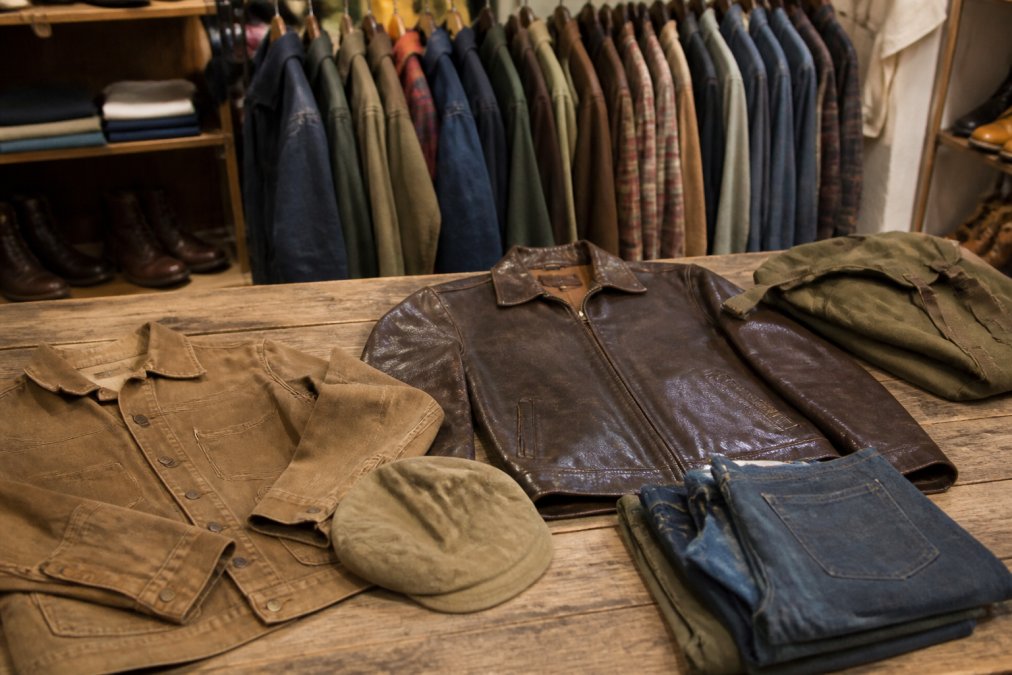
Where to Buy Authentic Vintage Clothing: 2026 Guide
Table of Contents
- Where to Buy Authentic Vintage Clothing: 5 Trusted Sources
- The 5 Best Sources for Authentic Vintage Clothing
- How to Vet Any Vintage Seller Before You Buy
- How to Identify Authentic Vintage Clothing
- Vintage Sizing Conversion Charts and Fabric Care
- Is Vintage Fashion Still in Style?
- Tips for Buying Vintage Clothing Online
- Ethical Sourcing and Provenance: What to Ask
- Frequently Asked Questions
Last Updated: September 15, 2026
Where to Buy Authentic Vintage Clothing: 5 Trusted Sources
The hunt for genuine vintage has never been more popular, yet the market is flooded with retro-inspired fakes. The hunt for genuine vintage has never been more popular, yet the market is flooded with retro-inspired fakes. This guide cuts through that noise, showing you exactly where to buy authentic vintage clothing and how to verify it before you spend a dollar.
Authentic vintage clothing is defined as pre-owned garments that are at least 20 years old, retaining original construction, labels, and materials (the FTC). Anything newer is "second-hand," and anything deliberately aged is "retro-inspired." Knowing the difference is the first step to protecting your wallet.
Here's what most buyers get wrong: they trust the seller's description instead of the garment's own evidence. Below, we break down five trusted sources, plus the verification tactics that separate a rare find from a costly mistake.
The 5 Best Sources for Authentic Vintage Clothing
The most reliable places to buy authentic vintage combine knowledgeable curation with transparent sourcing. Here's how the five main channels stack up.
- Specialty vintage retailers - Curated stock, authenticated before listing, higher prices but lower risk.
- Estate sales and auctions - Original owner provenance, often untouched pieces, requires early arrival.
- Consignment shops - Local, inspectable in person, quality varies by store.
- Online marketplaces - Huge selection, but you're relying on seller photos and honesty.
- Charity and thrift stores - Cheapest entry point, highest luck factor, no authentication.
For most buyers seeking quality without the guesswork, a curated retailer is the safest bet. Vinthentic offers a curated selection of high-quality products that bridge vintage craftsmanship with authentic modern design, helping you step into style with confidence and substance.
| Source | Price Range | Authentication | Best For |
|---|---|---|---|
| Specialty retailers | Higher | Verified | Peace of mind |
| Estate sales | Variable | Provenance-based | Rare finds |
| Consignment shops | Mid | In-person inspection | Local buyers |
| Online marketplaces | Wide | Seller-dependent | Selection |
| Thrift stores | Lowest | None | Bargain hunters |
How to Vet Any Vintage Seller Before You Buy
A seller's reputation is your first line of defense. Before committing to any purchase, check three things: return policy, measurement transparency, and photo quality.
Ask for flat-lay measurements rather than stated sizes, since vintage sizing rarely matches modern labels. Request close-ups of seams, zippers, and interior tags. A legitimate seller will provide these without hesitation. One that dodges or delays is telling you something.
How to Identify Authentic Vintage Clothing
Authenticity lives in the details, and the details follow a sequence. Work through the four checks below in order, label, construction, hardware, fiber, and you can date most garments to within a decade without an expert. This is the verification process most sellers hope you never learn.
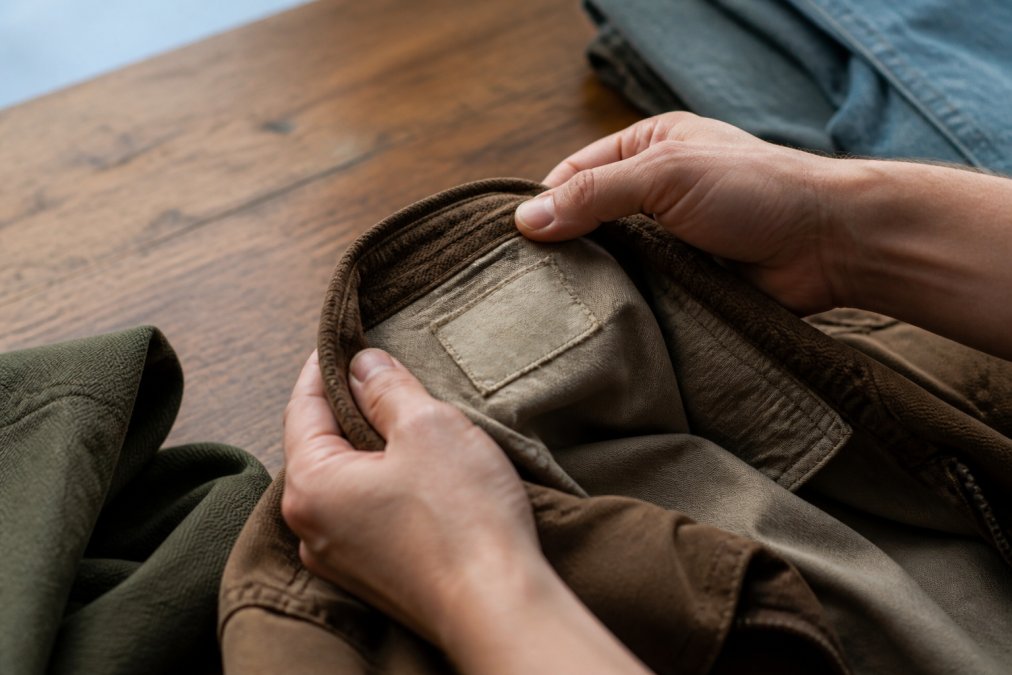
Step 1: Read the Label Like a Document
Labels are the closest thing vintage has to a birth certificate. Look for these markers:
- Union-made tags. The International Ladies' Garment Workers' Union (ILGWU) label appeared in different designs across decades, and the union's name and logo changed over time. A "Union Made" tag generally indicates production before the 1980s.
- Country of origin. "Made in USA" was common through the 1960s and 70s; a shift to "Made in Hong Kong," "Made in Korea," or "Made in China" often points to the 1970s and later as production moved overseas.
- Fiber content and care tags. A permanent care label listing fiber content became standard in the 1970s (the FTC). A garment with no fiber tag at all is more likely pre-1970s.
- RN number. The FTC's Registered Identification Number system lets you look up the manufacturer (the FTC). An RN number that returns a company founded in the 1990s tells you the garment is not from the 1960s, no matter what the listing says.
Step 2: Examine the Construction
Stitching tells a parallel story that is harder to fake than a printed label.
- Single-stitch vs. double-stitch hems. Single-stitch hems and seams typically predate the 1970s, when industrial double-stitching and serging became standard.
- Serged seams. A serged (overlocked) interior seam is a strong signal of post-1970s production. Genuine pre-1970s garments usually have clean-finished or pinked seams.
- Seam allowance. Older garments often have wider seam allowances, which is good news for alterations.
Step 3: Check the Hardware
Zippers, buttons, and snaps are dated artifacts in their own right.
- Metal zippers generally predate the 1970s; plastic zippers point to later production.
- Talon was a dominant zipper brand for much of the 20th century, and its slider designs changed over the decades.
- Buttons made of metal, glass, or early plastics like Bakelite suggest earlier production; uniform plastic buttons suggest later.
Step 4: Feel the Fiber
Older cotton and wool have a weight and texture that modern blends rarely replicate. A garment that feels suspiciously light and slick for its claimed era is worth a second look. If the fiber content tag is missing, a burn test on a loose thread, done safely outdoors, can distinguish natural fibers from synthetics by smell and ash, though never do this on a garment you intend to keep intact.
Labels, Tags, and Stitching Details That Confirm an Era
When the four checks agree, you have a confident date. When they conflict, a 1960s-style label on a serged seam, for example, trust the construction over the label. Labels can be sewn in; stitching cannot be easily faked. Experienced buyers weight construction and hardware most heavily for exactly this reason.
Vintage Sizing Conversion Charts and Fabric Care
Vintage sizing is the single biggest source of returns and disappointment in this market. A dress labeled a 1960s size 12 often fits like a modern size 8, and a 1940s size 16 can measure closer to a modern 10.
| Vintage Label Size | Modern Equivalent | Bust (in) | Waist (in) | Era Notes |
|---|---|---|---|---|
| 8 | 0-2 | 32 | 25 | 1950s-60s junior cuts run smallest |
| 10 | 4 | 34 | 26 | Common in 1960s day dresses |
| 12 | 6-8 | 36 | 28 | 1970s versions run closer to modern 8 |
| 14 | 10 | 38 | 30 | 1980s versions run closer to modern 12 |
| 16 | 12 | 40 | 32 | 1940s-50s cuts often need a full size up |
| 18 | 14 | 42 | 34 | Check shoulder width, not just bust |
Three measurement rules save the most money:
Fabric Identification and Care by Fiber
When a listing says "true to size," ignore it. Vintage sizing is era-specific, so always ask for the actual flat-lay measurements in inches and compare them to a garment you already own and love.
Is Vintage Fashion Still in Style?
Tips for Buying Vintage Clothing Online
Ethical Sourcing and Provenance: What to Ask
Frequently Asked Questions
What is the best site to buy authentic vintage clothing?
There is no single best site. Look for platforms that verify provenance, show detailed garment measurements, and disclose condition honestly. Vinthentic offers a curated selection of high-quality products. Avoid listings with only stock photos or vague descriptions. Check return policies before buying, since fit issues are common with era-specific sizing.
How to tell if vintage clothing is authentic?
Check the label, stitching, and hardware. Authentic vintage pieces often have union-made tags, metal zippers, or era-specific brand marks. Look for fiber content labels that match the period. Inspect seam construction: older garments use pinking shears or French seams rather than serged edges. If the price seems too low for a rare find, treat it as a red flag.
Are online vintage stores reliable for high-quality pieces?
Many are, but reliability varies. Trust stores that provide multiple photos, measurements, and condition notes. Read customer reviews and check return policies. Vinthentic offers curated collections of premium quality products. If a store hides flaws or refuses returns, shop elsewhere.
Is vintage fashion still in style in 2026?
Yes. Vintage and retro-inspired fashion remains a strong trend. Shoppers value sustainable fashion and unique pieces over fast fashion. Mid-century and 1990s styles are especially popular. Wardrobe staples like vintage denim and leather jackets stay relevant because they are timeless, not trend-driven. Buying pre-loved also supports the circular economy.
How do I know what size to order when buying vintage online?
Ignore the size tag and use measurements. Vintage sizing differs by decade and manufacturer. Ask for bust, waist, hip, and length measurements in centimeters or inches, then compare to your own body measurements. When in doubt, size up and plan for alterations. A vintage sizing conversion chart helps translate old sizes to modern equivalents.
The real challenge with vintage isn't finding something that looks old. It's finding something that looks right, fits right, and holds up. Vinthentic removes that gamble by offering vintage-inspired pieces built with genuine leather craftsmanship and handcrafted precision, designed for everyday comfort rather than display. You get timeless style without the provenance guesswork or the sizing surprises. Shop now and step into a wardrobe built to last.
Read more
Timeless Leather Accessories for Everyday Wear
Discover timeless leather accessories for everyday wear, from full-grain belts to loafers. Learn how to care for leather and choose pieces that last.
Read more
Genuine Leather Accessories Online Shop: 2026 Guide
Explore our genuine leather accessories online shop guide. Learn leather grades, care tips, and find timeless pieces built to last. Shop now.
Read more