
Genuine Leather Accessories Online Shop: 2026 Guide
Table of Contents
- Why a Genuine Leather Accessories Online Shop Beats the Mall
- Full Grain vs Genuine Leather: What the Labels Actually Mean
- How to Care for Leather Accessories So They Outlast Fast Fashion
- Best Leather Brands for Men and Women: What Separates Them
- Leather Accessories by Category: Wallets, Belts, and Key Holders
- Patina, Repair, and the Environmental Case for Buying Once
- Frequently Asked Questions
Last Updated: September 16, 2026
Why a Genuine Leather Accessories Online Shop Beats the Mall
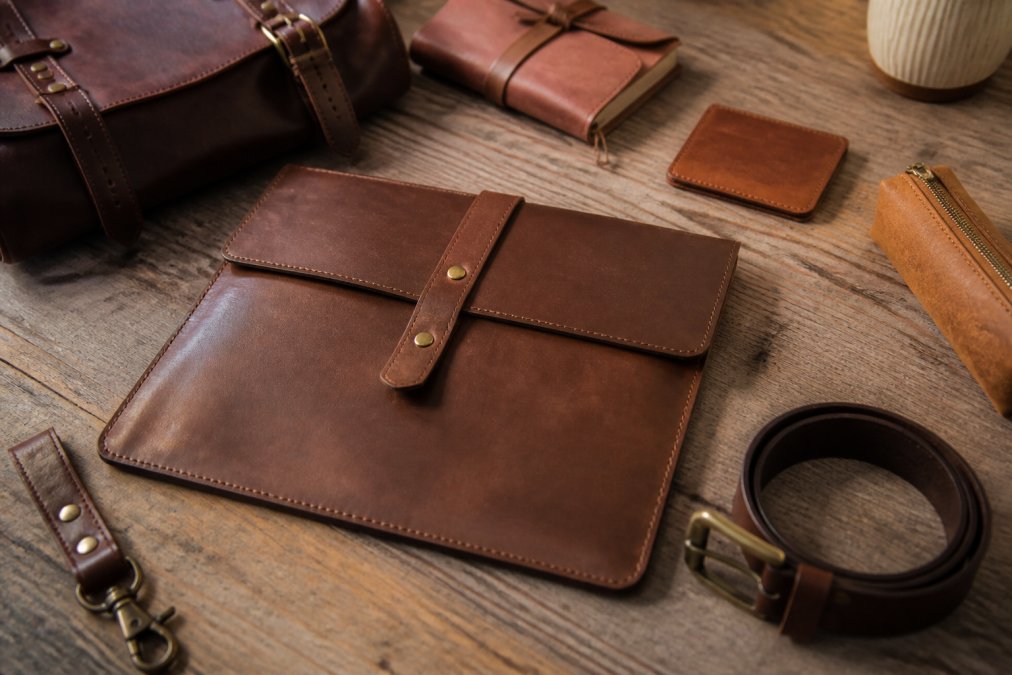
Shopping for genuine leather accessories online gives you access to full-grain and vegetable-tanned pieces that mall retailers rarely stock, often at lower prices because there is no storefront markup. Vinthentic offers handcrafted wallets, belts, and key holders. Below, we break down how to read leather labels, care for your pieces, and choose accessories worth owning.

Full Grain vs Genuine Leather: What the Labels Actually Mean
The term "genuine leather" is the weakest grade on the market, not a mark of quality. It legally means real leather, but it usually refers to the bottom split of the hide, sanded and stamped with a fake grain.

The Leather Grading Ladder, From Full Grain to Bonded
From strongest to weakest, the ladder runs full grain, top grain, split, and bonded. Bonded leather is shredded scraps glued to a backing; it peels within a year or two. A common mistake is paying full-grain prices for a "genuine leather" label. Check the grain texture and the edge finish instead.
| Grade | Source | Durability | Ages With Patina? |
|---|---|---|---|
| Full grain | Top hide layer, grain intact | Highest | Yes |
| Top grain | Sanded top layer | High | Rarely |
| Split | Inner hide layer | Moderate | No |
| Bonded | Glued leather scraps | Lowest | No |
How to Care for Leather Accessories So They Outlast Fast Fashion
Caring for leather accessories comes down to three habits: condition every few months, keep them dry, and store them away from direct heat. Leather is skin; it dries out, cracks, and fades without moisture.
- Condition every 3-6 months, more often in dry climates
- Wipe spills immediately with a dry cloth, never a wet one
- Store wallets and belts in a dust bag, away from radiators and sunlight
- Let soaked leather air-dry naturally; never use a hair dryer
Best Leather Brands for Men and Women: What Separates Them
The best leather brands often share traits such as naming their tannery, using vegetable-tanned or chrome-free leather, and offering a warranty. But "name the tannery" and "lifetime warranty" are easy to say and hard to verify, so here is what each claim actually looks like when it is real.
What Men and Women Actually Shop For
For men, the priorities tend to be everyday carry: a slim wallet, a durable belt, a key holder. For women, the same quality markers apply to totes, card cases, and straps. The gender split matters less than the construction. A woman's card case and a man's card case fail for the same reasons, thin leather, glued edges, cheap hardware, and they should be judged by the same checklist.
A Quick Brand Vetting Checklist
Before you buy from any shop, run this five-point check:
- Does the product page name the tannery or at least the tanning method?
- Is the leather grade stated (full grain, top grain, split, bonded)?
- Are the hardware material and stitching described?
- Is the warranty written out, with what it covers and what it excludes?
- Is there a real return window and a real address or contact method?
Leather Accessories by Category: Wallets, Belts, and Key Holders
A leather wardrobe breaks into three workhorses: wallets, belts, and key holders. Each one takes daily abuse, so each one rewards genuine full-grain construction.
Wallets Built for Everyday Carry
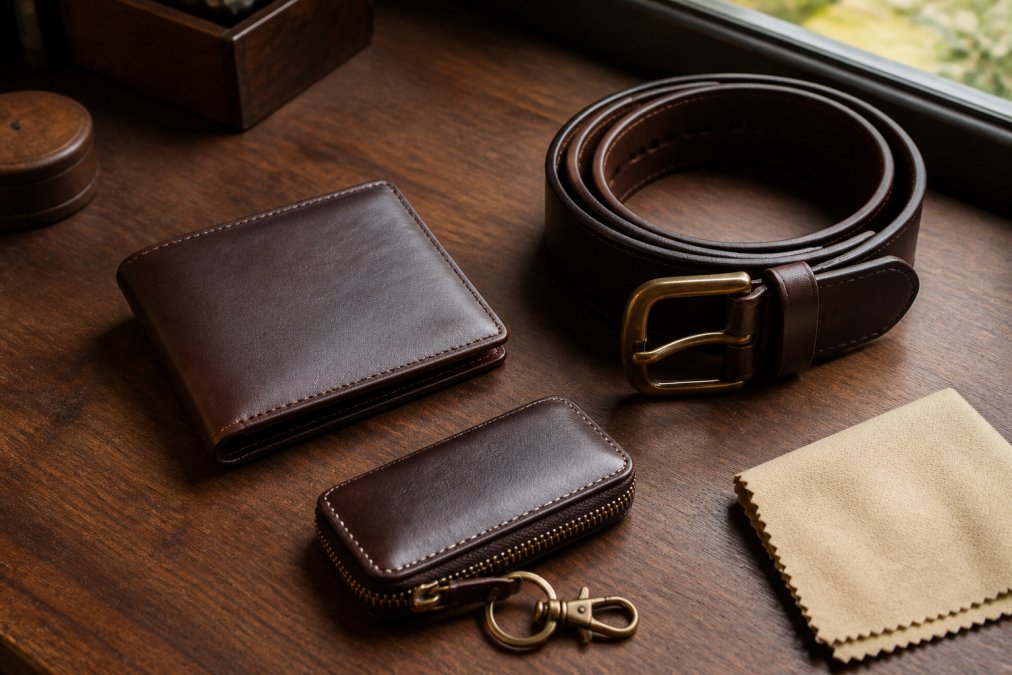
A wallet is the hardest-working accessory you own. The BULLCAPTAIN Men's Genuine Leather Wallet ($59.99) pairs premium leather with RFID blocking and multiple compartments in a classic bifold. If you prefer something slimmer, the RFID Blocking Pop-Up Card Wallet ($49.99) uses a pop-up card slot and built-in money clip. For a minimalist option, the BULLCAPTAIN Compact RFID Card Holder ($34.99) keeps it to the essentials.
Belts and Key Holders That Finish the Look
Belts and key holders are where a wardrobe either looks considered or careless. The Men's Genuine Leather Automatic Buckle Belt ($38.95) uses a ratchet buckle for a precise, adjustable fit in business and formal settings. The Men's Leather Key Wallet ($44.95) adds a secure zipper closure with key hooks and coin storage, so nothing jangles loose in your pocket.

Patina, Repair, and the Environmental Case for Buying Once
Full-grain leather improves with age, developing a patina that no synthetic can imitate. That patina is the visible record of use, and it is why heirloom-quality pieces get handed down rather than thrown out. Most shops mention durability and stop there. Here is what actually happens, how to fix what breaks, and why the environmental math favors repair.
What Patina Actually Is
Patina is not dirt and it is not a coating. It is the slow oxidation and migration of oils and waxes through the top layer of the hide, combined with the darkening effect of UV light and the natural burnishing that comes from handling. On vegetable-tanned full-grain leather, the surface starts pale and firm, then deepens through honey, caramel, and eventually a dark amber over months and years.
Three things drive patina speed and depth:
- Light exposure. UV darkens veg-tan leather noticeably. A wallet kept in a pocket patinas more slowly than one left on a desk.
- Hand oils. Natural skin oils feed the leather and accelerate the color shift. This is why handled edges darken first.
- Conditioning. A light conditioner every few months keeps the process even. Over-conditioning can darken too fast and clog the grain.
Repair vs. Replace: A Practical Guide
Most leather damage is fixable, and fixing it is almost always cheaper than replacing. Here is how to triage common problems:
- Loose or broken stitching. A cobbler or leatherworker can restitch a seam for a fraction of the cost of a new piece. Ask for a saddle stitch, which is stronger than a machine lock stitch.
- Stretched belt holes. A leatherworker can punch a new hole or add a reinforcement. Do not punch your own, a bad hole tears.
- Worn edges. Burnishing can be redone with edge wax and a slicker. Painted edges that have flaked can be sanded and re-burnished.
- Scratches and scuffs. Light scuffs on full-grain leather often buff out with a fingertip and a little conditioner. Deeper scratches can be blended with a matching cream.
- Cracked or peeling surface. This is the one case where replacement usually wins. Cracking means the leather has dried out past recovery, which is common with bonded and split leathers.
Vegetable Tanning vs. Chrome Tanning: The Environmental Comparison
The environmental case for vegetable-tanned leather is real but not absolute, and it is worth understanding the trade-offs rather than repeating a slogan.
- Chrome tanning uses chromium salts and finishes in hours to days. It is faster, cheaper, and produces softer, more uniform leather. The concern is chromium waste in tannery effluent; trivalent chromium is the standard form used today, and responsible tanneries treat and recycle their wastewater, but enforcement and practice vary widely by region.
- Vegetable tanning uses plant tannins and takes weeks. It produces firmer, more durable leather that patinas well. The trade-offs are higher cost, longer production time, and a larger water and land footprint per hide. It is not automatically "zero impact", it is a different impact profile.
- Chrome-free and metal-free alternatives (aldehydes, syntans) sit between the two. They avoid chromium but still rely on industrial chemistry.
Frequently Asked Questions
Is 100% leather the same as genuine leather?
No. 'Genuine leather' is a legal marketing term that covers a broad range of real leather, from split-grain to bonded leather, but it does not guarantee top quality. '100% leather' usually means no synthetic filler is present, yet it says nothing about which layer of the hide was used. Full-grain leather, which keeps the entire grain intact, sits at the top of the grading ladder and develops the richest patina over time. Check the product description for the specific grade rather than the word 'genuine' alone.
How can you tell if a leather accessory is genuine?
Look at the grain texture, which should show natural variation rather than a uniform printed pattern. Press the surface: real leather wrinkles and springs back, while synthetic blends crease sharply or stay flat. Check the edges for a fiber structure rather than a plastic coating, and smell the piece. Genuine leather has an earthy, organic scent. A reputable genuine leather accessories online shop may list the grade, tannery, and tanning method, so asking if that detail is missing can be helpful.
Is genuine leather durable enough for everyday use?
Yes, when it is a higher grade such as full-grain or top-grain. These layers hold up to daily handling, resist cracking, and soften with use. Bonded leather, made from shredded scraps and binder, is the exception and tends to peel within a year or two. For a wallet or belt you carry daily, choose full-grain or vegetable-tanned leather and condition it every three to six months. That routine keeps the fibers supple and can extend the life of the piece.
Where is the best place to buy leather goods online?
When buying online, consider a shop that provides details on leather grade and hardware. Reading the return policy before ordering is important, as fit and finish matter. Customer reviews that mention how the leather ages can also be insightful. A warranty or repair service can indicate a maker's confidence in their craftsmanship.
How do you properly maintain leather accessories to ensure longevity?
Wipe the surface with a dry cloth weekly to remove dust and oils. Apply a leather conditioner every three to six months, working it in with a soft cloth and buffing off the excess. Keep pieces away from direct heat and prolonged sunlight, which dry out the fibers and cause cracking. If the leather gets wet, let it air dry at room temperature rather than using a heater. Store wallets and belts in a breathable cotton bag, not plastic, so the leather can breathe between wears.
Building a wardrobe of genuine leather accessories means choosing pieces that age with you instead of against you. Vinthentic serves over 20,000 happy customers with handcrafted wallets, belts, and key holders made from genuine leather and built for everyday comfort. Customers like David S. note the pieces arrive quickly and hold up to daily wear. Shop the collection at Vinthentic and step into style that lasts.
Read more
Where to Buy Authentic Vintage Clothing: 2026 Guide
Learn where to buy authentic vintage clothing in 2026. Spot real vintage, find trusted sources, and shop timeless pieces with confidence. Start.
Read more
Building a Timeless Professional Wardrobe: 2026 Guide
Learn building a timeless professional wardrobe with capsule essentials, quality fabrics, and investment pieces. Get the 2026 guide to lasting style.
Read more