
Building a Timeless Professional Wardrobe: 2026 Guide
Table of Contents
- Why a Timeless Professional Wardrobe Beats Fast Fashion
- Capsule Wardrobe Essentials for Work: The 12-Piece Framework
- How to Choose Quality Fabrics for Professional Clothing
- Investment Pieces for a Professional Closet: Where to Spend
- Fit and Tailoring: The Difference Between Owned and Worn
- Maintenance and Garment Care for Long-Term Wear
- Budget-Conscious Timelessness: Smart Shopping Without the Markup
- Conclusion: Your Wardrobe as a Long-Term Investment
- Frequently Asked Questions
Last Updated: September 16, 2026
Why a Timeless Professional Wardrobe Beats Fast Fashion
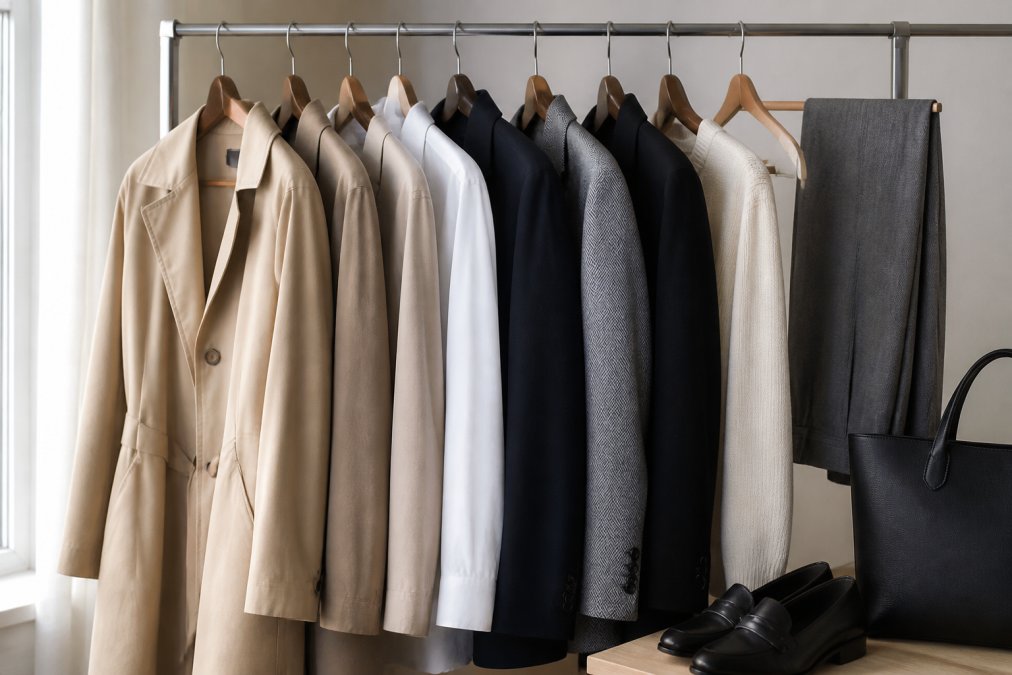
A timeless professional wardrobe is a small, carefully chosen set of high-quality garments that stay appropriate across seasons, dress codes, and job changes. At Vinthentic, we build around genuine leather craftsmanship and classic silhouettes for exactly this reason. Fast fashion wins on price and speed, then loses on everything else: seams split, colors fade, and cuts fall out of favor within a season.
Capsule Wardrobe Essentials for Work: The 12-Piece Framework
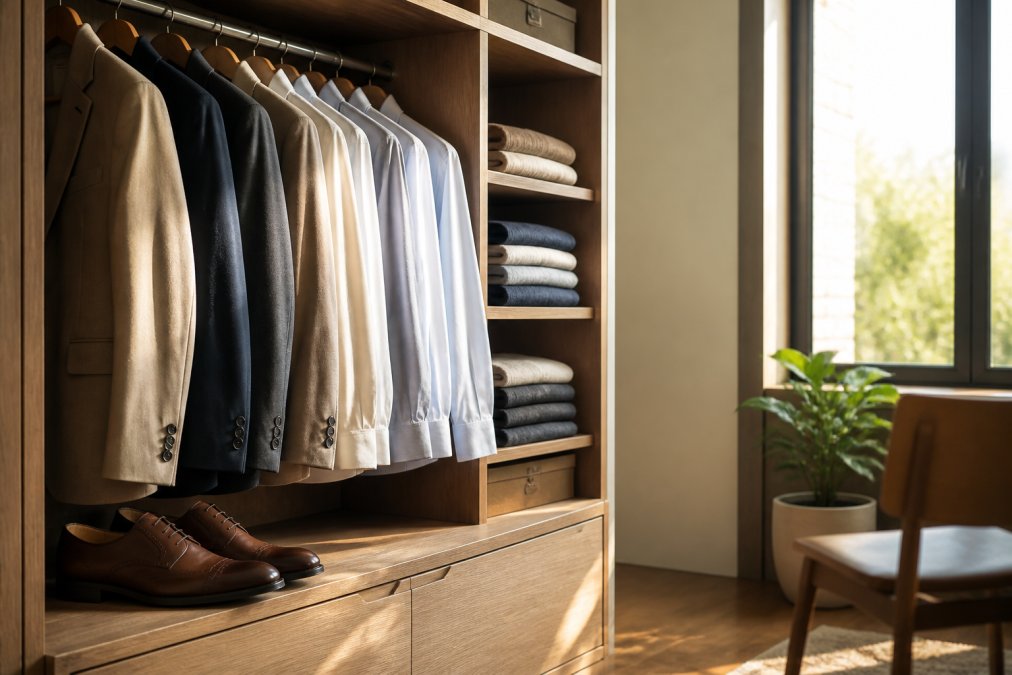
Capsule wardrobe essentials for work are the small set of versatile garments that combine into most of your weekly outfits. The framework below covers twelve pieces, split between tailoring, tops, knitwear, outerwear, and footwear, all in neutral tones that coordinate without effort. The count matters less than the logic: every piece should pair with at least three others.
| Category | Pieces | Why It Earns a Slot |
|---|---|---|
| Tailoring | Navy blazer, charcoal trousers, second blazer (gray or brown) | Anchors every professional look |
| Shirts | Two white, one light blue, one subtle pattern (stripe or check) | Covers formal to smart-casual |
| Knitwear | Merino crewneck, fine-gauge cardigan | Layers for three seasons |
| Outerwear | Wool overcoat | Finishes the silhouette outdoors |
| Footwear | Leather Oxfords, second pair for rotation | Grounds the whole rotation |
How the Twelve Pieces Actually Combine
The framework only works if the pieces talk to each other. Lay all twelve on the bed and try to build five weekday outfits without repeating a full look:
- Monday: navy blazer, white shirt, charcoal trousers, Oxfords
- Tuesday: gray blazer, light blue shirt, charcoal trousers, Oxfords (second pair)
- Wednesday: cardigan over a white shirt, charcoal trousers, Oxfords
- Thursday: navy blazer, patterned shirt, charcoal trousers, Oxfords
- Friday: overcoat over the merino crewneck and charcoal trousers, Oxfords
Neutral Color Palettes That Do the Coordinating for You
The framework leans on navy, charcoal, gray, white, and light blue because these tones sit next to each other without clashing. Build the neutral base first; add one accent, a burgundy tie, a forest-green knit, only after the twelve pieces already combine cleanly. The accent is the last 5% of the wardrobe, not the first.
How Body Type Changes the "Timeless" Cut
Most capsule guides treat "timeless" as one silhouette. It is not. The same navy blazer reads differently depending on frame, and the adjustments are small but decisive:
- Broader shoulders or chest: a slightly longer jacket (covering the seat) balances the upper body; avoid peak lapels that widen the chest further.
- Narrower shoulders: a structured shoulder with light padding restores proportion; unstructured Italian-style jackets can look borrowed.
- Taller frames: a lower button stance and a fuller trouser break keep the silhouette from looking stretched.
- Shorter frames: a higher button stance and a shorter jacket hem (ending at the wrist when arms hang) add visual height; a single vent keeps the line clean.
A Budget-Conscious Path to the Same Twelve Pieces
A timeless wardrobe is not a high-end wardrobe. The same twelve slots can be filled across three budget tiers:
- Thrift and consignment: blazers, overcoats, and leather shoes are the strongest second-hand buys because they were built to last and often sell for a fraction of retail. Inspect shoulder seams, lining, and sole wear before buying.
- Mid-range retail: shirts, knitwear, and trousers are the best places to buy new at mid-range prices, the construction difference versus luxury is smallest here.
- End-of-season sales: buy neutral staples (navy, charcoal, gray) when they are discounted, never trend colors. A navy blazer on markdown in February is the same blazer in September.
How to Choose Quality Fabrics for Professional Clothing
Choosing quality fabrics for professional clothing comes down to three checks: fiber content, weave density, and how the cloth recovers after being crushed in your hand. Natural fibers such as wool, cotton, and linen breathe better and age more gracefully than most synthetic blends, though a little elastane in trousers is a practical exception.
Natural Fibers vs. Synthetic Blends: What Lasts
Natural fibers hold their shape and develop character with wear, while synthetic blends often pill and shine at friction points. Don't judge fabric by feel alone in the store. Ask instead:
- What is the fiber percentage on the label?
- Does the weave spring back when squeezed?
- Does the lining breathe, or does it trap heat?
Investment Pieces for a Professional Closet: Where to Spend
Investment pieces for a professional closet are the garments worth paying more for because they carry the most visible weight and get the most wear. Spend on tailoring, outerwear, and footwear; save on shirts, basics, and anything trend-driven. The harder question is how to tell an investment piece from an expensive one.
The Cost-Per-Wear Test
Cost per wear is the only honest way to compare a $60 shirt to a $200 shirt. Divide the price by the number of times you expect to wear the garment before it wears out. A $200 blazer worn twice a week for five years works out to well under a dollar per wear; a $60 blazer worn twice a month for one year costs more per wear, and looks worse the whole time.
What Actually Makes a Garment Worth the Money
Price is a poor proxy for quality. These are the concrete signals that separate a piece worth paying for from one that is merely marked up:
- Full-canvas vs. fused construction in a jacket. A full-canvas jacket has a floating layer of horsehair and wool stitched inside the chest; it molds to your body over time. A fused jacket glues a stiff interlining to the fabric and bubbles or delaminates with dry cleaning. Press the chest of a jacket between your hands, if you feel a third, floating layer, it is canvassed.
- Goodyear-welted vs. cemented shoes. A Goodyear-welted leather shoe can be resoled repeatedly; a cemented shoe is glued and is essentially disposable once the sole wears through. Look for visible stitching around the sole edge.
- Fiber content on the label. A wool overcoat should be mostly wool, not a polyester blend marketed as "wool-touch." The FTC guidance on textile and leather labeling explains what those percentages legally mean.
- Seam and button construction. Functional (surgeon's) cuffs, pick-stitched lapels, and buttons attached with a shank rather than flat all signal a garment built to be repaired, not replaced.
Where to Save Without Looking Cheap
Shirts, undershirts, socks, and basic knitwear are categories where mid-range and even budget options perform close to luxury. A well-fitting $50 shirt with a good collar roll reads better than a poorly fitting $200 one. The same logic applies to pocket squares, belts, and casual knitwear, buy mid-range, replace when worn, and put the savings into tailoring, outerwear, and footwear.
The Second-Hand Shortcut to Investment Quality
Some of the best investment pieces are bought used. A Goodyear-welted leather shoe or full-canvas wool overcoat that cost several hundred dollars new often sells second-hand for a fraction of that, and both were built to outlive their first owner. Inspect the same signals, welt stitching, canvas feel, fiber label, and budget for a cobbler or tailor to refresh the piece.
Footwear That Anchors the Rotation
Footwear anchors a rotation because it sets the tone of every outfit and takes the most punishment. A classic leather Oxford in a dark neutral works with suits, trousers, and dark denim alike. Vinthentic's Men's Leather Formal Oxford Shoes Classic Design use a classic Oxford silhouette and high-quality leather, built for long office hours. Rotate two pairs so each dries between wears, and both will outlast a single pair worn daily.

Fit and Tailoring: The Difference Between Owned and Worn
Fit is the single biggest difference between clothing that looks owned and clothing that looks borrowed. A moderately priced garment that fits well beats an expensive one that does not. Know your numbers before you shop: shoulder width, sleeve length, waist, and inseam.
- Shoulder seam should sit at the edge of your shoulder, not past it
- Sleeve should end at the wrist bone, showing a sliver of shirt cuff
- Trouser hem should break once, lightly, on the shoe
Maintenance and Garment Care for Long-Term Wear
Garment care separates a wardrobe that lasts three years from one that lasts ten. Most damage comes from over-washing, not wear. Follow these habits:
- Air garments between wears; wool self-cleans and needs washing rarely
- Brush wool and use cedar shoe trees overnight to absorb moisture
- Store knitwear folded, never on hangers that stretch shoulders
- Rotate shoes so leather dries fully between wears
Budget-Conscious Timelessness: Smart Shopping Without the Markup
Budget-conscious timelessness means buying fewer, better pieces and measuring cost per wear instead of sticker price. A garment worn twice a week for three years costs pennies per wear, no matter what you paid.
- Buy end-of-season for staples in neutral tones, not trends
- Prioritize classic cuts that survive silhouette shifts
- Track cost per wear for a month to see what actually earns its space
Conclusion: Your Wardrobe as a Long-Term Investment
Building a timeless professional wardrobe is a discipline, not a shopping spree. Start with the twelve-piece framework, spend where it shows, and protect what you own with proper care. Vinthentic helps you do exactly that, with genuine leather craftsmanship, handcrafted precision, and timeless footwear design built for everyday comfort.
Frequently Asked Questions
What are the essential pieces for a timeless professional wardrobe?
A timeless professional wardrobe centers on a small set of versatile staples: two well-fitted blazers (navy and charcoal), five dress shirts in neutral tones, two pairs of tailored trousers, a quality leather belt, and one pair of leather Oxford shoes. These foundational pieces mix and match across business and smart-casual settings, reducing decision fatigue and ensuring you always look polished.
How do I choose quality fabrics for professional clothing that lasts?
Look for natural fibers like wool, cotton, and linen, which breathe better and age more gracefully than synthetic blends. Check the label for fabric content and feel the weight, a mid-weight wool trouser drapes better and resists wrinkling. High-quality materials hold their shape after repeated wear and cleaning, making them a smarter long-term buy than cheaper alternatives that pill or fade.
What is the 3-3-3 rule for building a capsule wardrobe?
The 3-3-3 rule suggests building outfits from three tops, three bottoms, and three pairs of shoes, creating 27 unique combinations. For a professional closet, this means selecting neutral, interchangeable pieces that work across meetings and casual Fridays. The rule encourages versatility and helps you avoid overbuying, which is central to building a timeless professional wardrobe that stays functional season after season.
How often should I audit my professional wardrobe?
Audit your professional wardrobe twice a year, ideally at the start of spring and fall. Remove items that no longer fit, show irreparable wear, or haven't been worn in 12 months. A seasonal wardrobe edit keeps your closet curated and reveals gaps, such as a missing neutral blazer or worn-out dress shoes, so you can replace them with investment pieces that fill a real need.
How do I balance modern trends with timeless professional style?
Anchor your wardrobe in classic cuts and neutral tones, then introduce trends through lower-cost accessories like ties, pocket squares, or socks. This keeps your core look consistent while allowing small updates. A timeless professional wardrobe is built on foundational pieces that outlast trends, so reserve trend-driven purchases for accents rather than major investments.
How can I maintain leather shoes and garments to extend their life?
Rotate leather shoes between wears and use cedar shoe trees to absorb moisture and hold shape. Condition leather every few months and store garments on sturdy hangers in a breathable closet. Address small repairs like loose buttons or scuffed heels promptly. Proper maintenance and garment care can add years to your investment pieces, improving their cost-per-wear and keeping your wardrobe looking sharp.
The hard part is not knowing what to buy; it is resisting the next impulse purchase that quietly breaks the system. Vinthentic makes the durable half easier, with genuine leather craftsmanship, handcrafted precision, and comfort-focused design across a curated range of staples and footwear. Shop now and start building a rotation you will still be wearing in a decade.
Read more
Genuine Leather Accessories Online Shop: 2026 Guide
Explore our genuine leather accessories online shop guide. Learn leather grades, care tips, and find timeless pieces built to last. Shop now.
Read more
Durable Leather Goods for Everyday Use: 10 Best Picks
Discover durable leather goods built to last. Compare handcrafted shoes, loafers, and accessories with genuine leather construction. Find your everyday.
Read more