
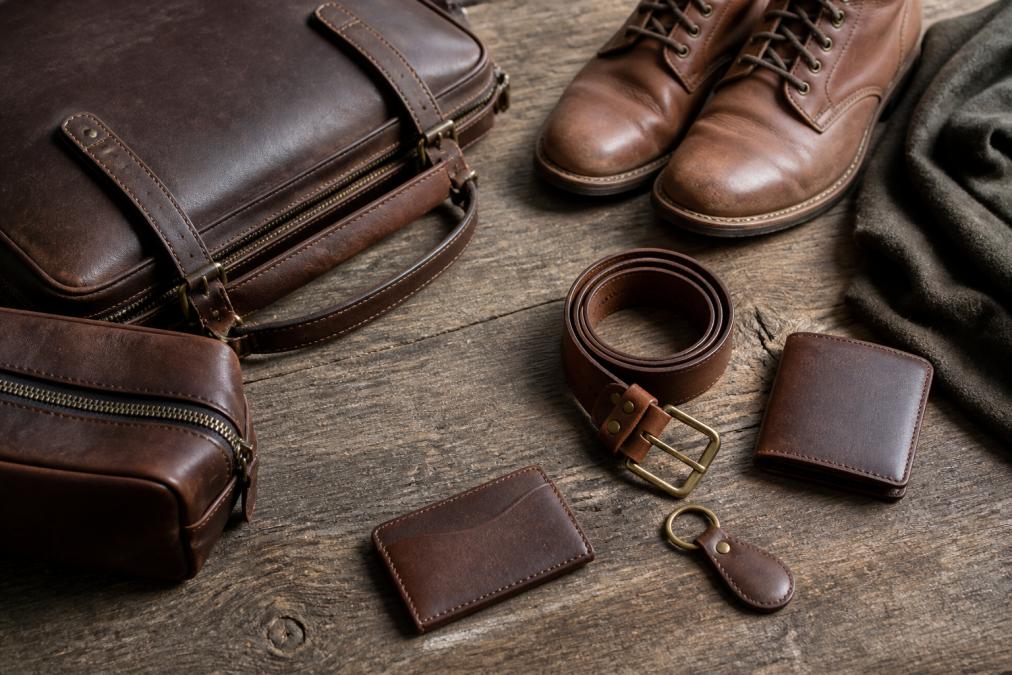
Timeless Leather Accessories for Everyday Wear
Table of Contents
- Why Timeless Leather Accessories Outlast Every Trend
- 7 Timeless Leather Accessories for Everyday Wear
- Full-Grain vs Top-Grain Leather Accessories: What Lasts
- How to Care for Leather Accessories Through the Seasons
- Repair or Replace? The Math Behind Long-Lasting Leather
- Conclusion: Building a Rotation That Ages Gracefully
- Frequently Asked Questions
Last Updated: September 14, 2026
Why Timeless Leather Accessories Outlast Every Trend
A well-made leather belt or pair of loafers can outlive a decade of trend cycles, and that longevity is exactly what makes timeless leather accessories for everyday wear worth the investment. At Vinthentic, we've built our catalog around this idea: pieces that look considered on day one and even better three years in. Leather is one of the few materials that improves with use. It molds to your body, develops a patina, and picks up character instead of wearing out.
Below, we break down seven pieces worth owning, how to judge leather quality before you buy, and how to keep each item aging gracefully.
The Enduring Appeal of Leather
Leather earns its place in a wardrobe through a tactile experience no synthetic can copy. Full-grain hides keep the natural surface of the animal, so each piece carries a slightly different grain pattern. Vegetable-tanned leathers, in particular, darken and soften over time rather than cracking. That is the patina process: oils from your hands, sunlight, and regular wear combine to give a belt or bag a finish no factory can replicate. This is why leather accessories feel personal in a way that mass-produced nylon or faux leather never does.
Why Leather Accessories Are a Smart Investment
An investment piece is judged by cost per wear, not sticker price. A leather belt worn four days a week for several years costs pennies per use, while a cheap alternative that frays within a season costs more in replacements. Quality construction, meaning hand-stitched seams, solid hardware, and full-grain hides, is what separates the two. A common mistake is buying on looks alone and ignoring the leather grain and stitching, which is precisely where lower-priced goods cut corners. Buy once, wear it daily, and let the material do the rest.
7 Timeless Leather Accessories for Everyday Wear
These seven pieces cover the essentials of a versatile leather rotation, from footwear to everyday carry. Each one earns its place because it works across settings: office, weekend, travel, and formal occasions.
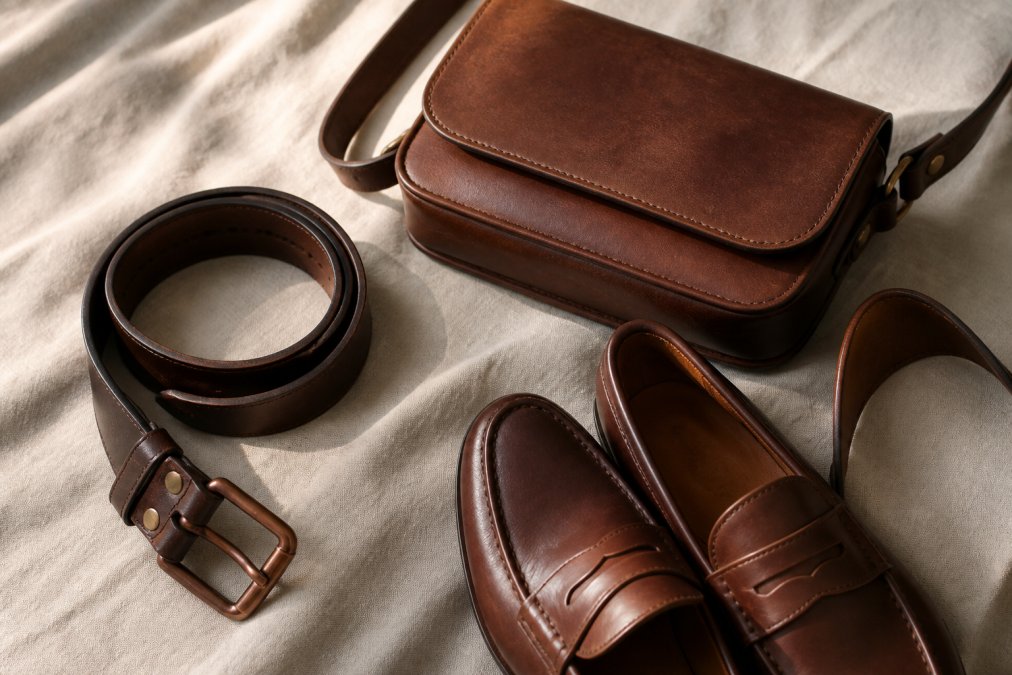
1. The Rustic Cowhide Pin Buckle Belt
The Vinthentic Rustic Cowhide Leather Pin Buckle Belt ($99.99) is the anchor of the rotation. It's cut from thick full-grain cowhide with a vintage copper pin buckle, and the rugged finish pairs with denim as easily as with tailored trousers. At 3.8cm wide, it holds its shape instead of curling at the edges, which is the first thing to fail on thinner belts. This is the piece you'll reach for daily and still be wearing in five years.

2. Genuine Leather Loafers With Metal Detail
Slip-on loafers solve the weekday-morning problem: polished enough for the office, relaxed enough for the weekend. The Genuine Leather Loafers With Metal Detail ($52.95) use a smooth leather upper, a cushioned footbed, and a durable rubber sole. The metal detail adds a subtle point of interest without tipping into flashy. Pair them with tailored trousers Monday through Friday, then with dark denim on Saturday.
3. The Retro Leather Hip Belt Bag
Hands-free carry has moved well past novelty status. The Vinthentic Retro Leather Hip Belt Bag ($64.99) uses premium leather, an adjustable belt, and secure compartments to keep phone, cards, and keys within reach. The retro silhouette reads as deliberate rather than dated, which is the test any accessory with vintage roots has to pass.

4. Men's Leather Oxford Dress Shoes
For weddings, interviews, and formal offices, the Men's Leather Oxford Dress Shoes ($67.95) deliver the classic lace-up silhouette with a leather upper and a comfortable sole built for long days. Oxfords are the least trend-sensitive shoe in menswear; the design has barely shifted in a century, which is precisely the point.
5. The Heritage Men's Crossbody Bag
The Vinthentic Heritage Men's Crossbody Bag ($39.99) handles the daily commute with a heritage-inspired look and enough storage for a tablet, charger, and notebook. The crossbody design keeps your hands free, and the neutral profile works with both a blazer and a hoodie.

6. The Salvador Men's Leather Jacket
A leather jacket is the statement piece of the rotation. The Salvador Men's Leather Jacket ($89.90) is cut from genuine leather with a slim fit, multiple pockets, and a design that dresses up or down. Sizes run S through 4XL. Wear it over a tee in spring and over a sweater in fall; it's the layer that makes a simple outfit look intentional.
7. Leather Penny Loafers With Suede Panel
The Leather Penny Loafers With Suede Panel ($47.95) round out the footwear lineup with genuine Italian leather, a cushioned footbed, and a durable rubber sole. The suede panel adds contrasting texture, which keeps the silhouette from reading flat. This is the pair for business-casual settings where the Oxfords feel like too much.
Full-Grain vs Top-Grain Leather Accessories: What Lasts
Full-grain leather is the strongest and most durable grade because it retains the hide's complete surface, while top-grain leather has that surface sanded away for a more uniform look at the cost of some durability. For a piece you'll wear daily, full-grain is the better long-term buy. It develops a genuine patina and resists cracking.
Top-grain still has a place: it takes dye more evenly, so it suits accessories where a perfectly consistent color matters more than aging character. The trade-off is that top-grain scuffs more visibly and won't develop the same depth over time. When you're comparing two pieces side by side, press a thumbnail into the surface. Full-grain shows a temporary mark that fades; corrected or bonded leathers feel plasticky and don't recover. Check the stitching too. Look for tight, even, hand-stitched seams, since loose machine stitching is the first thing to split.
How to Care for Leather Accessories Through the Seasons
Leather care is mostly about moisture balance: keep it conditioned, keep it dry, and it will stay supple for years. A simple routine beats an elaborate one. Wipe each piece with a dry cloth after heavy use, condition every two to three months, and store belts rolled rather than hung so they keep their shape. The American Leather Chemists Association guidance on leather care is a useful reference for anyone who wants to go deeper on conditioning and storage.
But the routine that works in one climate can ruin leather in another. Most care guides ignore this, and it's the single biggest reason a piece that thrived for its first owner fails for its second.
Humidity, Dry Heat, and Winter Salt
Humid summers. Mold and mildew are the enemy. Let pieces air out fully before storing them, and never seal damp shoes or bags in a closed container. A silica gel packet in a storage box absorbs ambient moisture. If mold appears, wipe it off with a cloth dampened with a diluted white vinegar solution, let the piece dry completely away from direct heat, then condition (Mold clean-up practices vary by sociodemographic and allergy factors).
Dry winter heat. Indoor heating pulls oils from leather, so condition more often, roughly every four to six weeks, and keep pieces away from radiators and vents. Dry leather feels stiff and looks dull; that's your cue to condition before it cracks.
Road salt. The most damaging of all. Wipe footwear with a damp cloth as soon as you're inside, then condition the leather once it's fully dry. Skip this and salt will stain the finish permanently. A beeswax-based conditioner adds a protective barrier before you head out.
Rain. Water spots are cosmetic, not fatal. Blot, don't rub, and let the piece dry at room temperature. Never use a hair dryer or radiator; heat sets the damage.
Repair or Replace? The Math Behind Long-Lasting Leather
Repair usually wins, and the math is straightforward. A belt that needs a new buckle or a shoe that needs a resole costs far less to fix than replacing the item outright, and the repaired piece often lasts years longer. Replace only when the leather itself has cracked through or the structure has failed.
That's the quiet advantage of buying well in the first place: good leather is repairable, while bonded or synthetic materials usually aren't. A cobbler can resole a quality pair of loafers; there's nothing to resole on a glued-together synthetic. Before you toss anything, price the repair. If it's a fraction of a replacement and the leather is still sound, fix it.
A few repairs worth knowing by name: a resole replaces the worn outsole on welted footwear and can be done two or three times over a shoe's life; a restitch resews a split seam on a bag or belt; a buckle swap replaces failed hardware on an otherwise sound belt; and a panel replacement swaps a worn section of a bag without rebuilding the whole piece.
Repair or Replace? The Math Behind Long-Lasting Leather
Repair usually wins, and the math is straightforward. A belt that needs a new buckle or a shoe that needs a resole costs far less to fix than replacing the item outright, and the repaired piece often lasts years longer. Replace only when the leather itself has cracked through or the structure has failed.
That's the quiet advantage of buying well in the first place: good leather is repairable, while bonded or synthetic materials usually aren't. A cobbler can resole a quality pair of loafers; there's nothing to resole on a glued-together synthetic. Before you toss anything, price the repair. If it's a fraction of a replacement and the leather is still sound, fix it.
Conclusion: Building a Rotation That Ages Gracefully
The challenge with leather isn't finding pieces you like; it's building a rotation that still looks right in three years. Start with one anchor piece, a full-grain belt or a pair of loafers, and add from there. Vinthentic's collection is built for exactly this: genuine leather craftsmanship, timeless footwear design, and comfort-focused construction across belts, bags, loafers, Oxfords, and jackets. With more than 20,000 happy customers and pieces designed to age gracefully rather than follow a season, it's a sound place to start. Shop now and step into style with substance.
Frequently Asked Questions
How do I know the leather is genuine and not a synthetic blend?
Check the grain and the edges. Genuine full-grain leather shows natural variation in texture and pore pattern, while synthetic blends look uniform and plasticky. Look for visible stitching quality and a slight matte sheen rather than a glossy coating. Product listings should name the leather type outright, such as full-grain cowhide or genuine leather, rather than vague phrases like premium material. If a listing avoids naming the leather, treat that as a warning sign.
What leather accessories are considered timeless staples?
A full-grain leather belt, a structured bag or crossbody, and a pair of leather loafers or Oxfords cover most wardrobes. These pieces work across office, weekend, and formal settings because their silhouettes have barely changed in decades. Neutral tones like tan, brown, and black keep them versatile. A leather jacket rounds out the rotation for cooler months. The point of timeless leather accessories is that they pair with what you already own instead of demanding a new wardrobe.
How should I care for leather accessories so they last?
Wipe dust with a dry cloth weekly, condition every two to three months, and store pieces in breathable cotton bags rather than plastic. Rotate your accessories so no single item takes daily wear. In dry climates, condition more often; in humid regions, focus on drying pieces fully before storage. Salt stains from winter roads should be wiped off the same day with a damp cloth, then conditioned once dry. Consistent small habits matter more than occasional deep cleaning.
Why is full-grain leather preferred for everyday accessories?
Full-grain leather keeps the entire hide intact, so the fibers stay tight and resist stretching. That structure is why it develops a patina instead of cracking. Top-grain leather is sanded to remove surface imperfections, which looks smoother at first but wears thinner over time. For a belt, bag, or pair of shoes you plan to wear several times a week, full-grain holds its shape longer. The trade-off is a higher upfront price and a slightly rougher finish at first.
Will leather accessories still look good in two or three years?
Pieces with quality construction and classic silhouettes age well because they were never tied to a trend cycle. A pin buckle belt, a penny loafer, or a heritage crossbody bag has looked the same for decades. What changes is the surface: leather darkens, softens, and picks up character. Regular conditioning and rotation slow that process. If you avoid heavily branded hardware and unusual shapes, the piece stays wearable long after fast-fashion equivalents have fallen apart.
Read more
Durable Vintage Inspired Clothing Review: 2026 Guide
Durable vintage inspired clothing review covering fabric quality, fit, pricing, and longevity. Learn how to spot quality pieces and build a lasting.
Read more
Where to Buy Authentic Vintage Clothing: 2026 Guide
Learn where to buy authentic vintage clothing in 2026. Spot real vintage, find trusted sources, and shop timeless pieces with confidence. Start.
Read more