
Article: How to Choose the Right Leather Boot Polish
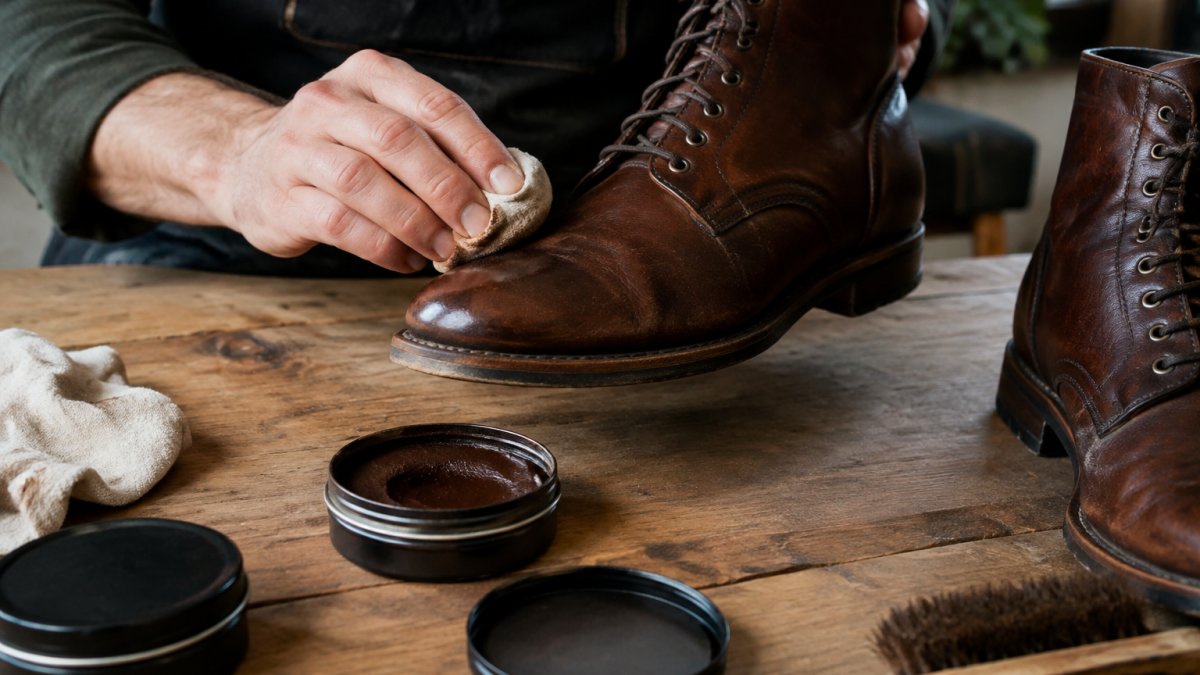
How to Choose the Right Leather Boot Polish
Last Updated: November 5, 2026
Quick Summary
The right leather boot polish depends on the leather itself, not the shade on the lid. Smooth, full-grain leather takes a cream or wax polish well, while suede and nubuck need a brush and protector instead. Cream polish conditions and restores color, while wax polish adds shine and a protective layer.
- Cream polish is the better daily choice for most smooth leather boots because it soaks in and restores oils.
- Wax polish suits rainy or snowy conditions but should be used less often since it builds up.
- Match color by going one shade lighter, never darker, and test on a hidden spot first.
- Condition first, let it soak in, then polish for finish, since conditioner and polish are not the same product.
- Polishing takes about fifteen to twenty minutes of hands-on work plus drying time, and step order matters more than products.
Table of Contents
- Start With the Leather, Not the Tin
- Cream vs Wax Shoe Polish: Which Formula Fits Your Boots
- How to Match Shoe Polish to Leather Color
- Leather Boot Conditioner vs Polish: What Each One Does
- How to Polish Leather Boots in Five Steps
- Reading the Label: Ingredients and Finishes That Matter
- Matching Leather Boot Polish to Your Vinthentic Pair
- Frequently Asked Questions
Start With the Leather, Not the Tin
Many people choose polish by color alone.
Here is the short answer: smooth, full-grain leather takes a cream or wax polish well, while suede and nubuck need a brush and protector instead. Know your leather first. Then pick the formula.
At Vinthentic, our boots are made from genuine leather. A little knowledge about polish goes a long way toward keeping that leather supple and rich.
Below, we break down cream versus wax, color matching, and a simple five-step routine you can follow at home.
Cream vs Wax Shoe Polish: Which Formula Fits Your Boots
Cream polish conditions and restores color, while wax polish adds shine and a protective layer. Many boot owners need both, used at different times.
Think of cream as food and wax as armor. Cream sinks in and keeps the leather from drying out. Wax sits on top and guards against water and scuffs.
When Cream Polish Wins
Cream polish is the better daily choice for most smooth leather boots. It soaks into the hide, restores oils, and evens out faded color without building a heavy coat.
- Best for dry or thirsty leather
- Ideal for softer, dress-style boots
- Great for restoring deep color
- Safe for frequent use
If your boots feel stiff or look chalky, cream is what they need.
When Wax Polish Wins
Wax polish shines brightest on boots that face weather and hard wear. It forms a barrier that shrugs off rain and light scuffs.
- Best for rainy or snowy conditions
- Ideal for work and outdoor boots
- Adds a high-gloss finish
- Use less often, since wax builds up
A common mistake is over-waxing. Too much wax traps dirt and cracks over time. Use it in thin layers.
| Feature | Cream Polish | Wax Polish |
|---|---|---|
| Main job | Condition and restore color | Shine and protect |
| Absorbs into leather | Yes | No, sits on top |
| Best for | Dry, faded leather | Wet, harsh conditions |
| Finish | Soft, natural | Glossy |
| How often | Regularly | Occasionally |
How to Match Shoe Polish to Leather Color
Color matching comes down to one rule: go one shade lighter, never darker. A polish that is slightly light blends in; one that is too dark leaves streaks and stains.
Black boots take black polish. Brown boots are trickier, since browns range from tan to espresso. When in doubt, choose a neutral cream that cleans and conditions without adding pigment.
Test Before You Commit
Always test polish on a hidden spot first. The inside of the ankle or under the tongue works well.
- Apply a small dot with a cloth
- Let it dry for a few minutes
- Check the color in natural light
- Wipe off if it looks wrong
This two-minute test saves hours of regret. It also tells you whether the polish soaks in evenly or sits on the surface.
Leather Boot Conditioner vs Polish: What Each One Does
Conditioner and polish are not the same product, and using only one leaves a gap. Conditioner moisturizes the leather; polish adds color and shine.
Skip conditioner and the leather dries out and cracks. Skip polish and the leather loses its color and protection.
The best routine uses both. Condition first, let it soak in, then polish for finish. Many leather care kits pair the two for exactly this reason. If you want to read more on proper leather care, check our men's leather boots that are built for everyday wear.
Men's Leather Chelsea Pull Tab Boots →

How to Polish Leather Boots in Five Steps
Polishing boots takes about fifteen to twenty minutes of hands-on work plus drying time, and the order of steps matters more than the products you use. The routine below assumes smooth leather; suede and nubuck need a brush and protector instead of polish.
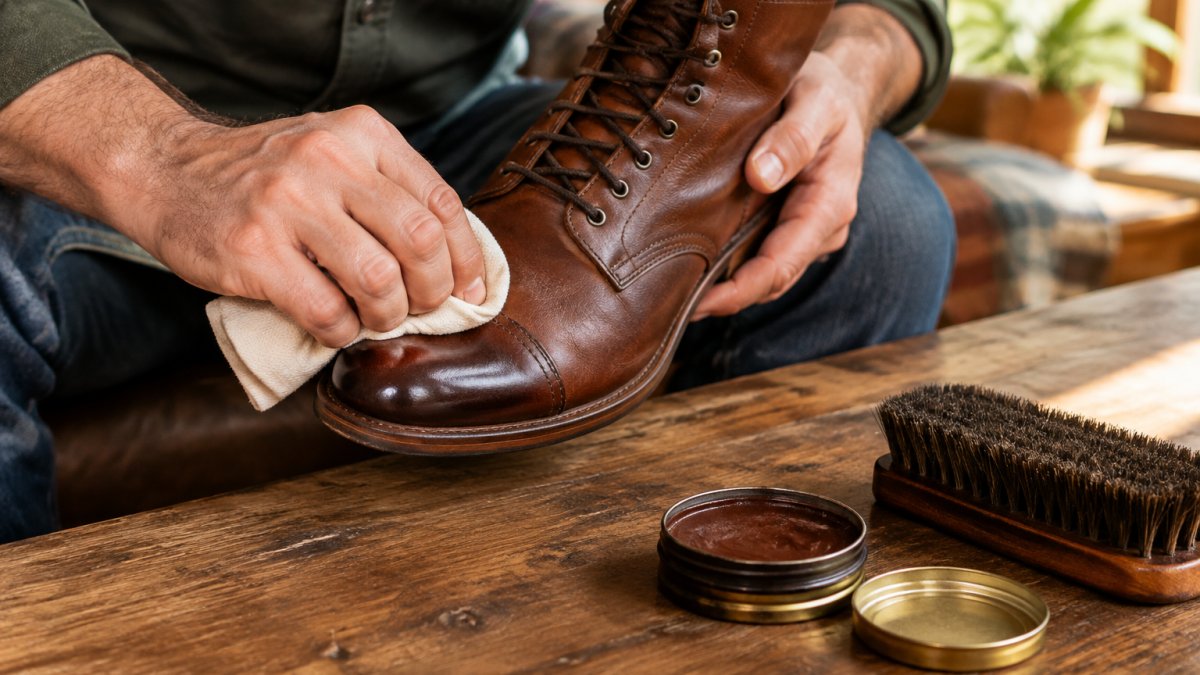
- Clean the surface. Brush off loose dirt with a horsehair brush, then wipe with a barely damp cloth. Do not soak the leather. Let the boots dry fully at room temperature, away from radiators and direct sun, for at least an hour before the next step. Polishing over grit or moisture is the fastest way to grind dirt into the grain.
- Condition the leather. Work a small amount of conditioner in with your fingers or a cloth, using circular motions and paying extra attention to flex points and the toe. Let it absorb for ten to fifteen minutes, then brush off any excess. If the leather drinks it in immediately, add a second thin coat.
- Apply the polish. For cream, use a soft cloth and work it in small circles, one thin layer at a time. For wax, load a dauber or cloth lightly and apply in thin layers rather than one heavy coat. Match the shade to the leather, or use neutral if you want to condition without changing color.
- Buff to a shine. Wait five to ten minutes for the polish to set, then buff with a clean horsehair brush using quick, light strokes. For a higher gloss on wax, follow with a microfiber cloth and short, brisk strokes. Buffing too soon smears the polish; buffing too hard on soft leather can dull the finish.
- Protect and store. Add a thin protective coat if your polish does not already include one, then let the boots air out for several hours before storing. Use shoe trees or stuff the toes to hold shape, and keep boots off the floor and out of damp closets.
Cream Routine Versus Wax Routine
Cream polish fits a frequent, gentle routine: clean, condition, apply cream, buff, store. Wax fits an occasional routine: clean, condition, apply one or two thin wax layers, buff, and reserve it for weather exposure. Many boot owners alternate, using cream most months and wax before wet or snowy stretches.
Common Mistakes That Dull the Finish
- Using too much polish at once, which builds up in seams and creases
- Skipping the cleaning step and buffing grit into the grain
- Buffing too soon, before the polish sets
- Letting wax build up over months without stripping it back
- Storing boots while still damp, which invites mildew and stiffness
Watch out: over-waxing is more common than under-waxing, and a thick coat traps dirt and cracks along flex lines, so thin layers beat heavy ones every time.
Once your boots are polished, give them a proper home. A sturdy rack keeps them aired and off the floor, and you can browse our shoe rack to store and air your boots between wears.
Reading the Label: Ingredients and Finishes That Matter
The label tells you more than the color ever will, but only if you know which lines matter. Read a polish label in this order: wax or oil content, solvent or carrier, pigment type, and finish claim. That sequence tells you whether the product feeds leather, seals it, or just coats it.
Wax and Oil Content
Waxes are the protective backbone. Beeswax is soft and water-resistant; carnauba is harder and gives a brighter, more durable shine; lanolin and neat's-foot oil soften and condition. A cream polish typically leads with oils and a soft wax, while a wax polish leads with hard waxes in a solvent carrier. If the first ingredients are waxes and oils rather than water and solvent, the product is doing real work on the leather.
Solvents and Carriers
Most paste wax polishes suspend wax in a solvent so it spreads and sets. That is normal. What you want to avoid is a label dominated by harsh petroleum distillates with little wax or oil behind them, because those strip natural oils and leave leather dry once the solvent flashes off. A common pattern is a strong solvent smell that lingers and a finish that looks shiny for a day, then chalky. Water-based creams are gentler and better for frequent use on softer leather.
Pigment Type
Pigmented polish adds color and can hide scuffs; neutral polish cleans and conditions without changing shade. On brown boots with uneven fading, a pigmented cream in a shade one step lighter than the leather evens tone without streaks. Neutral is the safe choice when you are unsure of the exact dye lot, and it is the right pick for two-tone or patina finishes where you want to preserve variation.
Finish Claims
Matte and satin finishes suit casual and work boots; high gloss suits dress pairs. Be skeptical of labels promising a mirror shine from a single coat, since a true gloss usually comes from thin wax layers built over time, not one heavy application.
A Quick Label Checklist
- Waxes and oils listed before water or solvent: good sign for conditioning
- Beeswax, carnauba, lanolin, or neat's-foot oil named: useful ingredients
- Overpowering solvent with little wax behind it: use sparingly or skip
- Pigmented versus neutral stated clearly: match to your goal
- Finish named (matte, satin, gloss): match to the boot's role
Watch out: a polish can smell strongly of solvent and still be fine for occasional waxing, but using it every week on dry leather will pull out more oil than it puts back.
Matching Leather Boot Polish to Your Vinthentic Pair
Your boots deserve a polish that fits how they are built.
For our Men's Leather Chelsea Pull Tab Boots, a neutral or matching brown cream is a suitable choice for the smooth leather.
If your pair is the Savone men's Chelsea boots, a matching brown cream protects the finish. For the Christopher men's leather shoe, a light neutral polish keeps the shine clean and even.


A simple rule: cream for care, wax for weather. Match the shade to your leather, test first, and your boots will look better for years.
Frequently Asked Questions
Should I use cream or wax polish on leather boots?
Cream polish feeds the leather and restores color, which makes it the better weekly choice for smooth leather boots. Wax polish sits on the surface and adds a harder, glossier shield against rain and scuffs, so use it when you need protection or a mirror shine. Many owners keep both: cream for routine care, wax for weatherproofing before a wet week.
How do I match boot polish to the color of my boots?
Choose a polish one shade lighter than the leather, or a neutral formula if you are unsure. Test on a hidden spot such as the inside of the heel or under the tongue, let it dry fully, then check the color in daylight. Darker polish deepens the tone and can leave patchy results on lighter leather, so build up gradually rather than applying a heavy coat.
What is the difference between leather boot conditioner and polish?
Conditioner soaks into the leather to restore oils and keep it supple, while polish sits on top to add color, shine, and a protective layer. Condition first, let it absorb, then polish. Skipping conditioner lets leather dry out and crack over time, and skipping polish leaves the surface exposed to scuffs and water.
Can I use regular shoe polish on work boots or suede?
Smooth leather work boots take standard cream or wax polish, though heavier scuffs may call for a pigmented cream first. Suede and nubuck need a brush and a suede-specific protector instead, because cream and wax polish matte the nap and leave a greasy patch. Check the boot's material before you buy a tin.
Choosing the right leather boot polish is really about knowing your leather and caring for it with the right formula. At Vinthentic, we craft genuine leather footwear designed to last, with handcrafted precision and timeless style. Our boots are built for everyday comfort, so a small care routine keeps them looking sharp season after season. Join more than 20,000 happy customers who trust our craftsmanship. Get started with Vinthentic and step into style with substance.

Read more
Cleaning and Restoring Vintage Silk: A Step-by-Step Guide
Learn how to clean and restore vintage silk without damaging delicate fibers. Follow safe washing, stain removal, and storage steps to protect your pieces.
Read more