
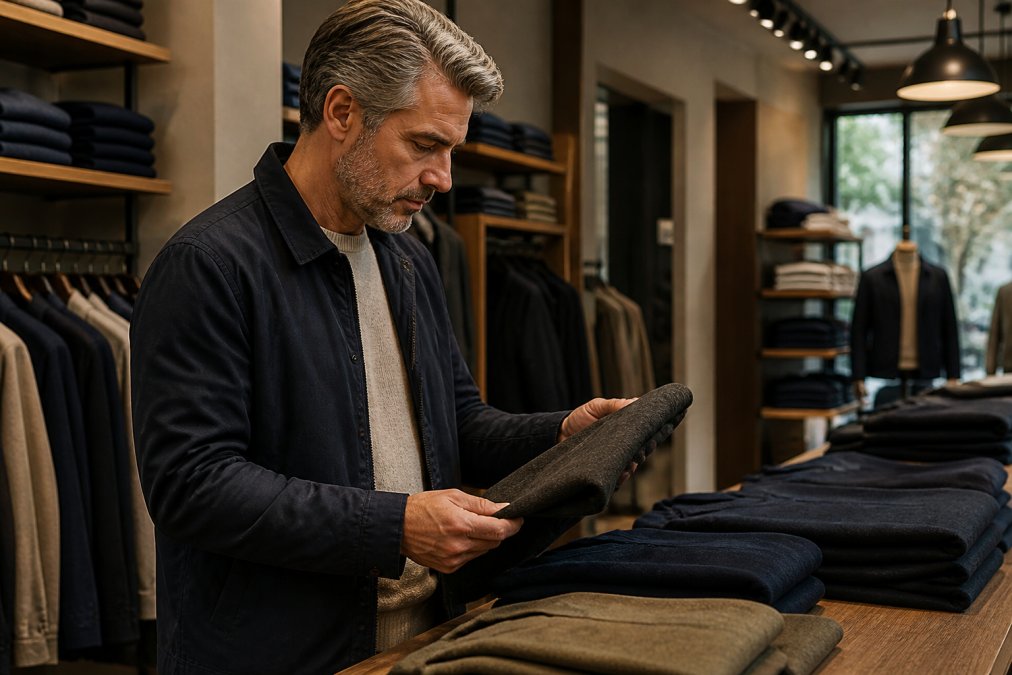
Where Do 50 Year Old Men Shop for Clothes?
Table of Contents
- Where Do 50 Year Old Men Shop for Clothes? What Changes After 50
- Timeless Style Tips for Men Over 50
- Men's Wardrobe Essentials Checklist
- How to Build a Capsule Wardrobe for Men
- Fit, Fabric, and Silhouette: What Actually Matters
- Budget vs. Investment: Where to Spend and Where to Save
- Shopping Online: Sizing, Returns, and Digital Tools
- Conclusion
- Frequently Asked Questions
Last Updated: September 19, 2026
Where Do 50 Year Old Men Shop for Clothes? What Changes After 50
Most men don't change how they dress at 50 because they suddenly care less. They change because the clothes that worked at 35 stop fitting the same way, and nobody tells them where to go next. This guide from Vinthentic breaks down where 50 year old men shop for clothes, what actually changes after 50, and how to build a wardrobe that still looks sharp a decade from now.
Timeless Style Tips for Men Over 50
Timeless style for men over 50 means choosing pieces that fit well, use quality fabric, and stay relevant for years rather than one season. The goal is a wardrobe that works across the office, weekends, and evenings without constant replacement.
A few principles carry most of the weight:
- Stick to a restrained color palette: navy, charcoal, brown, olive, and cream
- Favor understated patterns over loud prints
- Prioritize fabric durability over trend appeal
- Buy classic silhouettes that flatter rather than follow
Men's Wardrobe Essentials Checklist
A strong wardrobe for men over 50 starts with a short list of elevated essentials that mix and match. You do not need a closet full of options. You need a dozen pieces that all work together, and each one should be chosen with your current measurements, not the ones you had at 40.
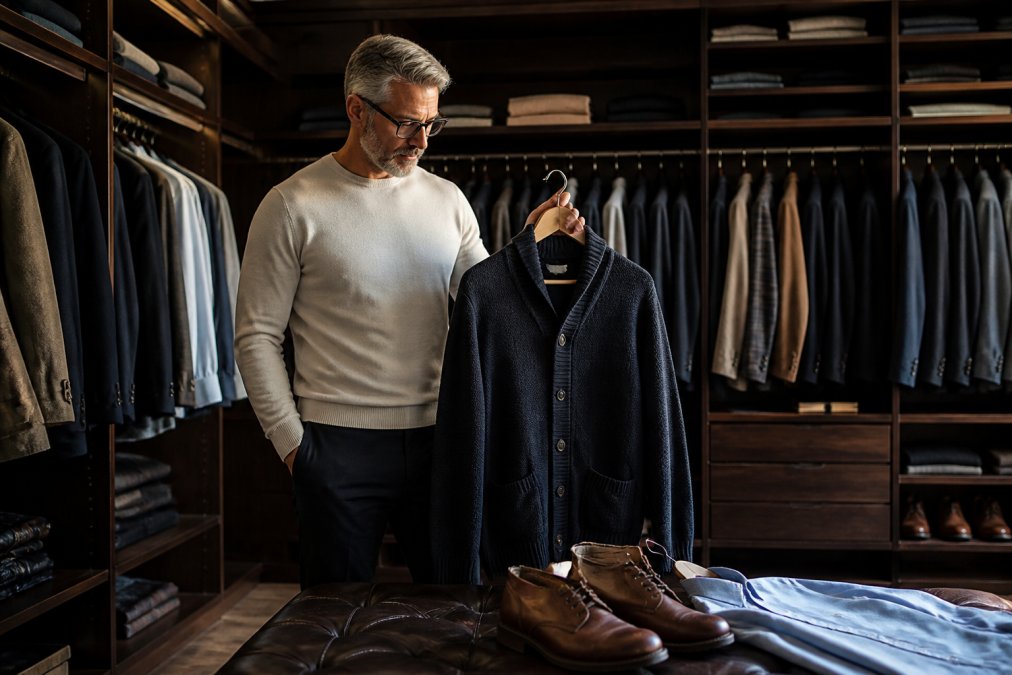
- Two to three button-down shirts in solid or subtle stripe. Check the chest and neck first, if the collar gaps or the placket pulls, size up and have the waist taken in.
- One knit cardigan for layering. A mid-weight wool or cotton blend drapes better over a softening midsection than a stiff blazer.
- One quarter-zip sweater for cooler weather. The stand collar frames the face and hides necklines that have thinned with age.
- Two pairs of well-fitted chinos or wool trousers. Look for a mid-rise that sits at the natural waist, not below the belly.
- One dark suit that fits your shoulders. Shoulders are the hardest thing to alter, so buy for them and tailor everything else.
- One pair of leather dress shoes. A rounded toe reads more current than a square one.
- One pair of leather boots for smart casual.
- One casual flannel or overshirt for weekends.
That is the foundation. Everything else is optional.

Tops and Layers
Tops do most of the visual work. A Men's Classic Knit Cardigan in a soft warm knit layers easily over a button-down for the office or a tee for weekends. For colder days, a Men's Quarter-Zip Stand Collar Sweater adds a refined neckline without bulk. A Men's Slim Fit Vertical Stripe Shirt with a Kent collar handles business casual and dinners equally well.

Bottoms and Footwear
Footwear anchors the whole outfit. A Men's Leather Brogue Lace-Up Dress Shoes covers business meetings and formal events. A Men's Leather Chelsea Pull Tab Boots slides from office to dinner without a change. For everyday wear, Men's Leather Slip-On Loafers combine a padded sole with a relaxed fit that holds up all day.

Where to Actually Buy These Pieces
Most guides stop at the list. The harder question is where to shop once you know what you need. A practical split for men over 50:
- Department stores (Nordstrom, Macy's, Dillard's) for suits, dress shirts, and shoes you want to try on in person. In-house tailoring is often free or low-cost with purchase.
- Direct-to-consumer and heritage brands (Bonobos, J.Crew, Todd Snyder, Buck Mason) for chinos, knitwear, and casual shirts with consistent sizing charts.
- Outdoor and workwear brands (L.L.Bean, Patagonia, Carhartt) for flannels, overshirts, and boots built for real wear.
- Specialty footwear (Allen Edmonds, Rancourt, Vinthentic) for leather shoes and boots that can be resoled rather than replaced.
- Mass retailers (Target's Goodfellow & Co., Uniqlo) for basics you plan to replace every year or two.
Fit Notes for a Changing Body
A few adjustments cover most of what happens after 50:
- Shoulders and posture. If you have developed a forward lean or rounded shoulders, a jacket that fit at 40 will now pull across the back. Look for a slightly higher armhole and a softer shoulder construction.
- Midsection. A mid-rise trouser with a flat front and a bit of stretch in the fabric sits cleaner than a low-rise pair that digs in.
- Neck and jawline. Collars that are too tight or too tall emphasize thinning. A Kent or button-down collar in a slightly shorter point length flatters more than a spread collar.
- Arms and legs. Sleeves and hems can be shortened, but they cannot be lengthened. Buy for length and tailor down.
How to Build a Capsule Wardrobe for Men
Learning how to build a capsule wardrobe for men comes down to one rule: every piece must work with at least three others. That constraint kills impulse buys and forces you toward versatile basics.
A simple process:
- Audit what you own and remove anything that no longer fits
- Identify gaps in color and category
- Choose one anchor color and build around it
- Buy one quality piece at a time instead of a full refresh
- Replace, don't accumulate
Fit, Fabric, and Silhouette: What Actually Matters
Fit and silhouette matter more than brand or price. A well-fitted affordable shirt will always look better than an expensive one that pulls at the chest or bunches at the waist.
Budget vs. Investment: Where to Spend and Where to Save
Spend on the pieces you wear most and the ones that carry visual weight. Save on the pieces that get replaced often or matter least to the overall look. That is the standard advice. The more useful version is cost per wear, and for men over 50, it is also the most sustainable way to shop.
| Category | Spend or Save | Why |
|---|---|---|
| Footwear | Spend | Worn daily, defines the outfit, and can be resoled |
| Outerwear | Spend | High visual impact, long lifespan |
| Knitwear | Mid | Quality matters, but styles rotate |
| Shirts | Save | Replaced often, easy to refresh |
| Casual tops | Save | Lower stakes, seasonal |
The Cost-Per-Wear Math
Cost per wear is simple: divide the price by the number of times you expect to wear the item. A Men's Classic Leather Lace-Up Boots at $89.95 is a genuine investment piece. It softens with wear and works with both business and weekend outfits. Compare that to replacing a cheap pair every year and the math favors quality every time.
Where to Save Without Looking Cheap
- T-shirts and undershirts. Buy in multipacks from Uniqlo, Target's Goodfellow & Co., or J.Crew. Nobody sees the label.
- Casual button-downs. Lands' End and L.L.Bean run frequent sales and hold up well for weekend wear.
- Socks, belts, and basics. These are commodity items. Buy on sale.
- Trend pieces. If you want to try a wider leg or a new color, do it in a cheaper fabric first.
Where to Spend Without Overpaying
- Footwear. Allen Edmonds, Rancourt, and similar makers offer resoling, which extends the life of a pair for years. Vinthentic's leather boots and dress shoes are built on the same principle.
- Outerwear. A wool overcoat or a good leather jacket is a ten-year purchase. Buy it in a neutral color.
- Tailoring. A $20 to $40 alteration on a jacket you already own often does more for your look than a new $200 purchase.
The Sustainable Angle Most Guides Skip
Men over 50 are the demographic most likely to keep clothes for a decade, and the least likely to be targeted by sustainable-fashion marketing. That is a gap worth closing. Three practical moves:
- Repair before you replace. Cobblers resole leather shoes for a fraction of the cost of new ones. Tailors can re-line a jacket, replace buttons, and take in a waist after weight changes.
- Buy resale for the pieces you would not buy new. Grailed, eBay, and The RealReal carry quality suits, coats, and shoes at a steep discount. For classic menswear, the secondary market is deep.
- Choose natural fibers. Wool, cotton, linen, and leather biodegrade and age well. Cheap polyester blends pill, hold odor, and end up in a landfill within a season.
A Simple Rule for the Whole Wardrobe
If a piece will be worn weekly for three or more years, spend. If it will be worn seasonally or replaced within two years, save. Everything else is a judgment call, and the judgment gets easier once you know your cost per wear.
Shopping Online: Sizing, Returns, and Digital Tools
Shopping online for men's clothing has gotten easier, but fit accuracy still decides whether a purchase works. Check the size chart against your actual measurements, not the size you wore five years ago.
Conclusion
Building a wardrobe that still looks sharp after 50 isn't complicated, but it does require intention. The men who get it right focus on fit, fabric, and a small set of pieces that work together rather than chasing trends or filling their closet with volume.
Frequently Asked Questions
What kind of clothes should a 50 year old man wear?
Focus on fit and fabric over trends. Well-tailored chinos, a quality knit cardigan, a slim-fit vertical stripe shirt, and leather footwear form a strong foundation. Neutral color palettes like navy, gray, and brown create versatility. Prioritize comfort-focused pieces that still look polished. A classic knit cardigan at $42.95 and leather loafers at $89.95 are examples of investment pieces that work across office and weekend settings.
Where do 50 year old men shop for clothes?
Many 50 year old men shop online at specialty retailers that focus on timeless style rather than fast fashion. Look for stores offering genuine leather craftsmanship, classic silhouettes, and detailed sizing information. Vinthentic serves this audience with wardrobe staples like leather Chelsea boots at $87.95 and quarter-zip sweaters at $32.95. Prioritize retailers with clear return policies and fabric durability details before committing.
What is the 3-3-3 rule for men's clothing?
The 3-3-3 rule suggests building outfits around three colors, three textures, and three layers. For example, navy chinos, a white shirt, and brown leather boots create a three-color base. Add a knit cardigan for texture and layering. This framework simplifies getting dressed while maintaining visual interest. It works especially well for a capsule wardrobe because it forces versatile combinations from fewer pieces.
How do I build a capsule wardrobe for men over 50?
Start with 8 to 12 versatile pieces: two pairs of chinos, three shirts (including a flannel and a vertical stripe option), two knit layers, and two pairs of leather shoes. Choose a consistent color palette so everything mixes. Add one sport coat for elevated occasions. Replace items only when they wear out, not when trends change. This approach reduces decision fatigue and ensures every piece earns its place.
How do you dress stylishly in your 50s without looking like you're trying too hard?
Stick to understated patterns, classic silhouettes, and quality fabrics. Avoid loud logos or trend-driven cuts. A slim-fit vertical stripe shirt at $44.95 paired with leather brogue dress shoes at $64.95 reads as sophisticated without effort. Let fit and material do the work. Tailoring matters more than brand names. Choose pieces that feel comfortable and look intentional, not costume-like.
Read more
Best Websites for Buying Vintage Men's Clothing
Discover the best websites for buying vintage men's clothing. Learn how to shop vintage menswear online, find sizing tips, and explore timeless pieces.
Read more
How to Protect Suede Footwear From Rain and Snow
Learn how to protect suede footwear from rain and snow with waterproofing sprays, salt stain removal, and winter care tips. Keep your shoes pristine all.
Read more