
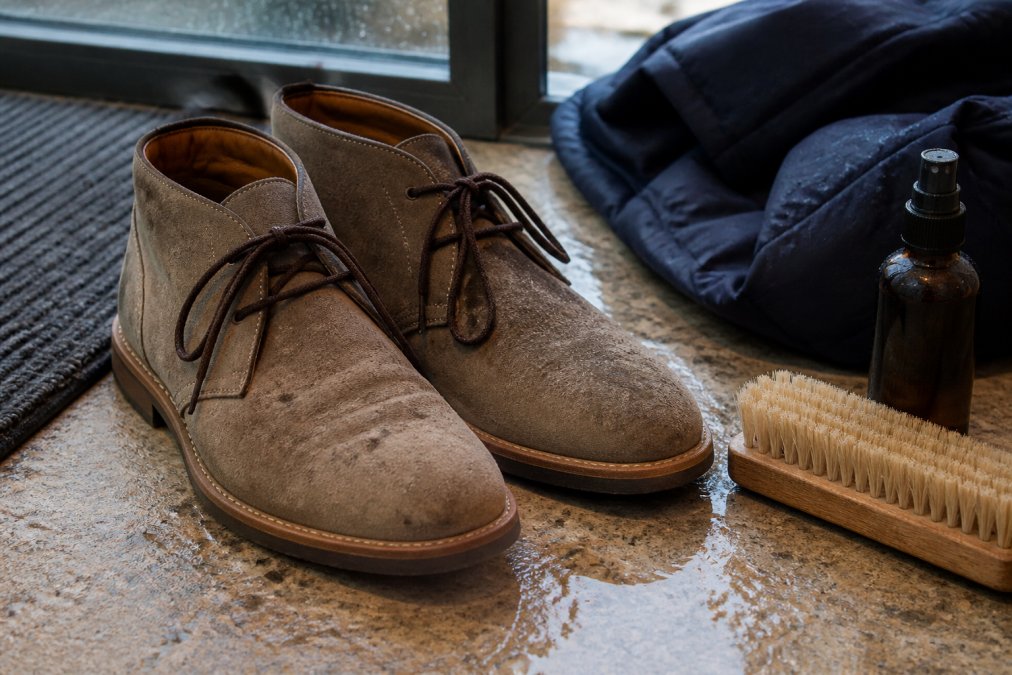
How to Protect Suede Footwear From Rain and Snow
Table of Contents
- Why Suede Needs Protection Before Bad Weather Hits
- Choosing the Best Suede Protector Spray for Your Shoes
- How to Apply Suede Protector: A Step-by-Step Guide
- How to Remove Salt Stains From Suede After Winter Walks
- Suede Maintenance Tips for Winter: Brushing, Drying, and Rotation
- What to Do If Your Suede Gets Soaked or Stained
- Post-Winter Deep Restoration for Suede Footwear
- Natural vs. Synthetic Sealants: Which Lasts Longer?
- Frequently Asked Questions
Last Updated: September 20, 2026
Why Suede Needs Protection Before Bad Weather Hits
Suede is leather with a brushed, velvety surface called the nap, and that open texture is exactly what makes it vulnerable to rain and snow. Each fiber lifts slightly, so water, salt, and grit soak in fast instead of rolling off. Once moisture settles deep in the nap, it weakens the fibers and leaves dark patches that are hard to reverse.
This guide walks through how to protect suede footwear from rain and snow damage, step by step. You'll learn which protector sprays work, how to apply them, and what to do when things go wrong.
The stakes are higher in winter. Road salt and slush dry into stiff, white-edged stains that pull color from the surface.
- The nap absorbs liquid instead of repelling it
- Salt and grit grind into the fibers and stain
- Slow winter drying lets dampness spread deeper
Choosing the Best Suede Protector Spray for Your Shoes
- Standard chrome-tanned suede (the most common) tolerates most protectors.
- Oiled or waxed suede already carries a factory finish; adding a solvent-based spray can strip that finish and leave a mottled, uneven surface.
- Metallic, printed, or foil-stamped suede has a surface coating that silicone and solvent carriers can lift, causing flaking or a dull haze.
- Dyed suede in deep reds, blues, and blacks is the most prone to color migration when a solvent carrier re-wets the dye.
How the main chemistries differ:
- Silicone-based sprays lay down a flexible water-repellent film and dry fast. They breathe less, so on heavy suede they can trap moisture underneath if the shoe is worn damp.
- Fluoropolymer protectors bond at a lower surface energy, which is why they resist both water and oil-based stains. They are the strongest option for salt and slush, but they are also the most likely to leave a visible residue if over-applied.
- Solvent-based (non-silicone) formulas penetrate the nap rather than coating it, so they feel lighter and breathe better. The trade-off is that the solvent itself is what can lift dye or factory finishes.
- Water-based and eco-friendly formulas use fewer volatile solvents and are gentler on sensitive finishes, but they typically need reapplication more often.
A compatibility check before you spray:
- Read the label for the words "suede and nubuck", not just "leather."
- Confirm the finish type. If the shoe is oiled, waxed, metallic, or printed, choose a water-based formula.
- Test on a hidden spot (inside the heel or under the tongue) and let it dry a full 24 hours, not just until it looks dry.
- Watch for darkening, a white haze, or a stiff patch. Any of those means the carrier is attacking the finish.
Fluoropolymer protectors offer strong stain resistance, but many shoppers now prefer eco-friendly, non-toxic options with fewer harsh solvents. Check the label for suede compatibility first. For a deeper look at material care, the American Leather Chemists Association resources explain how finishes interact with different leather surfaces.
Ventilation matters for more than smell. Aerosol protectors release fine particles, so spray outdoors or in a garage with the door open, and let the shoes cure in that same ventilated space. Curing indoors in a closed closet can leave a lingering solvent odor in the nap for days.
How to Apply Suede Protector: A Step-by-Step Guide
Applying protector properly takes about 15 minutes per pair, plus drying time. Rushing it, or spraying too close, leaves uneven coverage that wears off in patches.
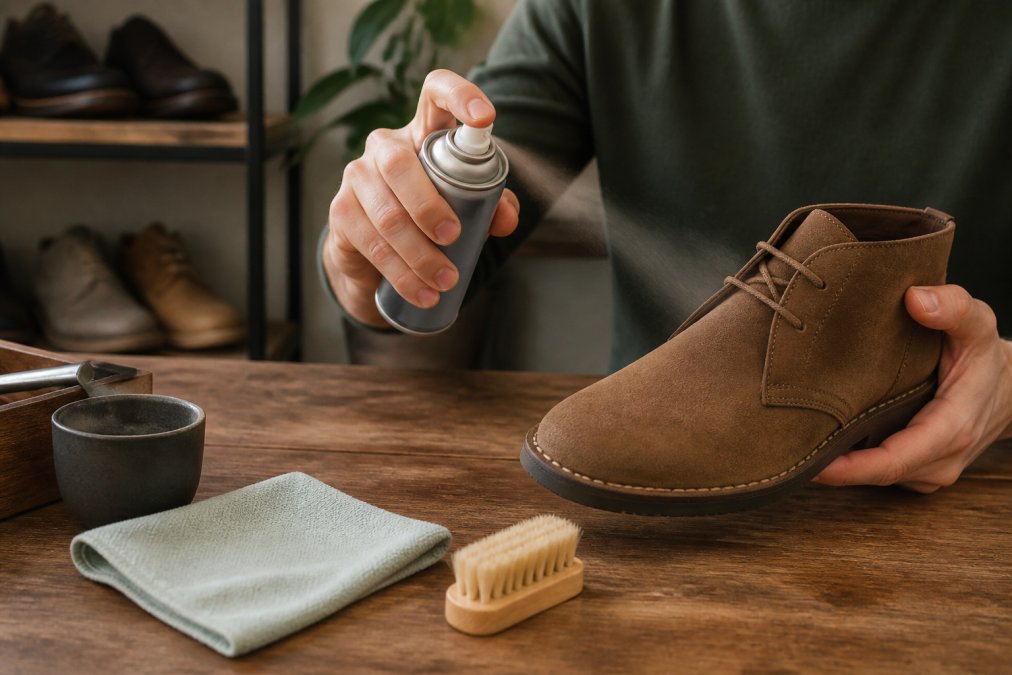
What you'll need:
- Suede protector spray
- A suede brush or crepe brush
- A soft, absorbent cloth
- Newspaper or a drop cloth
How to Remove Salt Stains From Suede After Winter Walks
Diagnose the stain before you treat it:
| What you see | What it is | First move |
|---|---|---|
| White, crusty ring at the edges | Dried road salt | Brush off dry first, then vinegar blot |
| Dark, spreading patch | Water saturation | Air-dry fully, then brush; do not wet again |
| Brownish tide line | Salt plus dirt wicked to the surface | Vinegar blot, then suede eraser |
| Greasy, dark spot | Oil or slush residue | Cornstarch draw-out, then brush |
| Stiff, discolored panel | Salt left too long | Deep clean plus conditioning |
The vinegar method, done correctly:
- Let the shoes air-dry away from direct heat. Never treat damp suede.
- Brush off any dry salt crust with a suede brush before adding liquid. Adding vinegar to a salt crust just drives the salt deeper.
- Mix one part white vinegar with one part water. Do not strengthen the ratio, full-strength vinegar can strip dye.
- Dampen a cloth and blot the stain, don't rub. Work from the outside of the stain inward so you don't spread the ring.
- Let it dry completely, then brush the nap back up.
- Repeat if a white ring remains, but give the shoe a full day to dry between attempts.
What not to do:
- Don't use a hair dryer, radiator, or direct sun. Fast drying is what creates the stiff, discolored panels that never fully recover.
- Don't scrub with pressure. It pushes salt deeper and can leave a permanent discolored ring.
- Don't use baking soda paste on colored suede. It is abrasive and can leave a chalky residue in the nap.
If a stain has been on the shoe for weeks and the vinegar method does not lift it, treat it as a restoration job rather than a spot clean, see the post-winter restoration steps below.
Suede Maintenance Tips for Winter: Brushing, Drying, and Rotation
Suede maintenance tips for winter come down to three habits: brush often, dry slowly, and rotate your pairs. These small routines prevent most of the damage people try to fix later.
- Brush weekly with a suede brush to keep the nap lifted and stop dirt from settling.
- Air-dry naturally, away from radiators and heaters, which crack the leather.
- Rotate your shoes so each pair gets a full day to dry out.
- Use shoe trees to hold the shape and soak up leftover dampness.
- Store clean and dry, never while still damp.
What to Do If Your Suede Gets Soaked or Stained
Soaked suede needs slow, gentle drying, not heat. Fast drying stiffens the leather and locks in water marks, so patience is the whole game here.
Follow these steps:
- Blot off surface water with an absorbent cloth.
- Stuff the shoes with newspaper or shoe trees to hold their shape.
- Let them air-dry at room temperature, away from sun and heat.
- Once dry, brush the nap to restore the surface texture.
- Reapply protector before the next wear.
Post-Winter Deep Restoration for Suede Footwear
Post-winter restoration brings tired suede back to life after months of salt, slush, and grit. This is the step most guides skip, and it's where a pair either recovers or stays looking worn.
- Clean to remove salt and grit
- Condition to restore softness
- Re-protect to rebuild the barrier
- Brush to refresh the surface
Natural vs. Synthetic Sealants: Which Lasts Longer?
Natural and synthetic sealants protect suede differently, and the right pick depends on how you use your shoes. Synthetic formulas, including silicone-based and fluoropolymer options, tend to last longer and resist water and stains more strongly. Natural and eco-friendly alternatives use fewer harsh chemicals but often need more frequent reapplication.
| Sealant Type | Water Resistance | Reapply | Best For |
|---|---|---|---|
| Silicone-based | Strong | Every few weeks | Wet, snowy winters |
| Non-silicone | Moderate | Monthly | Everyday wear |
| Eco-friendly | Light | Often | Light rain, mild climates |
| Fluoropolymer | Very strong | Every few weeks | Heavy salt and slush |
Frequently Asked Questions
Can suede footwear be worn in the rain?
Suede can be worn in light rain if it has been treated with a quality suede protector spray, which creates a water-repellent barrier. However, prolonged exposure to heavy rain will eventually soak through and damage the nap. Always check the weather, apply a fresh coat of protector before the season starts, and carry a small absorbent cloth to blot moisture immediately after exposure.
What is the best water repellent spray for suede?
The best suede protector spray for your shoes depends on the material and your priorities. Silicone-based sprays offer strong water repellency but can darken some suedes. Non-silicone, solvent-based protectors are gentler on delicate nap and breathe better. Look for a spray specifically labeled for suede and nubuck, test it on a hidden area first, and reapply every few weeks during wet weather.
How often should you reapply suede protector?
Reapply suede protector every two to four weeks during heavy rain or snow season, and always after cleaning or deep brushing. If water stops beading on the surface, it is time for a fresh coat. For occasional wear in mild conditions, one application at the start of the season and another midway through is usually enough to maintain a protective barrier.
Does snow damage suede permanently?
Snow itself does not permanently damage suede if you act quickly. The real threats are salt stains from treated sidewalks and moisture that dries without proper air circulation, which can stiffen the nap and cause discoloration. Brush off snow before it melts, blot any dampness with an absorbent cloth, and let shoes air-dry away from direct heat to prevent lasting harm.
Winter throws rain, salt, and slush at your footwear, and suede takes the hit harder than almost any other material. The fix isn't complicated: pick the right protector, apply it properly, and keep up a simple brushing and rotation routine. For footwear made to hold up season after season, Vinthentic offers handcrafted leather shoes built for everyday comfort and timeless style. Get started with Vinthentic and step into winter with confidence.
Read more

Where Do 50 Year Old Men Shop for Clothes?
Wondering where do 50 year old men shop for clothes? Discover timeless style tips, wardrobe essentials, and a capsule wardrobe checklist. Start building.
Read more
How to Start an Ethical Men's Wardrobe: 2026 Guide
Learn how to start an ethical men's wardrobe in 2026 with capsule essentials, sustainable fabrics, mending tips, and Vinthentic's timeless footwear. Start.
Read more