
Article: Best Websites for Buying Vintage Men's Clothing
Best Websites for Buying Vintage Men's Clothing
Table of Contents
- Quick Comparison: What to Look for in Vintage Men's Clothing Websites
- How to Shop for Vintage Menswear Online
- Is Vintage Fashion Still in Style for Men?
- Vintage Clothing Sizing Guide: How to Get the Right Fit
- Best Websites for Buying Vintage Men's Clothing: What to Look For
- Essential Vintage Wardrobe Staples for Men
- Condition Grading and Authentication: What Buyers Need to Know
- Conclusion
- Frequently Asked Questions
Last Updated: September 18, 2026
Quick Comparison: What to Look for in Vintage Men's Clothing Websites
The best websites for buying vintage men's clothing share four traits: transparent condition grading, real garment measurements, a workable return policy, and evidence of provenance. This guide from Vinthentic breaks down how to judge any seller against those standards.
Buying vintage men's clothing online is a research exercise, not a gamble. Sites that earn repeat customers publish measurements, grade flaws honestly, and accept returns.
What most buyers get wrong is chasing rare finds before they understand sizing.
| What to Check | Why It Matters | Red Flag |
|---|---|---|
| Condition grade | Sets expectations on wear | No grade given |
| Listed measurements | Vintage sizing runs small | "Fits like a medium" only |
| Return window | Protects your money | Final sale on everything |
| Provenance notes | Confirms authenticity | Vague era claims |
| Fabric content | Natural fibers age better | No material listed |
How to Shop for Vintage Menswear Online
Shopping for vintage menswear online comes down to three checks: measurements, condition grade, and return policy. Skip any one and you're buying blind.

Key Factors: Condition Grading, Provenance, and Return Policies
Condition grading is the seller's written assessment of wear, usually ranked from deadstock or new-old-stock down through excellent, good, fair, and as-is. A trustworthy listing names every flaw: a missing button, a faint stain, thinning at the elbow.
Is Vintage Fashion Still in Style for Men?
Yes. Vintage fashion for men has moved from niche hobby to mainstream wardrobe strategy, and the reason is durability: earlier decades used denser wool, heavier cotton, and full-grain leather that outlast fast fashion.
Why Timeless Pieces Outlast Fast Fashion Trends
Timeless pieces survive because their design isn't tied to a season. A plaid flannel shirt, a plain leather jacket, a pair of cap-toe boots: none look dated in two years.

Vintage Clothing Sizing Guide: How to Get the Right Fit
Vintage sizing is the single biggest source of returns. Ignore the tag and trust the tape: vintage garments were cut to different body standards, and decades of washing shrink natural fibers further.
Here's how to convert what you find:
- Jackets and coats: Compare pit-to-pit measurement doubled against your chest size, then add room for layering.
- Shirts: Check shoulder-to-shoulder first. If it's more than 2 cm off your best-fitting shirt, the drape will look wrong.
- Trousers: Ask for waist, inseam, and rise measured flat. Vintage rises are often higher than modern cuts.
- Knitwear: Natural fibers relax with wear. A slightly snug sweater will loosen; a tight one won't.
- Footwear: Vintage boots break in around the foot, so a half-size down from your sneaker size is often right.
Best Websites for Buying Vintage Men's Clothing: What to Look For
The best websites for buying vintage men's clothing fall into four tiers, each with a different risk profile. Knowing your tier matters more than any brand name, because it determines who grades the condition, who measures the garment, and who eats the cost when something goes wrong.
How to Evaluate Any Platform Before You Spend
Run every unfamiliar site through this five-point check. Fail two or more and walk away.
- Condition grade on every listing. A named grade (deadstock, excellent, good, fair, as-is) plus a written flaw list. "Great vintage condition" with no specifics is not a grade.
- Flat measurements, not tag sizes. Pit-to-pit, shoulder-to-shoulder, sleeve length, total length, waist, inseam, and rise. If the listing only says "fits like a medium," the seller is guessing.
- Return window stated in writing. A published number of days, who pays return shipping, and whether the window applies to sale items. Peer-to-peer platforms frequently leave this to the individual seller, so read the specific listing, not the platform's general policy.
- Provenance detail. Era-specific evidence the seller can point to: a label style, a union tag, a zipper brand, a fabric content tag. Sellers who know their inventory describe these without prompting.
- Payment method with recourse. Credit cards and established payment processors give you a dispute path. Direct transfers and gift cards do not.
Regional Sourcing: Where a Site Ships From Changes What You Get
Most guides ignore this, but the region a seller sources from shapes both style and practical cost.
Vinthentic Mens Vintage Plaid Shirts →
- Domestic sellers ship faster, avoid customs delays, and are easier to return to. If you need a piece for a specific event, buy domestic.
- Sellers sourcing American workwear tend to carry heavier denim, chore coats, and work boots cut for a boxier frame.
- Sellers sourcing European tailoring tend to carry sharper shoulders, higher armholes, and slimmer trousers, but sizing runs smaller and returns across borders are expensive.
Investment Pieces: Which Vintage Items Hold Their Value
Not all vintage appreciates. Pieces that hold or gain value share four traits:
- Recognizable heritage branding with documented era-specific labels.
- Rare or discontinued models that collectors actively hunt.
- Excellent or better condition, ideally with original hardware and packaging.
- A documented provenance story, original receipt, box, or owner history.
Essential Vintage Wardrobe Staples for Men
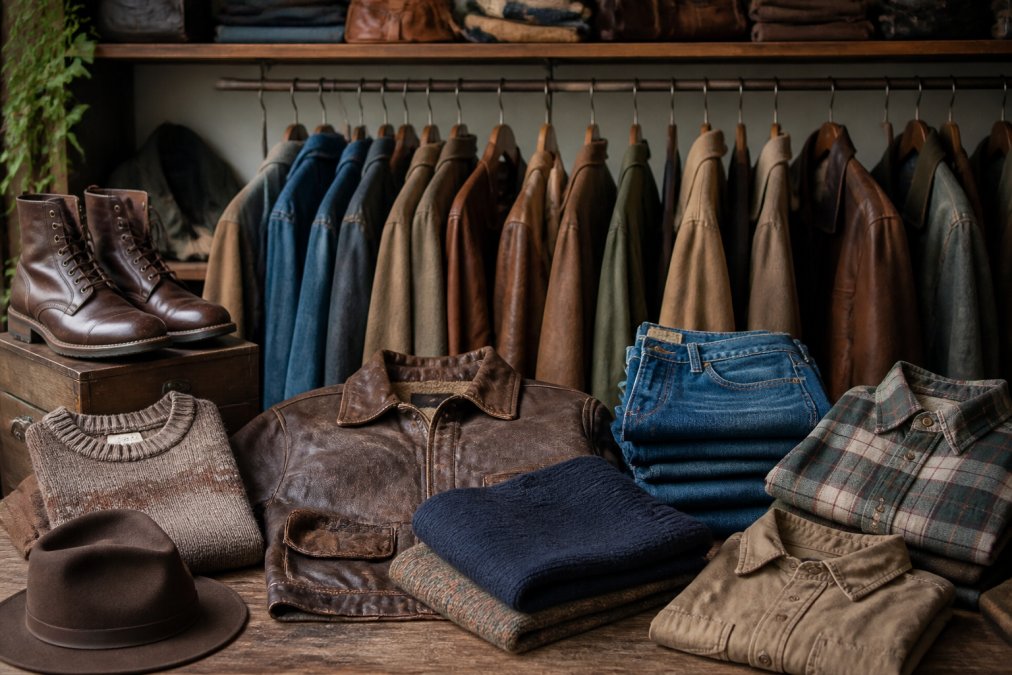
Five pieces cover almost every situation: a plaid flannel or button-up shirt, a leather jacket, leather boots, a wool overcoat, and one pair of well-cut trousers. Build around those and you can dress for work, weekends, and evenings from the same closet.
Condition Grading and Authentication: What Buyers Need to Know
Condition grading and authentication separate confident vintage buyers from people who get burned. Both are learnable and take about ten minutes per listing once you know what to check.
A Standardized Condition Scale You Can Apply to Any Listing
Sellers use inconsistent language, the single biggest source of buyer disappointment. Use this five-point scale to translate any listing into something you can evaluate.
- Deadstock / New Old Stock (NOS). Never worn, often with original tags or packaging. Expect no flaws. If a seller claims deadstock but shows wear at the collar or cuffs, the grade is wrong.
- Excellent. Worn but with no visible flaws. Original hardware intact, no repairs, color unfaded. This is the highest grade most wearable vintage reaches.
- Good. Minor, disclosed flaws: a faint stain, slight thinning at an elbow, a replaced button. Structurally sound and wearable as-is.
- Fair. Visible flaws that affect wear or appearance: a small hole, noticeable fading, a loose seam. Wearable, but expect to repair or accept the flaw.
- As-is / Project. Significant damage: major stains, tears, missing hardware, or structural failure. Priced for repair or salvage.
Authentication: Decade-Specific Tells
Authentication is about matching construction details to the era the seller claims. Check three things in this order.
How to Ask the Right Questions Before You Buy
Send the seller a short, specific message. Sellers who answer clearly are usually the ones worth buying from.
- "Can you confirm the flat pit-to-pit and shoulder-to-shoulder measurements?"
- "Are there any flaws not visible in the photos?"
- "What era is this from, and what label detail supports that?"
- "What is your return window, and who pays return shipping?"
Conclusion
The hardest part of buying vintage men's clothing online isn't finding pieces. It's finding sellers who measure honestly, grade condition properly, and stand behind what they ship.
Frequently Asked Questions
What are the best sites for buying vintage men's clothing?
The best sites for vintage men's clothing combine clear condition grading, accurate measurements, and buyer protection. Look for curated boutiques that specialize in vintage menswear, peer-to-peer marketplaces with seller ratings, and brand-owned vintage-inspired collections. Prioritize platforms that provide detailed photos, fabric content, and return policies. Vinthentic offers vintage-inspired plaid shirts and leather boots with transparent sizing and quality materials.
How do I determine the authenticity of vintage clothing online?
Check the label construction, stitching quality, and material composition. Authentic vintage garments often have older brand tags, union-made labels, or specific era markers like single-stitch seams. Ask sellers for close-up photos of tags, zippers, and buttons. Research heritage brands and their historical labeling. For designer archival pieces, request provenance documentation. Reputable sellers welcome these questions and provide detailed answers.
What should I look for when buying vintage menswear?
Focus on garment condition, measurements, and fabric quality. Look for signs of wear like thinning elbows, faded colors, or repaired seams. Request exact measurements (chest, waist, inseam) rather than relying on marked sizes. Natural fibers like cotton, wool, and leather age better than synthetics. Check for missing buttons, broken zippers, or lining damage. A good seller will disclose flaws upfront and offer returns.
How do I measure myself correctly for vintage clothing?
Use a flexible measuring tape and measure over lightweight clothing. For shirts, measure chest at the fullest point, shoulder seam to shoulder seam, and sleeve length from shoulder to wrist. For pants, measure waist at your natural waistline and inseam from crotch to hem. Compare your measurements to the garment's flat measurements, not the tagged size. Vintage sizing runs smaller, so always size up if between sizes.
Is vintage fashion still in style for men?
Yes, vintage fashion remains a strong style choice for men. The sustainable fashion movement and interest in quality craftsmanship keep vintage relevant. Classic pieces like plaid flannel shirts, leather boots, and denim jackets never go out of style. Men aged 30-50 increasingly seek heritage brands and investment pieces that outlast fast fashion. Vintage offers unique character and patina that new clothing cannot replicate.
Read more
Durable Leather Goods for Everyday Use: 10 Best Picks
Discover durable leather goods built to last. Compare handcrafted shoes, loafers, and accessories with genuine leather construction. Find your everyday.
Read more