
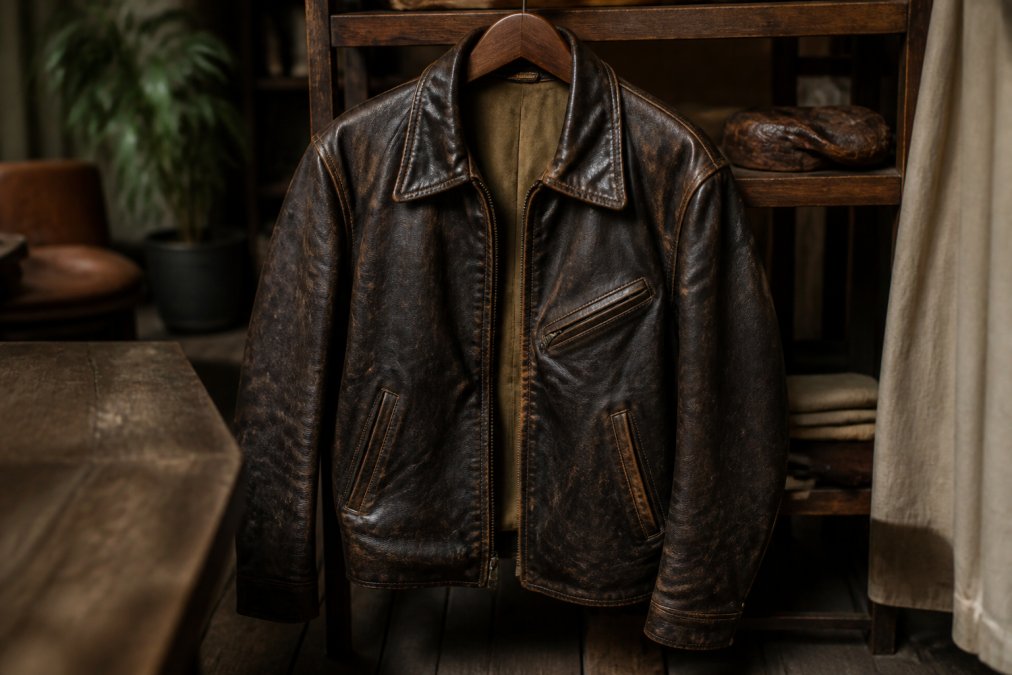
Is Vintage Leather Jacket Quality Worth the Price?
Table of Contents
- Why Vintage Leather Jacket Quality Commands a Higher Price
- How to Identify Full Grain Leather Before You Buy
- Signs of High Quality Leather Construction in Vintage Jackets
- Cost-Per-Wear Analysis: Vintage vs. Fast Fashion
- Vintage Leather Jacket Restoration Tips and Preservation
- The Hidden Risks: Dry Rot and Chemical Degradation
- Vintage Sizing and Fit: What Buyers Need to Know
- Conclusion
- Frequently Asked Questions
Last Updated: September 25, 2026
Why Vintage Leather Jacket Quality Commands a Higher Price
A vintage leather jacket often costs more than a new fast-fashion alternative, and the gap comes down to hide quality, construction, and how the leather ages. This guide from Vinthentic breaks down what actually justifies the price. Vintage leather jacket quality is worth the price when the hide is full-grain, the construction is sound, and the jacket still has decades of wear left.

The Role of Hide Thickness and Tanning Process
Thicker hides and slower tanning methods produce leather that holds its shape for decades. A tanning process that preserves the natural fibers, rather than stripping them, keeps the material supple instead of brittle.
How to Identify Full Grain Leather Before You Buy
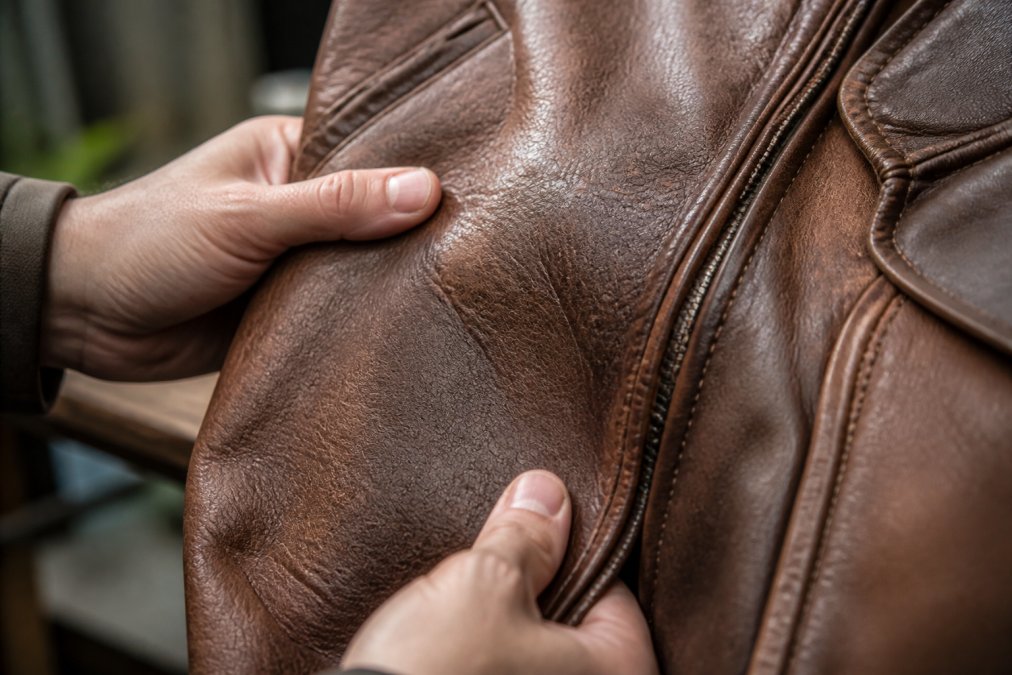
You can identify full-grain leather by checking the grain texture and running a surface abrasion test. Full-grain shows natural variation, visible pores, and slight imperfections. If the surface looks uniform and plastic-like, it has been corrected or coated.
Grain Texture and Surface Abrasion Tests
A simple abrasion test tells you a lot. Rub the leather with a damp cloth. Full-grain darkens slightly and recovers; coated leather can flake or dull. Check the hide quality across panels, since wear concentrates at the elbows and collar.
Signs of High Quality Leather Construction in Vintage Jackets
High-quality construction shows in the stitching, hardware, and lining. Look for even stitch density, tight seam integrity, and clean finishing at stress points. Loose threads or skipped stitches at the shoulders and armpits signal a jacket that will fail under regular wear.
Hardware Quality: Brass Zippers and Seam Integrity
Hardware quality is one of the fastest ways to judge a vintage piece. Brass zippers that glide smoothly and show a warm patina are a strong indicator. Cheap pot-metal zippers corrode, stick, and break.
| Feature to Check | Good Sign | Warning Sign |
|---|---|---|
| Grain texture | Natural variation, visible pores | Uniform, plastic-like surface |
| Zippers | Smooth brass, warm patina | Sticky, corroded pot metal |
| Stitching | Even density, tight seams | Skipped stitches at stress points |
| Lining | Intact or cleanly replaceable | Torn, exposing rough seams |
| Edges | Fibrous cross-section | Painted or sealed shut |
Cost-Per-Wear Analysis: Vintage vs. Fast Fashion
Cost-per-wear is the clearest way to judge whether the price is justified, and it is the calculation most buying guides skip because it forces them to commit to real numbers. Divide the purchase price by the number of times you expect to wear the jacket. The result reframes the question from "is this expensive?" to "what does each wear actually cost me?"
Running the Numbers
Consider two jackets worn three times a week during a five-month jacket season, roughly 65 wears per year.
| Vintage full-grain leather | Fast-fashion synthetic | |
|---|---|---|
| Purchase price | $150 | $150 |
| Realistic lifespan | 15-20 years with care | 1-2 years before seams, coating, or zipper fail |
| Total wears | ~975-1,300 | ~65-130 |
| Cost per wear | ~$0.12-$0.15 | ~$1.15-$2.30 |
The Variables That Actually Move the Number
Cost-per-wear is only as honest as its inputs. Three factors swing the result more than anything else:
- Lifespan assumption. A well-cared-for full-grain jacket can plausibly outlive its first owner. A coated or bonded-leather jacket often delaminates within a couple of seasons. The gap between those lifespans is where the entire argument lives.
- Conditioning cost. Budget for conditioner and occasional professional care. A bottle of quality leather conditioner runs a modest amount and lasts years, so the per-wear impact is negligible, but skipping it shortens lifespan and quietly raises your real cost per wear.
- Resale value. This is the variable competitors ignore. A quality vintage leather jacket frequently holds or gains value. A fast-fashion jacket is worth close to nothing the moment it is worn. If you eventually sell the vintage piece for what you paid, or more, your effective cost per wear can approach zero.
When Vintage Does Not Win
Cost-per-wear is not a blanket endorsement. A vintage jacket with early dry rot, a failed lining you must replace immediately, or a fit that means you rarely reach for it will lose the math badly. The calculation only works when the hide is sound, the construction holds, and you actually wear the thing. That is why the condition checks in this guide matter as much as the price tag: a cheap jacket you never wear has an infinite cost per wear.
Vintage Leather Jacket Restoration Tips and Preservation
Vintage leather jacket restoration tips start with a gentle clean and a quality leather conditioning routine. Wipe the surface with a damp cloth, let it dry away from direct heat, then apply a thin layer of conditioner. Conditioning restores suppleness and slows cracking.
When to Restore and When to Preserve
Restore when the damage is structural: failed seams, a broken zipper, or a torn lining. Preserve when the wear is cosmetic: surface scuffs, light fading, or a developing patina. Aggressive restoration can strip the character that made the jacket worth buying.
Over-cleaning is the most common mistake. Harsh soaps and solvents strip the natural oils from the hide, which speeds up dry rot and causes permanent cracking. Clean sparingly and condition instead.
The Hidden Risks: Dry Rot and Chemical Degradation
Dry rot is the single biggest risk when buying vintage leather, and it is not always visible on the surface. Unlike a scuff or a faded panel, dry rot is a structural failure, the hide has lost the internal cohesion that lets it flex without tearing. A jacket can look perfectly intact on a hanger and still split across the back the first time you reach for a steering wheel.
What Actually Happens Inside the Hide
Leather is a collagen matrix, protein fibers woven together and held supple by natural oils and fats introduced during tanning. Over decades, those oils migrate, evaporate, or oxidize. When the fiber bundles lose their lubricating fats, they stop sliding past each other under stress and start snapping instead. That is chemical degradation: the hide is not dirty, it is structurally compromised.
Three storage conditions accelerate the process:
- Sustained heat (attics, garages, car trunks in summer) drives oils out of the hide faster than they can be replaced.
- Low humidity pulls residual moisture from the fibers, leaving them brittle and papery.
- Cycling damp and dry (basements, unheated closets) causes the fibers to swell and shrink repeatedly, which micro-fractures the collagen over years.
How to Test for Dry Rot Before You Commit
You cannot fully assess dry rot from photos. Ask the seller to perform these checks, or do them yourself before money changes hands:
- The flex test. Gently bend the leather at the elbow and underarm, the two highest-stress zones. Healthy vintage leather flexes with resistance and returns to shape. Degrading leather crackles audibly, feels papery, or shows fine surface cracks that do not close when released.
- The pinch test. Pinch a fold of leather between thumb and forefinger and roll it. Good hide feels dense and slightly waxy. Dry rot feels thin, dry, and almost like stiff cardboard.
- The edge check. Look at a cut edge (inside a seam allowance or under the collar). Healthy leather shows a fibrous, cohesive cross-section. Degraded leather crumbles or sheds fibers when rubbed.
- The smell test. A sour, musty, or acrid smell can indicate mold damage or long-term moisture exposure, both of which often accompany rot.
The Dealbreaker Line
Early-stage dryness, leather that feels stiff but flexes without cracking, is treatable with conditioning and careful rehydration. True dry rot, where the leather crackles or sheds fibers, is not. Most experienced buyers treat crackling at the elbows or underarms as a hard no, regardless of how good the rest of the jacket looks. That single test protects you from the most expensive mistake in vintage leather buying.
Vintage Sizing and Fit: What Buyers Need to Know
Vintage sizing runs smaller than modern sizing, and it varies by decade and maker. A vintage size 40 is not the same as a modern size 40. Always ask for flat measurements: chest, shoulder, sleeve length, and back length. Compare those numbers to a jacket you already own.
Conclusion
Buying vintage leather is a judgment call, and the price only makes sense when the hide, construction, and condition hold up. Learn to read the grain, test for dry rot, and run the cost-per-wear math, and you will know within minutes whether a jacket earns its price. When you want vintage craftsmanship without the guesswork, Vinthentic offers genuine leather pieces built for everyday wear, including the Hamilton Crest Leather Vintage Jacket with aged leather and durable metal zippers, the Retro Faded Cowhide Genuine Leather Jacket in top-layer cowhide, and the Urban Slim Fit Leather Coat with a vintage urban finish.


Frequently Asked Questions
How can you tell if a vintage leather jacket is high quality?
Check the grain texture for natural imperfections, which indicate full-grain leather. Look at seam integrity and stitch density, and test hardware quality like brass zippers. Squeeze the leather; it should feel supple, not stiff or cracking. A high-quality vintage leather jacket will have a consistent patina and no signs of dry rot or structural weakness.
Is vintage leather more durable than modern mass-produced leather?
Often, yes. Older hides were frequently thicker and tanned with denser fibers, giving them better structural integrity. However, condition matters more than age. A well-maintained vintage leather jacket can outlast many new ones, but one with chemical degradation or dry rot may fail quickly. Inspect for cracking and suppleness before buying.
Are vintage leather jackets worth the cost of restoration?
It depends on the jacket's baseline quality. If the leather is full-grain and the damage is limited to lining replacement or hardware, restoration can be cost-effective. But if dry rot or deep cracking is present, restoration may not be viable. Compare restoration costs against the resale value and cost-per-wear of a replacement.
What should you look for when buying a pre-owned leather jacket?
Inspect for suppleness, uniform color, and intact stitching. Check the lining condition and hardware quality. Ask about the tanning process and hide thickness if available. Avoid jackets with a strong chemical smell or flaking surface, which indicate degradation. Always verify the return policy before purchasing online.
Does vintage leather require special maintenance compared to new leather?
Yes. Vintage leather often needs conditioning more frequently to prevent cracking and maintain suppleness. Use a leather conditioner every 6-12 months, and store the jacket on a wide hanger away from direct sunlight. Address lining replacement or seam repairs promptly to avoid further damage. Proper care preserves both wearability and resale value.
Read more
Best Durable Leather Belts for Heavy Duty Everyday Wear
Find the best durable leather belts for heavy duty everyday wear. Compare full-grain options, thickness, and hardware to pick a belt that lasts. Explore.
Read more
5 Best Eco-Friendly Men's Workwear Brands for 2026
Discover the 5 best eco-friendly men's workwear brands for 2026. Compare pricing, durability, and ethical standards. Find your sustainable work wardrobe.
Read more