
Article: Is Ergonomic Footwear Worth the Investment?
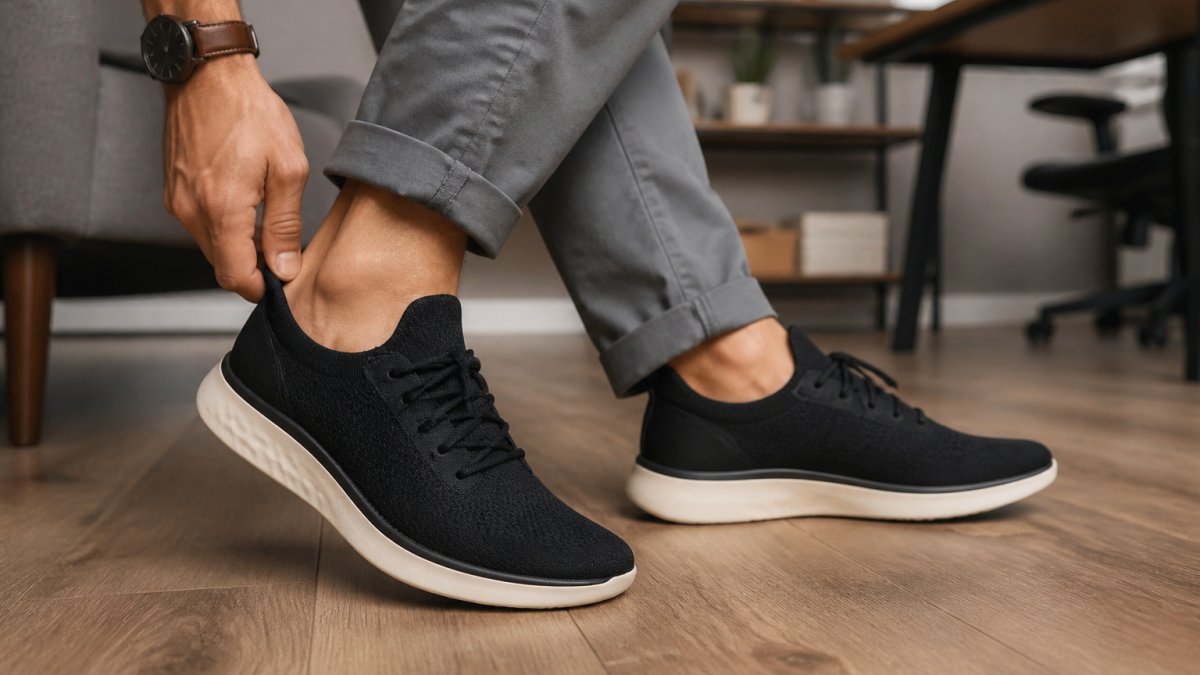
Is Ergonomic Footwear Worth the Investment?
Table of Contents
- The Real Cost of Ergonomic Footwear: Breaking Down the Investment
- Benefits of Ergonomic Footwear That Actually Impact Your Day
- Ergonomic Shoes vs. Regular Shoes: What the Difference Means for Your Feet
- Best Shoes for Standing All Day: What to Look For
- How to Choose Ergonomic Shoes That Fit Your Life
- Who Should Skip the Investment (and When to See a Professional)
- Vinthentic Picks: Ergonomic Footwear That Blends Style and Support
- Conclusion: Making the Investment Decision That Fits Your Feet
- Frequently Asked Questions
Last Updated: October 4, 2026
The Real Cost of Ergonomic Footwear: Breaking Down the Investment
A good pair of ergonomic shoes costs more than a basic pair, and that gap is the whole question. At Vinthentic, shoppers constantly ask whether ergonomic footwear is worth the investment.
Ergonomic footwear is built around the natural shape and movement of the human foot, using arch support, cushioning, and a flexible sole to reduce strain during long periods of standing or walking.
So judge shoes by their construction, not their label. The American Podiatric Medical Association guidance on footwear points to fit, support, and cushioning as the factors that actually affect foot health, which is where we start our cost breakdown.
Upfront Price vs. Long-Term Value
The sticker price is only one number in the equation. A cheap shoe that loses its cushioning in a few months often costs more per mile than a well-built pair that holds its shape for a year or longer.
Here is how we think about the trade-off:
| Factor | Budget Shoes | Ergonomic Shoes |
|---|---|---|
| Upfront cost | Lower | Higher |
| Cushioning lifespan | Shortens quickly | Holds shape longer |
| Replacement frequency | More often | Less often |
| Cost per month of wear | Often comparable | Often lower |
| Foot fatigue during long shifts | Common | Reduced |
Not every premium shoe earns its price, though. A brand name proves nothing, look for a cushioned insole, a supportive midsole, and a sole that flexes where your foot bends.
Cost Per Wear: The Number Most Shoe Reviews Skip
Cost per wear is the most useful figure for this decision, and almost no product page shows it. Divide the purchase price by the days you realistically expect to wear the pair before the cushioning flattens or the outsole wears through.
Run the division with your own numbers:
- Estimate your wear days. Five days a week is roughly 250 wear days a year. Three days a week is roughly 150.
- Estimate lifespan. Budget shoes often need replacing within a season of heavy use; supportive shoes commonly last a year or longer.
- Divide price by wear days. A cheaper shoe replaced twice a year can land at a similar or higher cost per wear than a pricier shoe worn for a full year.
- Add the hidden costs. Replacement shipping, re-shopping time, and the productivity dip from sore feet are real costs even when they never appear on a receipt.
So "is it worth it" is not a flat yes, it is a calculation, and it usually favors supportive footwear only when your wear days are high.
What Drives the Price Difference
The premium comes from specific inputs, not the word on the box:
- Midsole material. Denser foams and molded midsoles cost more and hold their shape longer than soft foams that compress within weeks.
- Footbed construction. A contoured, removable footbed with real arch geometry costs more than a flat insert.
- Outsole compound. Rubber outsoles that grip smooth floors and resist abrasion extend usable life.
Durability and When to Replace
Even a well-built pair has a service life. Watch for these signals that the cushioning has given out:
- The insole no longer springs back when you press it.
- You feel the floor through the ball or heel of the foot.
- The midsole shows visible compression lines or creasing that does not recover.
Rotating two pairs extends the life of both, because foam recovers between wears, often cheaper over a year than replacing one pair more frequently.
Benefits of Ergonomic Footwear That Actually Impact Your Day
Most marketing promises about comfort are vague. The benefits that show up in daily life come down to how your feet feel at hour eight, how your knees and lower back handle a long shift, and whether you dread putting your shoes on in the morning.
Reduced Foot Fatigue and Pain
Foot fatigue is the dull ache that builds through a day of standing, caused by pressure that never gets redistributed. Ergonomic design spreads that load across the whole foot instead of concentrating it in the heel and ball.
Memory foam insoles and contoured footbeds mold to your foot over time and cushion the spots that take the most punishment.
Better Posture and Joint Support
Your feet are the base of your posture. When they roll inward or collapse, the effect travels upward through your ankles, knees, and hips. Supportive footwear gives that chain a stable foundation.
The connection is mechanical: a shoe that holds your arch neutral keeps your weight centered, which can ease strain on joints higher up the chain, though results vary.
Ergonomic Shoes vs. Regular Shoes: What the Difference Means for Your Feet
The practical difference between ergonomic shoes and regular shoes comes down to three things: arch support, cushioning, and flexibility.
Regular shoes are built for looks or a low price point, often with a thin, rigid sole and a flat footbed that offers no arch support.
The difference is most obvious when you stand still for hours. In a flat shoe, pressure builds in the same spots with no relief.
Best Shoes for Standing All Day: What to Look For
The best shoes for standing all day share a short list of features: cushioned insoles, real arch support, a flexible sole, and a fit that leaves room for your toes.
When you shop, check these in order:
- Cushioning: A memory foam or padded insole that absorbs impact under the heel and ball
- Arch support: A footbed that follows your arch instead of sitting flat
- Flexibility: A sole that bends at the ball of the foot, not the middle
Cushioning, Arch Support, and Flexibility
Cushioning handles shock absorption: every step sends force up through your leg, and a padded midsole spreads it out.
Arch support keeps your foot stable and prevents the inward roll that strains the ankle and knee over time.
Flexibility keeps your stride efficient. A rigid sole forces your foot to work harder with every step; one that flexes naturally eases foot fatigue.
How to Choose Ergonomic Shoes That Fit Your Life
Start with how you actually use your feet, not with the label on the box. A nurse on a twelve-hour shift and a commuter who walks two blocks have different needs, and the same shoe will not serve both well. The most useful approach is to compare shoes by use case using the same criteria every time, then verify fit before the return window closes.
Men's Orthopedic Mesh Walking Shoes Supportive Cushioned Footwear →
Compare by Use Case, Not by Brand
Most reviews discuss benefits in general terms. A side-by-side comparison by use case is more honest, because the feature that matters most changes with the job. Use the same criteria across every pair you consider: cushioning, arch support, flexibility, traction, breathability, and fit range.
| Use Case | Priority Feature | What to Avoid |
|---|---|---|
| Long shifts on concrete | Maximum cushioning and shock absorption | Thin, rigid soles with no midsole |
| Walking commutes | Flexible sole that bends at the ball of the foot | Stiff soles that fight your stride |
| Standing in one spot | Contoured arch support and even pressure distribution | Flat footbeds that concentrate pressure |
| Office and smart-casual | Supportive insole hidden inside a refined upper | Athletic styling that reads as gym wear |
| Travel and weekends | Lightweight construction and easy on-and-off | Heavy soles that tire you on long days |
Work through these questions before you buy:
- How many hours a day are you on your feet? Long shifts call for maximum cushioning and support.
- What surface do you walk on? Concrete floors demand more shock absorption than carpet.
- Do you have existing foot pain? Plantar fasciitis and flat feet change what support you need.
- How much room do you need? Toe room and width matter more than the size number.
- How often will you wear them? Daily wear justifies a higher price than occasional use.
Fit Assessment: Measure Before You Commit
Fit is where most people go wrong, and it is the one variable no product page can solve for you. Buy for the larger foot, shop late in the day when feet swell, and leave a thumb's width between your longest toe and the front of the shoe. A supportive shoe that fits badly will still cause pain.
A practical in-store or at-home check takes about two minutes:
- Heel lock. Your heel should not slide up when you walk. If it does, the shoe is too long or too loose.
- Arch contact. You should feel the footbed under your arch, not a gap and not a hard ridge pressing into it.
- Toe splay. Wiggle your toes. If they touch the sides, go wider.
Break-In: What Is Normal and What Is Not
Some adjustment is normal. A supportive footbed can feel firm or even slightly odd for the first few wears as your foot adapts to a different pressure pattern. What is not normal is sharp pain, numbness, tingling, or a hot spot that gets worse each time you wear the pair.
A reasonable break-in schedule is a few hours on day one, a half day on day two, and a full day by the end of the first week. If a pair still hurts after that, the problem is the fit or the design, not your feet.
Return Policies and Reducing Purchase Risk
An ergonomic shoe is a higher-stakes purchase, so the return policy matters as much as the shoe. Before you buy, confirm three things: the return window length, whether worn shoes qualify for return, and who pays return shipping. A generous try-on policy is worth more than a small discount, because it lets you test the fit under real conditions without locking in the cost.
If you cannot try before you buy, prioritize sellers with clear sizing guidance and free or low-cost returns. The cost of one return is almost always less than the cost of a pair you never wear.
Who Should Skip the Investment (and When to See a Professional)
Ergonomic footwear is not the right answer for everyone, and we would rather tell you that than sell you a pair you do not need.
There is also a limit to what any shoe can fix.
A few groups should think twice before spending more:
- Anyone with a diagnosed foot condition that needs custom orthotics
- People with diabetes or circulation problems, who need medical guidance on footwear
- Shoppers who want a quick fix for long-standing joint pain
If none of those apply and you are on your feet for hours, the math usually favors the investment. If any of them apply, talk to a professional first.
Vinthentic Picks: Ergonomic Footwear That Blends Style and Support
Style and support do not have to be a trade-off, and that belief shapes what we carry.
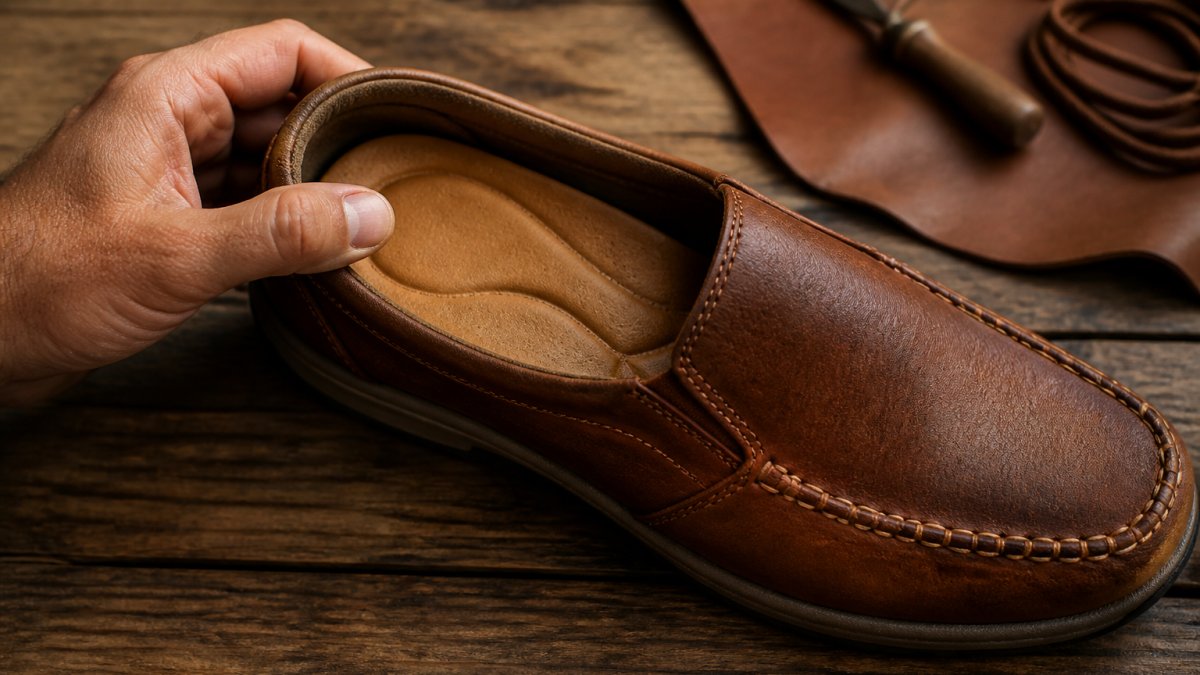
Here is how our picks line up by use case:
| Shoe | Price | Best For | Key Support Feature |
|---|---|---|---|
| Men's Orthopedic Mesh Walking Shoes | $54.95 | Long days on your feet | Memory foam insole, high-traction rubber sole |
| Men's Hand-Stitched Leather Casual Shoes | $49.95 | Office and smart-casual wear | Ergonomic cushioned insole, even pressure distribution |
| Vinthentic Dino Men's Barefoot Shoes | $44.99 | Natural movement and flexibility | Lightweight, flexible sole, breathable materials |
| Jacques Cézanne Breathable Mesh Slip-On Sneakers | $49.99 | Easy on-and-off daily wear | Cushioned insole, flexible outsole |
| Men's Lightweight Knit Slip-On Casual Shoes | $52.95 | Travel and weekends | Contoured padded footbed, flexible rubber outsole |
Our top pick for standing all day is the Men's Orthopedic Mesh Walking Shoes.


For a dressier setting, the Men's Hand-Stitched Leather Casual Shoes carry an ergonomic cushioned insole that spreads pressure evenly, which supports foot health through all-day wear.
If you want the closest thing to barefoot freedom, the Dino Barefoot Shoes use a flexible sole and breathable materials for unrestricted movement.
Conclusion: Making the Investment Decision That Fits Your Feet
The question of whether ergonomic footwear is worth the investment has a clear answer once you know your own numbers. If you stand or walk for hours each day and replace cheap shoes often, supportive footwear usually pays for itself in comfort and longevity.
Judge each pair on construction, not marketing. Cushioning, arch support, flexibility, and fit are the features that change how your feet feel at hour eight.
Frequently Asked Questions
Are ergonomic shoes worth the extra cost?
It depends on how much time you spend on your feet. If you stand or walk for hours daily, ergonomic footwear can reduce foot fatigue and support better posture, making the investment worthwhile. For occasional wear, a standard pair may suffice. Consider cost per wear: a $50 pair worn 200 times costs 25 cents per use, while a $30 pair worn 50 times costs 60 cents per use. The better value often lies in the shoe you actually wear.
What are the benefits of ergonomic footwear?
Ergonomic footwear is designed to support your foot's natural shape, absorb shock, and distribute pressure evenly. Benefits include reduced foot fatigue, less joint strain, improved posture, and better stability during long periods of standing or walking. Features like arch support, cushioned insoles, and flexible soles work together to keep your feet comfortable and supported throughout the day, which can also help with common foot problems like plantar fasciitis.
How are ergonomic shoes different from regular shoes?
Ergonomic shoes are built with specific design elements: contoured arch support, shock-absorbing cushioning, and flexible soles that move with your foot. Regular shoes often prioritize style or cost over these features. The difference shows up in how your feet feel after hours of wear. Ergonomic options reduce pressure points and fatigue, while regular shoes may leave you sore. The gap is most noticeable if you have foot pain, flat feet, or stand all day.
Can ergonomic shoes help with foot pain?
Yes, for many common causes of foot pain. Ergonomic footwear with arch support and cushioning can relieve discomfort from plantar fasciitis, flat feet, and general fatigue. The key is choosing shoes that match your specific needs. For example, a supportive walking shoe with memory foam insoles can reduce impact, while a flexible barefoot-style shoe may help strengthen foot muscles over time. If pain persists, consult a podiatrist for personalized advice.
How long should a quality pair of ergonomic shoes last?
With regular wear, a quality pair of ergonomic shoes typically lasts 6 to 12 months. Signs it's time to replace them include worn-out soles, flattened cushioning, and returning foot pain. Rotating between two pairs can extend their life. Investing in durable materials, such as the high-quality leather and hand-stitched construction found in our Men's Hand-Stitched Leather Casual Shoes, can also improve longevity and long-term value.
Foot pain and fatigue build quietly, then show up when you least need them. At Vinthentic, we build footwear around genuine leather craftsmanship, handcrafted precision, and comfort-focused design, so you get support that lasts without giving up style. Our customers tell us the difference shows up on day one, not week three. Browse our collection and find the pair that fits how you actually move.
Shop NOW.
Read more
Why Traditional Tailoring Lasts Longer: A 2026 Guide
Traditional tailoring lasts longer because of canvas construction, natural fibers, and repairable seams. Here's how construction decides garment lifespan.
Read more