
Article: Luxury Leather Loafers: A 2026 Comparison Guide
Luxury Leather Loafers: A 2026 Comparison Guide
Table of Contents
- What Separates Luxury Leather Loafers From the Rest
- Side-by-Side Comparison: Vinthentic's Best Men's Leather Loafers
- Women's Leather Loafers and the Inclusive Fit Question
- Italian Leather Loafers: What You're Actually Paying For
- Fit, Sizing, and Break-In: Getting It Right the First Time
- How to Care for Leather Loafers So They Last Years
- Which Pair Belongs in Your Collection
- Frequently Asked Questions
Last Updated: October 6, 2026
What Separates Luxury Leather Loafers From the Rest
Luxury leather loafers are slip-on shoes made from high-grade hides, finished with stitched construction and hardware that holds up over years of wear. The difference between a pair worth keeping and a pair that falls apart in a season comes down to three things: the hide, the construction, and the fit. This guide from Vinthentic breaks down how to judge all three before you spend a dollar.

Most buyers focus on the label. The smarter move is to look at the leather itself. Full-grain and calfskin hold their shape and develop a patina; corrected-grain and bonded leather crack within months. That single distinction decides whether your luxury leather loafers look better in year three or worse.
Below, we will compare five pairs of men's loafers side by side, explain what Italian leather actually means, and cover fit, break-in, and care. The Footwear Distributors and Retailers of America guide to leather grades is a useful reference for understanding hide quality before you shop.
Leather Types That Actually Matter
Full-grain leather is the outermost layer of the hide, with the grain intact. It is the most durable and the most expensive. Calfskin is a younger hide with a finer, softer grain, which is why so many Italian loafers use it. Suede is the underside of the hide, buffed to a soft nap; it scuffs more easily but takes color beautifully. Corrected-grain leather has the surface sanded and stamped to hide flaws, and it wears faster than the real thing.
Smooth leather suits business attire and formal shoes. Suede leans casual. If you want one pair that does both, a brown smooth-leather loafer is the safer bet.
Side-by-Side Comparison: Vinthentic's Best Men's Leather Loafers
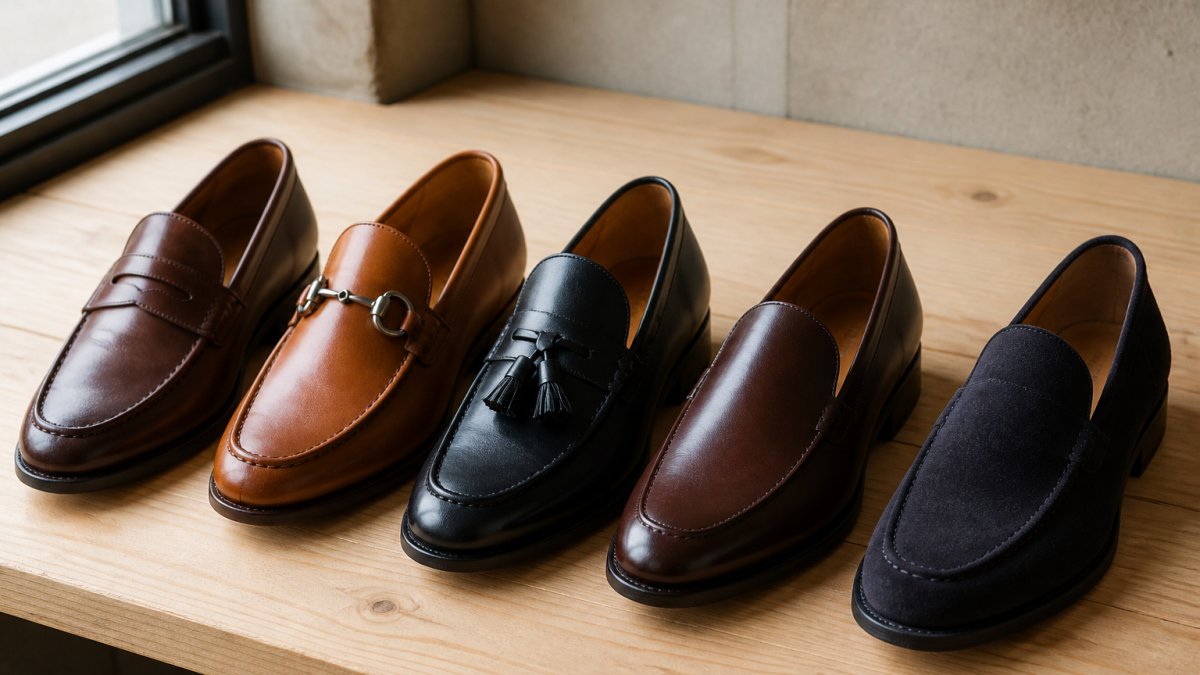
Our five men's leather loafers range from $54.99 to $114.99, all handcrafted with genuine leather and cushioned insoles. The differences come down to leather source, sole type, and support level. Here is how they compare.
| Loafer | Price | Leather | Standout Feature | Best For |
|---|---|---|---|---|
| Vinthentic Italiano | $54.99 | Italian leather | Cushioned insole | Best value |
| Vinthentic Romeo | $57.99 | Italian leather | Timeless silhouette | Everyday wear |
| Pietro Calzetta | $57.99 | Italian leather | Slip-resistant sole | Wet-weather commutes |
| Tuscan Men's | $99.99 | Italian leather | Slip-on ease | All-day comfort |
| Alessandro Allori | $114.99 | Genuine leather | Orthopedic arch support | Long days on feet |
Start with the Vinthentic Italiano Genuine Leather Loafers if you want the lowest entry point into genuine Italian leather. For a classic shape that works with business attire and casual wear alike, the Vinthentic Romeo Genuine Leather Loafers are our most versatile pick. If you stand for hours, the Alessandro Allori Genuine Leather Loafers add orthopedic support and arch cushioning worth the higher price.


The Pietro Calzetta Genuine Leather Loafers bring a durable slip-resistant sole that handles slick sidewalks better than a smooth leather sole. And the Tuscan Men's Genuine Leather Loafers sit in the middle on price with a clean, timeless design.
Women's Leather Loafers and the Inclusive Fit Question
Women's leather loafers follow the same rules as men's: leather quality and construction decide longevity, not the label. The fit question matters more, though. Loafers are slip-on shoes with no laces to adjust, so the wrong width means heel slip or pinching that never resolves. Look for a size range that maps clearly to your usual shoe size, and check the width before you commit.
A common mistake is sizing up to fix a tight toe box. That trades a tight fit for a loose one and makes the shoe flop. If the toe box pinches, the last is wrong for your foot, not the size.
Italian Leather Loafers: What You're Actually Paying For
Italian leather loafers cost more because of three inputs: the hide, the tannery process, and the handwork. Understanding each one tells you whether a given price is justified.
The hide. Italian tanneries buy raw hides from specific regions and grade them before tanning. A full-grain calfskin from a named tannery has fewer scars and a tighter grain structure than a generic hide, which is why it holds shape and patinas instead of cracking.
The tanning. Vegetable tanning uses plant tannins and takes weeks; it produces leather that ages with visible character and is favored for straps and structured uppers. Chrome tanning is faster and produces softer, more uniform leather, which is why most dress loafers use it.
The construction. This is where the price gap widens most:
- Blake stitch, a single internal stitch joins upper to sole. Flexible, lightweight, and resoleable by a cobbler. Common in Italian loafers.
- Blake Rapid, adds a second stitch through a midsole, making the shoe more water-resistant and more durable, at a higher cost.
- Goodyear welt, a ribbed welt is stitched to the upper and the sole is stitched to the welt. The most repairable construction, but bulkier and less flexible. Rare in loafers because the profile is thicker.
- Cemented (glued), upper is glued to the sole. Cheapest, lightest, and generally not resoleable. Common at the low end of the market.
A stitched sole can be repaired by a cobbler for a fraction of the shoe's price, while a glued sole usually cannot.
"Made in Italy" on its own is not a quality guarantee. What matters is whether the brand names the tannery, the leather grade, and the construction method.
Vinthentic Romeo Genuine Leather Loafers →
Fit, Sizing, and Break-In: Getting It Right the First Time
Good fit comes down to three checks: heel, arch, and toe. Your heel should sit locked with no slip. The arch should feel supported, not pressed. Your longest toe should sit about a finger's width from the front. Do these checks at the end of the day, when your feet are at their largest.
Break-in for genuine leather takes a short time if the fit is right. Wear them indoors for an hour or two on the first few days, then build up. Leather softens and molds to your foot, so a snug-but-comfortable pair becomes a perfect one. A pair that hurts on day one rarely gets better. Patience remains the most effective tool when you break in leather shoes, ensuring that the natural fibers yield to your stride rather than resisting it.
How to Care for Leather Loafers So They Last Years
Care is what separates a pair that lasts three years from one that lasts ten. The mechanism is simple: leather is skin, and like skin it loses moisture over time.
The four habits, in order of impact:
- Rest. Leather absorbs moisture from your foot during wear. Give each pair a full day to dry before wearing again. Rotating two pairs roughly doubles the life of each versus wearing one pair daily.
- Clean. Wipe smooth leather with a damp cloth after each wear to remove dust and salt. For suede, use a horsehair brush in one direction to lift the nap and remove surface dirt.
- Condition. Apply a cream or lotion conditioner every three to four weeks for smooth leather. Conditioner replaces the oils that keep the fibers supple. Over-conditioning is possible, a thin coat is enough; a heavy coat clogs the pores and attracts dirt.
- Protect. Use a suede protector spray on suede and a water-repellent treatment on smooth leather before the first wear and reapply seasonally. Neither makes the shoe waterproof; both buy you time in a sudden shower.
Smooth leather vs. suede, different rules:
- Smooth leather: cream conditioner, horsehair brush for buffing, wax polish for scuffs and shine. Polish builds a protective layer but should not replace conditioning.
- Suede: never use cream or wax, they mat the nap permanently. Use a suede brush, a suede eraser for scuffs, and a protector spray. Blot water spills immediately; do not rub.
Storage. Cedar shoe trees absorb moisture and hold the shoe's shape between wears. Avoid plastic trees, they trap moisture. Store in a dust bag away from direct sunlight, which fades dye and dries leather.
Weather. Salt and slush are the biggest threats in winter. Wipe salt off immediately with a damp cloth and re-condition, because salt draws moisture out of the leather.
The cost-per-wear math. A pair worn twice a week for five years sees roughly 500 wears. At $115, that is about 23 cents per wear. A $55 pair replaced every season over the same period costs more in total and never fits as well.
- Wipe smooth leather after each wear
- Condition every 3-4 weeks
- Brush suede and reapply protector monthly
- Use cedar shoe trees between wears
- Rest each pair a full day before wearing again
- Reapply water repellent each season
The American Leather Chemists Association overview of leather care explains why conditioning matters: leather is skin, and it dries out and cracks without moisture replaced over time.
Which Pair Belongs in Your Collection
Match the pair to how you actually wear it. For a first pair that covers work and weekends, the Romeo or Italiano is the smart buy. For long days on your feet, the Alessandro Allori's orthopedic support earns its price. For wet commutes, the Pietro Calzetta's slip-resistant sole is the practical choice.
Value here is not the lowest price. It is cost per year of wear. A stitched, full-grain pair that lasts five years costs less per wear than a cheap pair replaced every season.
Building a wardrobe of luxury leather loafers that actually lasts means choosing leather quality and construction over labels, then caring for the pair so it earns its keep. At Vinthentic, we handcraft every pair from genuine Italian leather with cushioned insoles and timeless silhouettes, backed by more than 20,000 happy customers and a fit designed for everyday comfort.
Frequently Asked Questions
How can you tell if leather loafers are good quality?
Check three things. First, the grain: full-grain and calfskin leather show natural texture and crease evenly when you press the surface, while corrected leather feels plasticky and creases in straight lines. Second, the construction: stitched soles and cushioned insoles indicate a shoe built to last. Third, the lining: genuine leather lining breathes, synthetic lining traps heat. Vinthentic's loafers use genuine Italian leather with cushioned insoles, so the quality signals are visible before you wear them.
How should luxury leather loafers fit?
They should feel snug across the instep and heel without pinching the toes. You want roughly a finger's width of space at the front of the longest toe. Leather stretches slightly with wear, so a pair that feels tight but not painful will break in well. Vinthentic's loafers are available in US sizes 6 through 14. A cushioned insole, like the ones in the Romeo and Italiano styles, adds comfort during the break-in period.
Are leather loafers comfortable for everyday wear?
Yes, when the construction supports it. Cushioned insoles, arch support, and soft leather uppers make a real difference over long days. The Alessandro Allori model includes orthopedic support and arch support, which suits people who stand or walk frequently. The Pietro Calzetta adds a slip-resistant sole for varied surfaces. Genuine leather also molds to your foot over time, so comfort improves with wear rather than fading.
How do you care for leather loafers?
Wipe them with a damp cloth after wearing, let them air dry away from direct heat, and use cedar shoe trees to hold their shape. Condition the leather every two to three months with a cream suited to the finish. For suede, brush rather than wipe. Store them in dust bags if you rotate pairs. Vinthentic's Italian leather loafers respond well to this routine and hold their shape for years when cared for consistently.
Read more
Is Ergonomic Footwear Worth the Investment?
Is ergonomic footwear worth the investment? Compare costs, benefits, and real value per wear to decide if ergonomic footwear earns a place in your closet.
Read more