
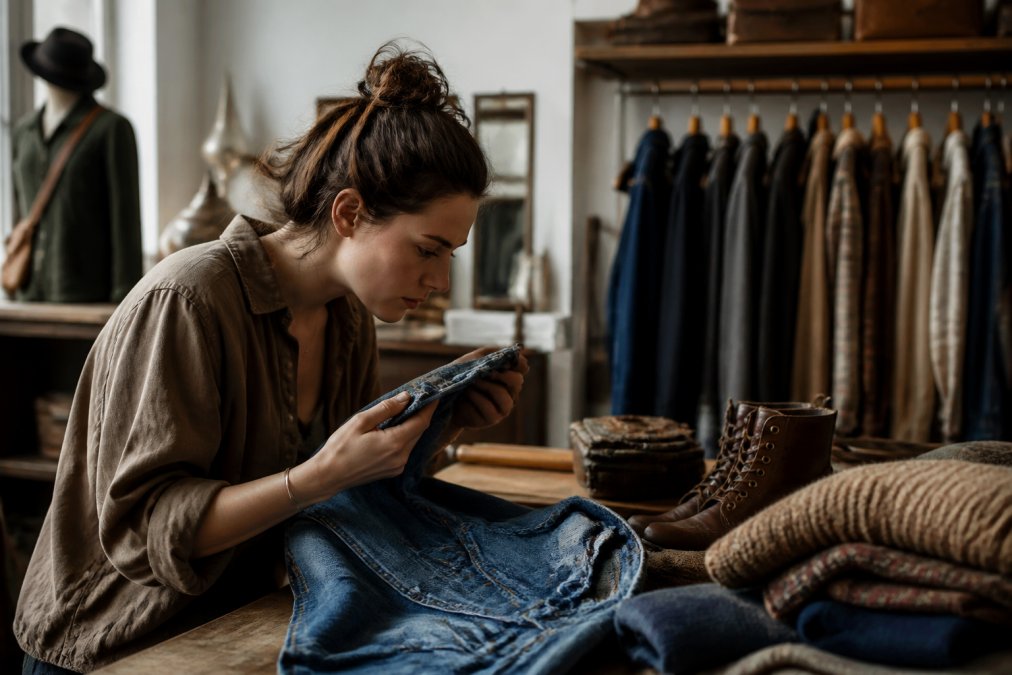
How to Identify Authentic Vintage Style: 2026 Guide
Table of Contents
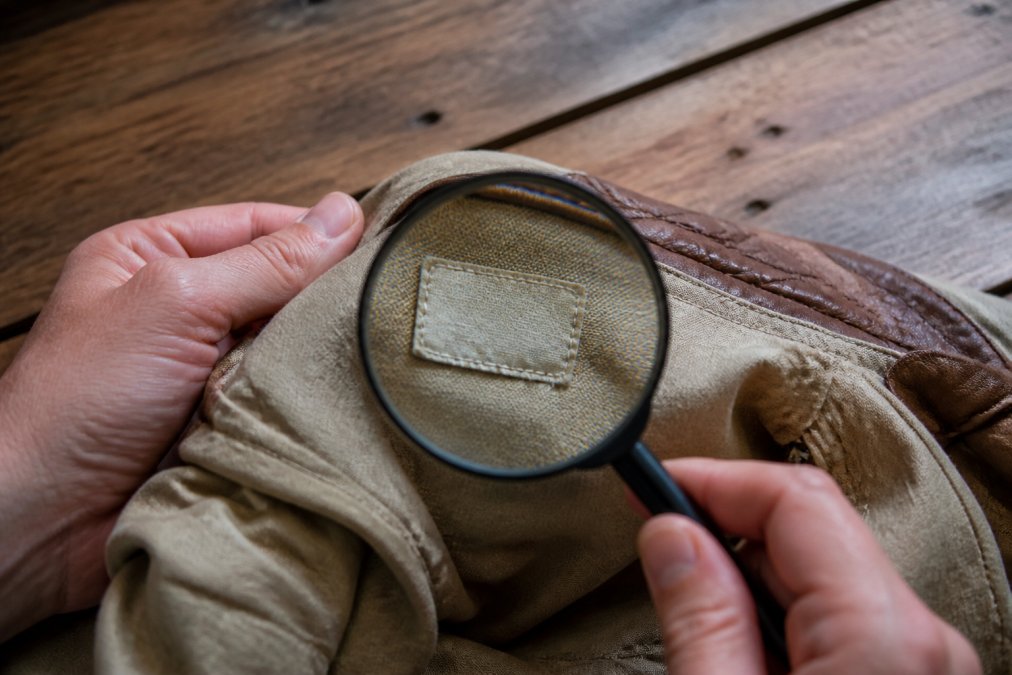
- Start With the Label: A Vintage Clothing Tag Identification Guide
- How to Spot Fake Vintage Clothing Before You Buy
- Fabric, Stitching, and Hardware: Construction Clues That Date a Garment
- How to Authenticate Vintage Leather Goods
- Silhouette and Era Markers: Matching Style to Decade
- Caring for Authentic Vintage So It Lasts
- Frequently Asked Questions
Last Updated: September 10, 2026
Start With the Label: A Vintage Clothing Tag Identification Guide
Knowing how to identify authentic vintage style starts with the one detail most shoppers overlook: the label. Original tags carry manufacturing codes, union marks, and typography that are nearly impossible to fake convincingly. This guide walks through the exact markers to check when sourcing pieces, from RN numbers to fiber content, so you can separate genuine vintage from a modern imitation before money changes hands.
The label is your first witness. It records who made the garment, when, and where, and those details rarely survive reproduction.
Reading RN Numbers and Union Labels
An RN number is a registration number the Federal Trade Commission assigns to a manufacturer, importer, or seller, and it has been a legal requirement on textile labels for decades (FTC textile labeling requirements(https://www.ftc.gov/business-guidance/resources/threading-your-way-through-labeling-requirements-under-textile-wool-acts)). A five or six digit number under "RN" or "WPL" tells you the company, not the decade, so treat it as a starting point rather than proof.
Union labels matter more for dating. The International Ladies' Garment Workers' Union used different label designs across eras, and the wording and color shift over time. A red, white, and blue union tag with "Union Made" in a specific script points to a narrower window than a generic tag. Cross-reference the number against public registries, then let the other clues confirm the era.
Fonts, Care Tags, and Country of Origin
Typography is a quiet tell. Older labels often used woven or embroidered lettering rather than printed ink, and the fonts reflect the design conventions of their decade.
Care tags are equally revealing. A garment made before the early 1970s typically lacks the detailed fiber-content and care instructions now standard, because those rules expanded over time. A "Made in" line also anchors the piece: manufacturing shifted between regions across the decades, so the country of origin narrows your timeline.
How to Spot Fake Vintage Clothing Before You Buy
The fastest way to spot fake vintage clothing is to look for contradictions: a 1960s silhouette paired with a modern care tag, or a "vintage" print on a fabric that did not exist in that era. Fakes usually get the aesthetic right and the details wrong. The trick is knowing which details are physically impossible for the era being claimed.
Reproduction vs. Vintage: The Telltale Signs
A reproduction is a new garment made to look old; genuine vintage was actually produced in the period it evokes. The gap shows up in three places:
- Serged edges where a true vintage piece would use French seams or hand-stitching
- Nylon zippers on a garment claiming to predate their common use; older pieces lean toward metal zippers
- Plastic buttons standing in for bakelite or early resin, which have a distinct weight and cold feel
Deadstock items, meaning unsold original stock, can look brand new and still be authentic. The label and construction, not the condition, settle the question.
The 'Vintage-Inspired' Fast-Fashion Trap
This is the gap most guides skip. A huge share of what is sold as vintage online is not a counterfeit of a real old garment, it is a brand-new piece designed to evoke an era. That is a different problem, and it needs a different test.
Vintage-inspired fast fashion almost always fails on era consistency. Ask one question: could every single detail on this garment have existed in the same year? A dress with a 1950s nipped waist and full skirt, but a hidden nylon coil zipper and a printed care tag, is internally contradictory. Real garments from an era are internally consistent because they were made with the materials and machines of that era.
A few era-consistency checks that catch most reproductions:
- Zipper material and brand. Metal zippers with stamped brand names on the pull are common on older garments. A nylon coil zipper is a strong signal of later production. If the seller claims a pre-1970s date and the zipper is nylon, walk away.
- Button material. Bakelite and early resin buttons feel heavy and cold, and they sound different when tapped against a hard surface. Thin, uniform plastic buttons are a modern tell.
- Care and fiber tags. Detailed standardized care instructions are a later development. A garment claiming an early date but carrying a full modern care tag is a contradiction.
- Stitching regularity. Hand or older-machine stitching is often slightly irregular. Perfectly uniform, tight, machine-perfect stitching across every seam suggests modern production.
- Print and dye methods. Screen-printed graphics and certain synthetic dyes are era-specific. A graphic that looks digitally crisp on a garment claiming mid-century production is a red flag.
A Practical Buying Checklist
Before money changes hands, request photos of the actual tag, the interior seams, and the zipper pull. Then run this sequence:
- Date the label using typography, union marks, and country of origin.
- Date the construction using seams, zipper, and buttons.
- Date the silhouette using shoulder, waist, and hem proportions.
- Check for contradictions between those three dates.
When all three agree, you are looking at a genuine piece. When any one of them is out of step with the others, treat it as a reproduction until proven otherwise.
Fabric, Stitching, and Hardware: Construction Clues That Date a Garment
Construction is where reproductions fall apart under scrutiny. Run your fingers along the inside seams: hand-stitched or French-seamed interiors signal older, higher-effort manufacturing, while overlocked seams and uniform serging point to modern production lines.
Hardware narrows the window further. Zipper brand names stamped on the pull, the metal used, and the style of the slider all changed decade by decade. Buttons follow the same logic: bakelite, glass, and early plastics each have a signature weight and sound.
Fiber content tells the rest of the story. Natural fibers like wool, silk, and cotton dominate older garments, while the rise of synthetic fabrics marks a later era. A "silk" dress that feels slick and melts near a flame is likely polyester.
| Clue | Older Garment | Modern Reproduction |
|---|---|---|
| Seams | French seams, hand-stitching | Serged, overlocked edges |
| Zippers | Metal, branded pulls | Nylon, unbranded |
| Buttons | Bakelite, glass, early resin | Plastic |
| Care tags | Minimal or absent | Detailed, standardized |
How to Authenticate Vintage Leather Goods
Authenticating vintage leather goods comes down to patina, stitching, and hardware, the three areas where age leaves marks that are hard to fake. Genuine older leather develops a soft sheen and fine surface cracks that follow the way the item was worn; new "distressed" leather looks uniform and deliberate.
Patina, Stitching, and Hardware on Older Leather
Real patina builds unevenly, darker at the edges and creases where hands and straps made contact. Reproduction aging is sprayed on and looks even. Stitching on older pieces is often slightly irregular, done by hand or on older machines, while modern copies are mechanically perfect.
Hardware tells you about materials too. Brass and solid metal fittings on vintage bags and shoes tarnish and wear in a way plated modern hardware does not. The FTC guidance on leather labeling(https://www.ftc.gov/legal-library/browse/rules/leather-guide) governs how leather content must be disclosed, so a genuine maker's mark and honest labeling are part of the authentication picture.
Simple Material Tests You Can Do at Home
Most guides stop at "feel the leather." You can go further with a few non-destructive checks that separate genuine leather from bonded, faux, and coated materials.
- The grain test. Genuine full-grain leather has a natural, irregular pore pattern that varies across the surface. Faux leather and bonded leather show a repeating, uniform pattern because they are embossed from a mold or roller.
- The press test. Press a fingernail into the surface. Real leather creases and springs back with fine lines radiating from the press point. Faux leather tends to stay smooth or shows a sharp, plastic-like dent.
- The edge test. Look at a cut edge. Genuine leather shows a fibrous, layered cross-section. Bonded leather shows a uniform, fuzzy, glued-together core. Faux leather shows a fabric backing under a plastic top layer.
- The smell test. Real leather has an earthy, animal smell. Faux and heavily coated leather smells like plastic or chemicals.
- The warmth test. Leather warms to the touch and holds that warmth briefly. Faux leather stays cool and feels slick.
These are non-destructive and safe to run on a piece you are considering buying, provided you have the seller's permission to handle it.
Why Material Science Matters for Value
Understanding what a piece is actually made of does more than confirm authenticity, it tells you how the item will age and what it is worth. Full-grain leather develops patina and can be conditioned and repaired for decades. Bonded leather degrades and cannot be restored. That difference is the entire value proposition of vintage leather, and it is why a maker's mark plus an honest material test beats a seller's description every time.
This is also where a curated source matters. Vinthentic offers collections built around genuine leather craftsmanship and handcrafted precision, so pieces are chosen for the qualities that hold up over years, not just the look of a single season.
Silhouette and Era Markers: Matching Style to Decade
Silhouette is the broadest dating tool, and the easiest to learn. Shoulder shape, waist placement, hemline, and overall proportion shift predictably from decade to decade, and once you can read them, you can place most garments within a few years.
A few markers worth memorizing:
- 1950s: defined waists, full skirts, structured shoulders
- 1960s: shift dresses, boxy shapes, shorter hems
- 1970s: relaxed fits, wide lapels, earthy palettes
- 1980s: exaggerated shoulders, bold color, high contrast
- 1990s: minimal lines, slip dresses, understated tailoring
Era-specific details like collar shape and sleeve cut confirm what the silhouette suggests. When the silhouette and the label agree, you can buy with confidence.
Caring for Authentic Vintage So It Lasts
Preservation is the difference between a piece you wear for a season and one you pass down. Store vintage on padded hangers or folded flat, away from direct sunlight, which fades dye and weakens fibers. Clean sparingly and gently, since older fabrics and dyes are less stable than modern ones.
For leather, condition regularly to keep it supple and store it away from heat, which dries and cracks the surface. Handle hardware carefully; vintage zippers and buttons are often irreplaceable. A little care keeps the provenance intact, and provenance is what makes authentic vintage worth owning.
If you would rather start with pieces that are already vetted, Vinthentic offers premium apparel and accessories built to last, from timeless footwear to wardrobe staples. Customers like Stephen H. put it simply: the quality is top-notch.
Frequently Asked Questions
What are the key indicators of authentic vintage clothing?
Start with the label: older tags use different fonts, list a country of origin, and often include an RN number or union mark. Then check construction. Authentic vintage garments frequently show French seams, serged edges, or hand-stitched details that fast fashion skips. Hardware matters too, since metal zippers and bakelite buttons are common in older pieces. Fabric composition helps as well, because synthetic vs natural fibers shifted by decade. No single clue proves authenticity, so look for several markers that agree.
How can you tell the difference between vintage and retro?
Vintage means a garment is genuinely from an earlier era, typically 20 years old or more. Retro describes something new that copies an older style. A retro jacket might mimic a 1970s silhouette but use a modern nylon zipper, a contemporary care tag, and synthetic fabric blends that did not exist then. Check the label font, fiber content, and hardware. If the construction reads modern but the look reads old, you are holding a reproduction, not an authentic vintage piece.
Do vintage clothes have specific types of zippers or tags?
Yes. Metal zippers with branded pulls appear often in mid-century garments, while nylon zippers became common from the 1960s onward. Tag design also shifts by decade: older labels tend to be woven rather than printed, use serif fonts, and name a country of origin. Union labels and RN numbers help narrow the date further. If a tag looks freshly printed or the zipper feels lightweight and modern, treat the piece as a reproduction until other clues confirm otherwise.
How do I verify the age of a vintage garment?
Cross-check several markers instead of trusting one. Read the RN number and union label, then match the tag font and care instructions to a known era. Examine fabric composition, since fiber blends changed decade by decade. Look at stitching type, zipper style, and button material. Compare the silhouette against era-specific references. When three or four clues point to the same decade, you have reasonable confidence. Digital authentication tools and vintage forums can help confirm anything unclear.
Telling real vintage from a convincing imitation comes down to patience and a checklist: read the label, test the construction, and let the silhouette confirm the era. Vinthentic makes that easier by sourcing pieces with genuine leather craftsmanship, handcrafted precision, and timeless design built for everyday comfort. Over 20,000 happy customers have already built wardrobes around that standard. Shop now and step into style with confidence.
Read more
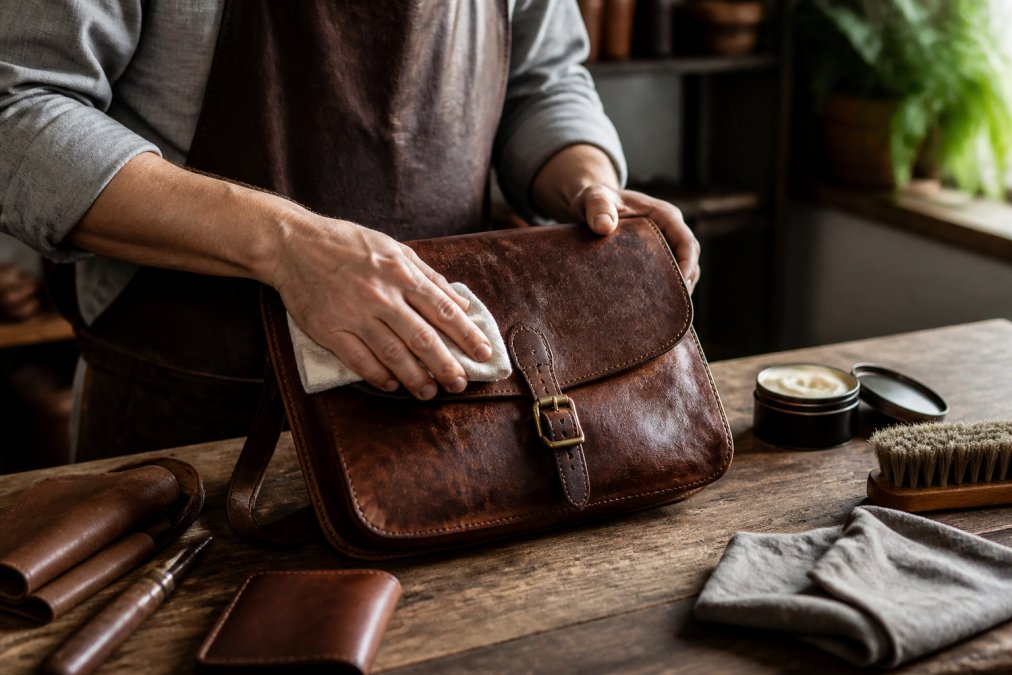
How to Maintain Vintage Leather Accessories
Learn how to maintain vintage leather accessories with our expert care guide. Discover cleaning, conditioning, and storage tips to preserve your pieces.
Read more
Men's Professional Style Guide 2026: Modern Office Wear
Elevate your work wardrobe with our men's professional style guide 2026. Discover timeless staples, modern trends, and expert tips to dress sharp every.
Read more