
Article: How to Curate a Cohesive Wardrobe: 2026 Guide

How to Curate a Cohesive Wardrobe: 2026 Guide
Table of Contents
- Start With a Wardrobe Audit: What to Keep, Alter, or Donate
- Define Your Lifestyle Needs and Personal Style
- Build a Wardrobe Color Palette That Mixes and Matches
- How to Build a Capsule Wardrobe With Versatile Basics
- Capsule Wardrobe Outfit Ideas for Work, Weekend, and Formal Events
- Prioritize Fit, Fabric Quality, and Timeless Pieces
- Budgeting, Cost Per Wear, and Intentional Shopping
- Test Your Cohesive Wardrobe and Maintain It Through the Seasons
- Frequently Asked Questions
Last Updated: October 13, 2026
Start With a Wardrobe Audit: What to Keep, Alter, or Donate
A wardrobe audit is a structured review of everything you own, judging each piece on fit, condition, and how often you wear it.
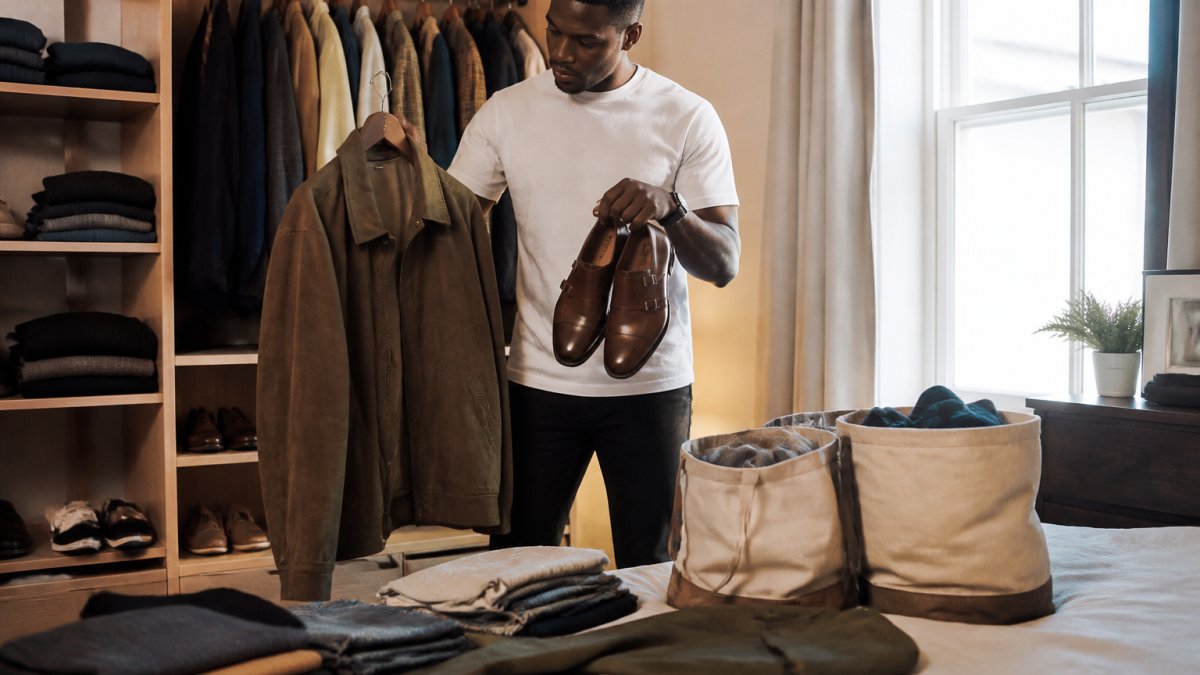
Start by pulling everything out, you cannot judge a closet you can't see. Work in 45-minute blocks rather than one marathon session, because decision fatigue leads to bad decisions.
Then sort each piece into four piles, not three: keep, tailor, donate or sell, and replace.
The Four-Question Test for Every Garment
Ask four questions about each item:
- Does it fit right now, today, not after a planned weight change?
- Have I worn it in the past 12 months?
- Does it work with at least three other pieces I own?
- Is it in wearable condition, no stains, holes, pilling, or stretched seams?
Score each answer yes or no. Three or more "no" answers means it leaves the keep pile. Two means it goes to the tailor if the fix is small, or out if it isn't. One is usually a keep with a note about what needs attention.
The test removes emotion: you are judging the garment, not your past self.
Decision Rules for the Hard Cases
Most audits stall on the same four categories. Here is how to handle each.
Unworn but expensive. Cost is a sunk cost, not a reason to keep. Ask whether you would buy it again at full price today.
Sentimental items. You do not have to choose between keeping everything and throwing away memories.
"Someday" pieces. Formal wear, costume pieces, and occasion-only items belong in separate storage, not your everyday closet.
How to Declutter Your Closet Without Regret
Keep a "maybe" box for anything you genuinely cannot decide on. Date it, seal it, and store it out of sight for 90 days. If you have not opened it by then, donate it unopened, this prevents the regret spiral that kills most closet edits.
Before donating, check whether local charities, shelters, or clothing-swap groups accept the categories you are giving away, many do not take worn shoes or stained items. Resale apps work best for brand-name, lightly worn pieces; donate the rest.
Define Your Lifestyle Needs and Personal Style
Your wardrobe should match how you actually spend your week, not how you wish you spent it. Track your outfits for two weeks, noting where you go and what you reach for.
Then write a one-sentence style statement. Something like: "Relaxed vintage with clean lines, built for office days and weekends."
This statement becomes your filter. If a piece doesn't serve it, it doesn't come home with you.
Vinthentic customer Stephen H. put it simply: "I love shopping at Vinthentic!
Build a Wardrobe Color Palette That Mixes and Matches
A wardrobe color palette is a small set of colors chosen so any two pieces look good together. Pick two neutrals as your base, add one or two accents, and stop there. This is the fastest route to a cohesive wardrobe, because every piece you buy already works with everything else.
Neutral Tones as the Foundation
Neutral tones do the heavy lifting, navy, charcoal, stone, camel, cream, and olive pair with almost anything and never date. A simple ratio works well: about 70 percent neutrals, 20 percent secondary colors, 10 percent accents, keeping outfits interesting without turning your closet into a costume rack.
How to Build a Capsule Wardrobe With Versatile Basics
A capsule wardrobe is a small, intentional set of versatile clothing that all works together. Most capsules run 30 to 40 pieces, including shoes and outerwear. The goal is not minimalism for its own sake, but repeatable outfits you can build in under a minute.
Start with these wardrobe basics:
- Two pairs of well-fitting trousers
- Dark denim that holds its shape
- Three to four shirts for work and weekends
- One layering jacket that works across seasons
- One pair of leather shoes that dresses up or down
- A classic belt that ties the look together
Versatile clothing earns its place by working in more than one setting. A relaxed flannel shirt layers under a jacket for the office and stands alone on weekends. Our Men's Vintage Classic Casual Belt is built for exactly that dual role.

| Wardrobe Gap | What to Add | Why It Works |
|---|---|---|
| Nothing to layer | Everyday layering jacket | Adds a finishing layer without bulk |
| Shoes limit outfits | Genuine leather sneakers | Smart enough for work, easy for weekends |
| Shirts feel flat | Classic check flannel shirt | Texture and pattern with neutral colors |
| Outfits lack polish | Vintage classic belt | Ties casual and formal looks together |
Capsule Wardrobe Outfit Ideas for Work, Weekend, and Formal Events
Repeatable outfits are the payoff of a good capsule. Build three or four formulas and rotate them:
- Work: Tailored trousers, a crisp shirt, leather shoes, and a classic belt. Add a layering jacket in cool weather.
- Weekend: Dark denim, a flannel shirt, and leather sneakers. Roll the sleeves for a relaxed look.
- Formal events: Pressed trousers, a structured jacket, and polished leather footwear. Keep accessories simple.
- Layering days: Flannel under a jacket, with a belt that matches your shoes.
The point is mix and match. When every piece coordinates, you stop guessing and start dressing.

Prioritize Fit, Fabric Quality, and Timeless Pieces
Fit beats brand every time. A well-fitted piece from a modest label looks better than an expensive piece that pulls at the shoulders.
Fabric quality matters just as much. Natural fibers like cotton, wool, and genuine leather hold up better, age well, and breathe. Timeless pieces share three traits: simple lines, neutral colors, and sturdy construction.

David S., a Vinthentic customer, said it well: "I am so happy with my purchase! The shoes arrived quickly and were exactly as imagined. Perfect for daily wear."
Budgeting, Cost Per Wear, and Intentional Shopping
Cost per wear is the price of a garment divided by how many times you expect to wear it. A $120 jacket worn 100 times costs $1.20 per wear; a $30 jacket worn twice costs $15 per wear. The cheap piece is the expensive one. This shifts the question from "what does it cost?" to "what does it cost me each time I put it on?"
How to Estimate Cost Per Wear Before You Buy
You cannot know future wear exactly, so estimate. A common pattern is to group garments by expected frequency:
- Daily drivers (jeans, everyday shoes, a go-to jacket): assume 80-150 wears per year.
- Regular rotation (work shirts, a few pairs of trousers): assume 30-60 wears per year.
- Occasional pieces (a blazer, dress shoes): assume 10-25 wears per year.
- Event-only items (formal wear, a specific occasion outfit): assume 1-5 wears per year.
Divide the price by the low end of the range for a conservative cost per wear. A $200 pair of dress shoes at $8 per wear over 25 wears is reasonable for something you will keep for years. A $90 trend piece at $18 per wear over 5 wears is a poor buy no matter how good it looks on the rack.
A Realistic Phased Shopping Plan
You do not rebuild a wardrobe in one weekend. Spread purchases across three phases so your budget and judgment both hold up.
Phase 1, Fill the gaps that block outfits (weeks 1-4). Buy only the pieces that unlock combinations you already own.
Phase 3, Add personality and occasion pieces (months 5-12). Only after the foundation works do you add accent colors, statement pieces, or formal wear.
Setting a Clothing Budget That Holds
Set a monthly clothing budget as a percentage of your take-home pay rather than a fixed dollar figure, so it scales with your income. A common guideline is a small single-digit percentage of monthly take-home pay, adjusted to your goals. The exact number matters less than the discipline of tracking it.
- Keep a running shopping checklist of wardrobe gaps, and buy only from that list.
- Wait one week before any unplanned purchase. If you still want it after seven days and it fits the list, buy it.
- Replace, don't accumulate. When a workhorse wears out, the replacement comes out of the same budget line.
- Check cost per wear before every purchase, using the conservative estimate.
A practical rule: if a new piece does not create at least three new outfit combinations with what you already own, skip it.
Where to Spend and Where to Save
Spend on the pieces closest to your body and most often worn: shoes, outerwear, and the trousers or jeans you live in. These take the most wear and show quality differences fastest. Save on trend-driven pieces, layering basics, and anything you will wear a handful of times.
Test Your Cohesive Wardrobe and Maintain It Through the Seasons
Test your wardrobe by building ten outfits from memory, without opening your closet. If you can, the capsule works; if you stall, you have gaps to fill.
Seasonal maintenance keeps things on track. Twice a year, run a mini closet edit: store off-season pieces out of sight, bring the current season forward, and check for wear, loose stitching, and scuffed shoes.
Garment care extends everything. Brush leather shoes, air wool between wears, and wash less often. Well-kept pieces last years longer, which lowers cost per wear again.
Frequently Asked Questions
What does "curated clothing" mean?
Curated clothing means every piece in your closet was chosen on purpose rather than bought on impulse. A curated wardrobe favors versatile clothing that mixes and matches, so a small number of garments produces many outfit combinations. Instead of chasing trends, you select timeless pieces in a consistent color palette that fit your lifestyle needs. The result is a cohesive wardrobe where nothing sits unworn and getting dressed takes minutes, not an hour of trying things on.
What is the 3-3-3 rule for decluttering a wardrobe?
The 3-3-3 rule is a simple way to start decluttering: pull out 3 items to donate, 3 items to repair or alter, and 3 items to keep and restyle. It works because the task feels small enough to finish in one sitting, and the decision rules force you to sort rather than stall. Repeat it weekly during a closet edit and you will clear a meaningful amount of space within a month without the exhaustion of emptying everything at once.
How many pieces should a capsule wardrobe have?
Most capsule wardrobes land between 30 and 40 pieces, counting tops, bottoms, layers, shoes, and accessories but excluding underwear, sleepwear, and gym clothes. The exact number matters less than how well the pieces coordinate. A 25-piece capsule where everything mixes will outdress a 60-piece closet full of orphan items. Start with wardrobe basics you already own, then add only what fills a real wardrobe gap.
How can I make more outfits from the clothes I already own?
Photograph every outfit you wear for two weeks, then review the images to see which pieces repeat and which never appear. Lay out your coordinating pieces in groups of three (one top, one bottom, one layer) and build combinations you have not tried. Sticking to a tight wardrobe color palette makes this easier because neutral tones pair with almost anything. Accessories, belts, and footwear are the finishing touches that turn the same base outfit into a different look.
Building a wardrobe that actually works together takes patience, and most people quit halfway through the closet edit. We can help you finish it. Vinthentic offers genuine leather craftsmanship, handcrafted precision, and timeless footwear design built for everyday comfort. With over 20,000 happy customers, our pieces are made to slot into a curated wardrobe and stay there. Shop now and step into style with confidence.
Read more

Men's Leather Shoes for Formal Settings: 2026 Guide
Formal leather shoes: Find the best men's leather shoes for formal settings.
Read more