
Men's Leather Shoes for Formal Settings: 2026 Guide
Table of Contents
- Quick Comparison: Men's Leather Shoes for Formal Settings
- Men's Oxford Shoes: The Gold Standard for Black-Tie and Business
- Men's Derby Shoes: The Versatile Alternative for Wider Feet and Long Days
- Loafers, Monk Straps, and Brogues: Formal Enough for the Right Occasion
- Black Leather Dress Shoes for Men: When Black Beats Brown
- How to Care for Leather Dress Shoes So They Last Years
- How to Choose: Dress Code, Fit, and Leather Quality
- Conclusion: Building a Formal Shoe Rotation That Works
- Frequently Asked Questions
Last Updated: October 12, 2026
Quick Comparison: Men's Leather Shoes for Formal Settings
Choosing men leather shoes for formal settings comes down to matching style to dress code, then getting fit and leather right. This Vinthentic guide covers Oxfords, Derbies, loafers, monk straps, and brogues.
Formal leather shoes are leather dress shoes made to pair with suits, dress trousers, and business attire. The style you choose signals how formal the occasion reads.

| Style | Formality | Best For | Closure |
|---|---|---|---|
| Oxford | Highest | Black-tie, business, weddings | Closed lacing |
| Derby | High | Wider feet, long days, office | Open lacing |
| Monk strap | Medium-high | Evening wear, smart office | Buckle |
| Loafer | Medium | Business casual, dinners | Slip-on |
| Brogue | Varies | Office, smart-casual, events | Lace-up |
Men's Oxford Shoes: The Gold Standard for Black-Tie and Business
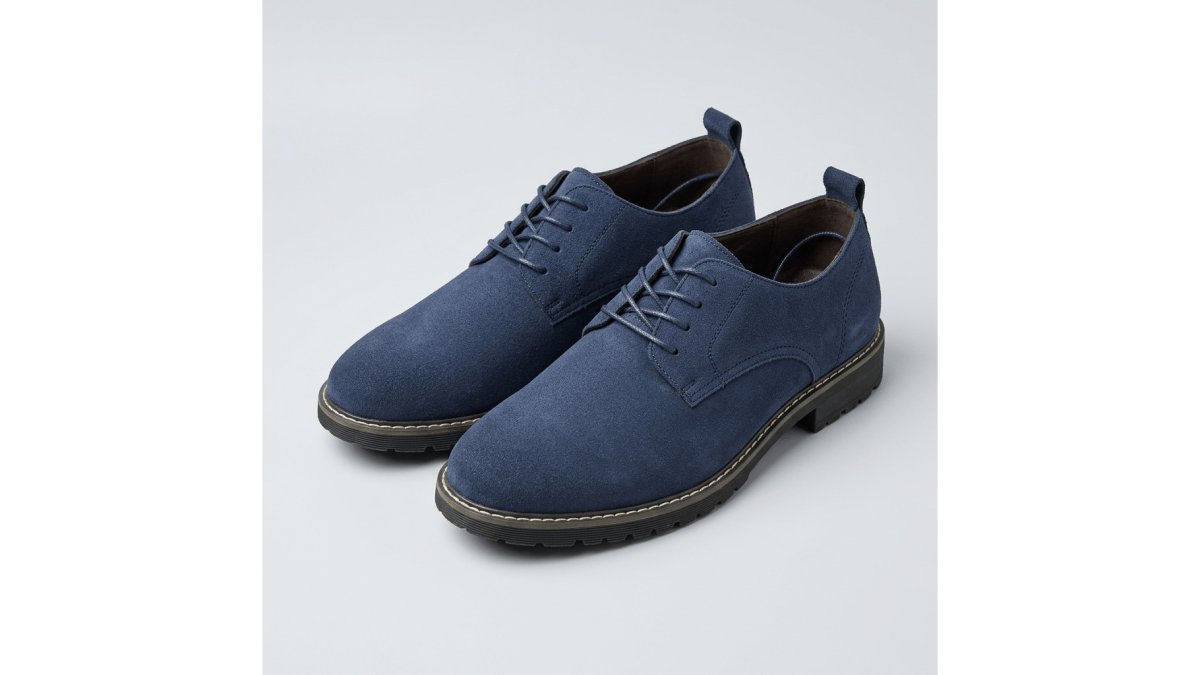
Oxford shoes are the most formal style of men's dress shoes, defined by closed lacing where the eyelet tabs sit under the vamp. That clean line is why Oxfords anchor black-tie, business attire, and weddings.
Our Men's Leather Oxford Dress Shoes ($67.95) pair a classic silhouette with a smooth leather upper and a comfortable sole. The Men's Leather Formal Oxford Shoes Classic Design ($99.95) lean more polished, with a premium leather build that ages well.

For a sharper toe, the Blaise Marinelli Classic Leather Oxford Dress Shoes ($84.99) add a cushioned insole and a pointed-toe profile.
Cap-Toe vs. Whole-Cut: Which Oxford Fits Your Event
A cap-toe Oxford has a seam across the toe and reads slightly less formal. A whole-cut Oxford is made from a single piece of leather with no toe seam, making it the dressiest option for evening wear and black-tie events. If you own one Oxford, make it a cap-toe.
Men's Derby Shoes: The Versatile Alternative for Wider Feet and Long Days
Derby shoes use open lacing, where the eyelet tabs sit on top of the vamp. That gives more room across the instep, which is why men's Derby shoes suit wider feet and long days on your feet.
The Clément Travaglini Leather Derby Dress Shoes ($149.99) are our most refined Derby, with a polished leather finish and a comfortable fit. The Camillo Ballini Leather Derby Shoes ($59.99) bring a colored Derby design, a durable rubber sole, and handcrafted construction at a lower price.
Derby vs. Oxford: Open Lacing and Fit Differences
The difference is in the lacing. Oxfords close with the tabs tucked under the vamp for a sleeker line; Derbies leave the tabs open on top, so the shoe adjusts more easily over a high instep. Choose a Derby for a wider foot or high arch, an Oxford for the cleanest silhouette.
Loafers, Monk Straps, and Brogues: Formal Enough for the Right Occasion
Loafers, monk straps, and brogues each sit in a specific formal range.
Loafers are slip-on dress shoes with no laces. The Leather Tassel Loafers ($52.95) use supple leather, a tassel-trimmed vamp, and a low square heel for polished everyday dressing.
Monk straps swap laces for a buckle. The Hilma Klint Leather Monk Strap Shoes ($59.99) pair premium leather with a single buckle design for a sleek, versatile finish.
Brogues add perforated detailing to a lace-up silhouette. The Men's Leather Brogue Lace-Up Dress Shoes ($64.95) bring a polished finish and pointed toe to business meetings and evening events.

Black Leather Dress Shoes for Men: When Black Beats Brown
Black leather dress shoes for men are the correct choice for black-tie, evening wear, and the most formal business settings. Brown leather works for daytime office settings and smart-casual looks, but reads less formal after dark. The rule: black suit, black shoes. With charcoal or navy, either works, though black stays safer for evening. Refining these formal ensembles requires careful attention to the metallic accents on your sleeves, where business formal cufflinks provide the necessary polish to complete a sophisticated silhouette.
Color, finish, and the formality ladder
Color is only half the decision, finish and sole do as much work as the hue.
- Black calfskin, polished, the default for business formal, weddings, and evening events. Pairs with black, charcoal, and dark navy suits.
- Black patent leather, reserved for black-tie and evening shoes, where the high shine is expected. Do not wear patent to a daytime business meeting.
- Brown calfskin, polished, suits navy, gray, and earth tones for daytime and business-casual wear. A medium or chestnut brown is the most versatile; dark brown leans dressier, tan leans casual.
A useful test: the shinier the finish and the thinner the sole, the more formal the shoe. A black Oxford with a leather sole and a high polish tops the ladder.
Sole construction and what it means for wear
- Leather soles are the traditional choice for formal shoes. They breathe, look sleeker, and mold to the foot over time, but they are slippery on wet pavement and wear faster than rubber, so they suit dry indoor settings best.
- Rubber or Dainite-style soles trade a little formality for grip and weather resistance, practical for commuting, travel, and wet climates, and most people cannot tell the difference from across a room.
- Leather sole with a rubber topy, a thin rubber layer added by a cobbler, keeps the leather look while protecting the sole from water and abrasion.
What price bands actually buy
The gap between a $50 pair and a $150 pair is rarely about color. It is about leather grade, lining, insole, and sole construction. The lower end typically gets a corrected-grain or split-leather upper, and a foam or fabric insole.
Men's Leather Oxford Dress Shoes →
A transparent way to compare is cost per wear. If a $60 pair lasts two seasons and a $150 pair lasts six, the $150 pair is the better value.
How to Care for Leather Dress Shoes So They Last Years
Knowing how to care for leather dress shoes separates a pair that lasts a season from one that lasts a decade. The routine takes minutes, but the right one depends on the leather, the lining, and the sole construction.
Match the care to the leather type
Not all "genuine leather" behaves the same, and the care that keeps one pair supple can dull another.
- Full-grain leather keeps the outermost layer of the hide intact, so the grain is tight and the surface takes a polish well. It is the most durable option and the most forgiving of a regular conditioning routine, holding its shape for years if conditioned before the leather feels dry.
- Top-grain leather has the outer layer sanded lightly to remove imperfections. It looks smoother out of the box but has less natural fiber structure, so it benefits from more frequent conditioning and gentler polish.
- Corrected-grain leather is sanded and stamped, often with a heavy finish. You are protecting the finish, not the hide, so use a cream polish rather than aggressive wax and avoid solvents that can lift the coating.
Why construction changes the routine
A Goodyear-welted shoe has a stitched welt a cobbler can replace, so the upper can outlive several soles; keep the welt stitching clean and plan on a resole rather than a replacement. A cemented shoe bonds the upper to the sole with adhesive, lighter and cheaper, but generally not resoleable, so protect the bond from heat and repeated soaking. A Blake-stitched shoe sits between the two: the stitching runs through the insole so it can be resoled, but the sole is thinner and wears faster.
A weekly and monthly routine that actually fits the shoe
- Wipe dust with a soft horsehair brush or cloth after each wear, grit left on the surface is what scratches the finish
- Insert cedar shoe trees while the leather is still warm to absorb moisture and hold the shape
- Rotate pairs so each has a full day to dry; wearing the same pair two days running is the fastest way to break down a leather insole
Conditioner and polish are not the same product. Conditioner feeds the leather and keeps it from cracking; polish builds shine and a light barrier against water and dirt. You need both, in that order.
When to repair versus replace
A cobbler can typically replace a heel and resole some shoes for a fraction of a new pair. The math changes when the upper is cracked, the lining has torn through, or a sole has separated, then replacement is usually the better value. Simple rule: if the repair costs more than about half what you paid and the upper is already cracking, put the money toward a new pair.
How to Choose: Dress Code, Fit, and Leather Quality
Choosing well comes down to three decisions: dress code, fit, and leather.
Dress code first. Black-tie and formal events call for a black Oxford or patent leather. Business attire allows Oxfords or Derbies.
Fit second. Get measured at the end of the day, when your feet are largest.
Leather quality third. Look for a smooth, even grain and a finish without heavy plastic coating.
Conclusion: Building a Formal Shoe Rotation That Works
Building a rotation beats buying one expensive pair and wearing it into the ground. Add a monk strap or brogue for more character.
At Vinthentic, we focus on genuine leather craftsmanship, handcrafted precision, and timeless footwear design built for everyday comfort.
Start with the pair that matches the rooms you actually walk into. Shop the Vinthentic collection, browse the Oxfords and Derbies, and step into a rotation that holds up for years.
Frequently Asked Questions
What are the best leather formal shoes for men?
The best formal leather shoes depend on the dress code. Oxfords are the most formal and suit black-tie and business settings. Derbies work well for business casual and wider feet. Monk straps and tassel loafers fit semi-formal events. Vinthentic offers Oxfords from $54.99, Derbies from $59.99, and monk straps at $59.99, so you can match the shoe to the occasion without overspending.
Are Oxfords or Derbies more formal?
Oxfords are more formal because of their closed lacing, where the eyelet tabs sit under the vamp. Derbies use open lacing with the tabs stitched on top, which gives a slightly more relaxed look and more room across the instep. For black-tie or strict business dress, choose Oxfords. For business casual or if you have a high instep, Derbies are the better fit.
Can you wear brown leather shoes with a formal suit?
Brown leather shoes work with navy, gray, and lighter suits, but they are less formal than black. For evening events or black-tie, black leather dress shoes for men are the safer choice. Brown Oxfords or Derbies in a dark shade like mahogany or oxblood pair well with navy or charcoal suits for daytime business and weddings.
How should men care for leather dress shoes?
Wipe shoes with a soft cloth after each wear to remove dust and salt. Use cedar shoe trees to hold the shape and absorb moisture. Apply a cream polish every four to six weeks, and use a horsehair brush to buff. Store shoes in dust bags away from direct heat. Rotating between two pairs gives leather time to dry and extends the life of each pair.
How do I know if the leather is genuinely high quality?
Look for leather that shows natural grain and creases softly when you press the surface. Check the stitching: even, tight stitches signal careful construction. Vinthentic uses premium leather uppers across its formal range.
Read more

How to Spot High Quality Clothing: 7 Checks
Learn how to spot high quality clothing with 7 practical checks for fabric, stitching, and labels. Use this guide before your next purchase.
Read more
How to Curate a Cohesive Wardrobe: 2026 Guide
Learn how to curate a cohesive wardrobe with a practical audit, color palette, capsule basics, and cost-per-wear tips for a closet that works.
Read more