
Article: Is Vintage Fashion Still in Style? A 2026 Guide
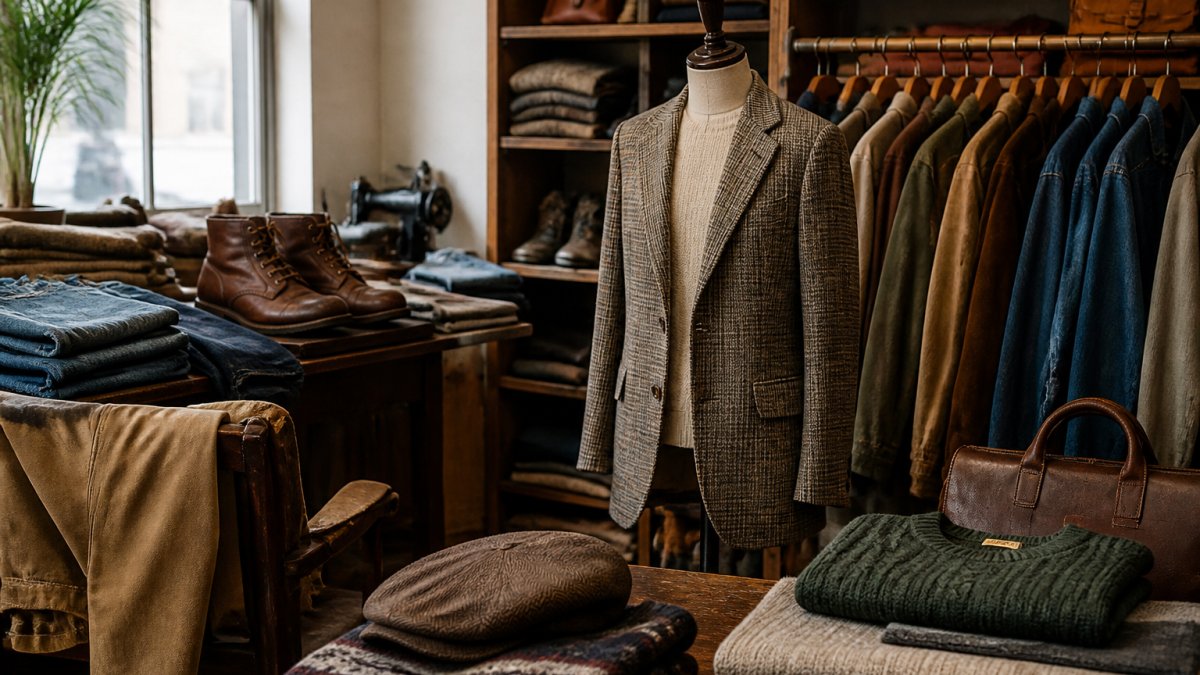
Is Vintage Fashion Still in Style? A 2026 Guide
Table of Contents
- Is Vintage Fashion Still in Style? The 2026 Answer
- What Counts as Vintage Clothing (And What Doesn't)
- Vintage vs. Retro Clothing: What's the Difference?
- How to Style Vintage Clothes Without Looking Dated
- Vintage Outfit Ideas That Work in 2026
- Why Vintage Keeps Coming Back: Nostalgia, Sustainability, and Individuality
- Frequently Asked Questions
Last Updated: October 14, 2026
Is Vintage Fashion Still in Style? The 2026 Answer
Yes, vintage fashion is still in style in 2026, and the demand has shifted from a novelty trend into a permanent part of how people build wardrobes. Search interest in vintage clothing has stayed strong for several years running, and Google Trends data on secondhand fashion searches shows the category holding well above its pre-2020 baseline.
The real question is not whether vintage is in style. It is which vintage, and how you wear it without looking like you raided a costume rack.
Below, we break down what counts as vintage clothing, how it differs from retro, how to style it for 2026, and how to spot the difference between authentic vintage and vintage-inspired pieces.
What Counts as Vintage Clothing (And What Doesn't)
Vintage clothing is generally defined as apparel that is at least 20 years old and represents the style of its original era. That age threshold is the working standard across the resale and fashion-history world, and it separates genuine vintage from modern reproductions.
Garment Age: The 20-Year Rule and Why It Matters
The 20-year rule is the industry's shorthand for authenticity. A jacket made in 2004 now qualifies as vintage. A jacket made in 2015 does not, no matter how faded or distressed it looks.
Age matters because it changes what you are buying. Older garments were cut differently, often with more generous seams and heavier fabric, and they were produced in smaller runs. That is why a genuine vintage piece feels different on the body than a modern copy of the same silhouette.
Authentic Vintage vs. Vintage-Inspired: How to Tell the Difference
Authentic vintage is an original garment from its era. Vintage-inspired is a new garment designed to look like it came from that era.
The practical difference shows up in three places:
- Labels and tags: Older garments carry era-specific label styles, union marks, and sizing conventions that changed over the decades.
- Construction: Look for metal zippers, bound seams, and fabric that has aged rather than been artificially distressed.
- Fit and sizing: Vintage sizing runs smaller than modern sizing, so a vintage medium is often closer to a modern small.
Vintage vs. Retro Clothing: What's the Difference?
Vintage and retro are not interchangeable terms, and mixing them up leads to mismatched expectations. Vintage means the item is genuinely old. Retro means the item is new but styled to reference an older era.
A 1970s original leather jacket is vintage. A 2026 jacket designed to look like a 1970s piece is retro.

This distinction matters most when you are shopping online. Sellers use "retro" loosely, sometimes to describe a modern item, sometimes to describe a genuine vintage piece.
How to Style Vintage Clothes Without Looking Dated
Styling vintage well comes down to balance: one period piece, anchored by clean modern basics. The fastest way to look dated is to wear an entire era head to toe.
The One-Piece Rule and Why It Works
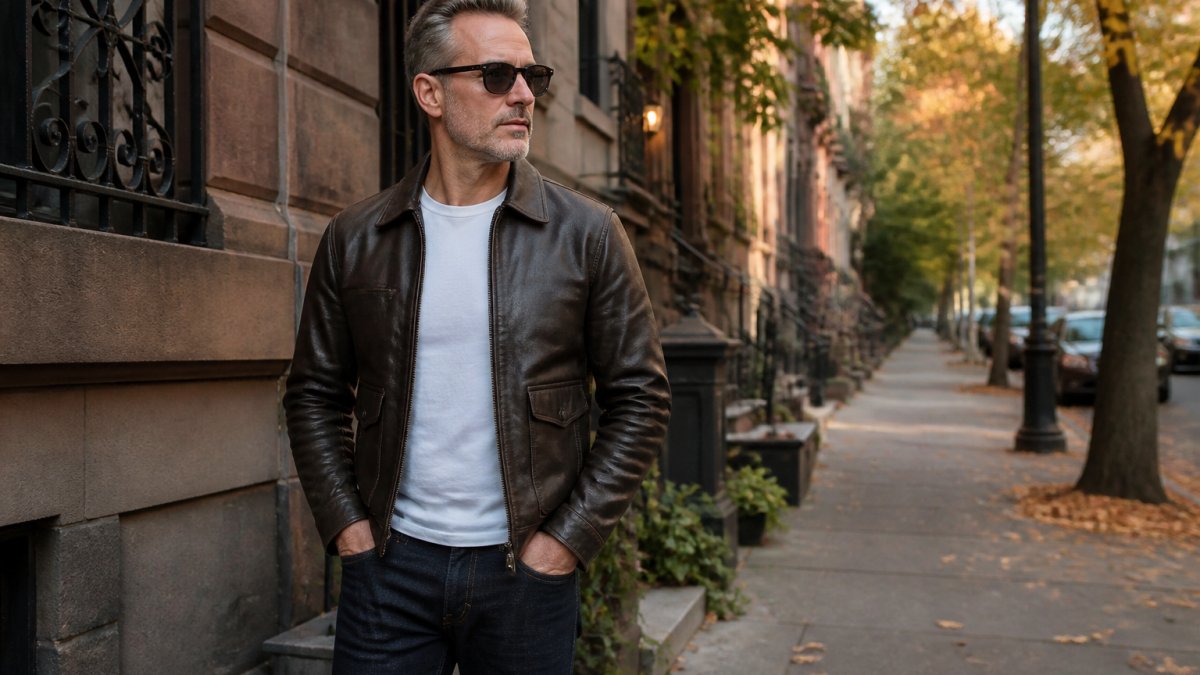
Most stylists and vintage sellers converge on the same principle: limit yourself to one or two vintage pieces per outfit, and let everything else read as contemporary. A vintage leather jacket over a plain tee and dark denim works because the jacket is the only element with visible age.

The exception is a deliberate full-look reference, a 1970s suede jacket with wide-leg trousers, for example, but even then, keep the accessories modern so the outfit has a clear anchor in the present.
Proportions: The Real Reason Vintage Can Look Off
Vintage garments were cut for different body proportions and different layering conventions. A 1980s blazer often has strong shoulders and a longer body than a modern blazer.
The fix is to balance volume. If the vintage piece is oversized or structured on top, keep the bottom fitted or straight. If the vintage piece is a wide-leg trouser or a full skirt, keep the top close to the body.
Outfit Formulas by Occasion
The strongest vintage outfits follow a simple formula: one statement piece, modern proportions, restrained accessories. Here are combinations that hold up across common situations.
| Occasion | Vintage Element | Modern Anchor | Why It Works |
|---|---|---|---|
| Everyday and weekends | Vintage or vintage-inspired leather jacket | Plain tee, dark jeans, clean sneakers | The jacket carries the age; the base stays current |
| Office and dinners | Vintage blazer | Modern tailored trousers, simple knit | Structured top, clean bottom, no era clash |
| Cool-weather outings | Faded leather or suede jacket | Neutral knit, chinos, boots | Texture and patina read as intentional |
| Evening and events | Vintage accessory or bag | Monochrome modern outfit | One aged element elevates an otherwise plain look |
| Warm-weather casual | Vintage button-down or camp shirt | Modern shorts, plain leather sandals | Lightweight vintage fabrics breathe better than modern blends |
Mixing Eras Without Looking Themed
You do not have to stay within one decade. In fact, mixing a 1970s jacket with 1990s denim and a modern tee often looks more current than a head-to-toe 1970s outfit, because the mix signals that you are styling, not recreating. The rule is to keep at most one piece per era and to let the modern pieces do the connecting work.
Fit, Sizing, Condition, and Care
Fit is where vintage shopping gets practical. Because vintage sizing runs smaller and older garments have already been worn, always ask for flat measurements rather than trusting the tag.
Condition and care follow the same logic. Check seams, lining, and hardware before buying, and treat older fabrics gently. Leather in particular benefits from conditioning and should be stored away from direct sunlight.
Vintage Outfit Ideas That Work in 2026
The strongest vintage outfits in 2026 follow a simple formula: one statement piece, modern proportions, restrained accessories. Here are combinations that hold up.
| Outfit | Vintage Element | Modern Anchor | Best For |
|---|---|---|---|
| Leather jacket look | Vintage or vintage-inspired leather jacket | Plain tee, dark jeans | Everyday and weekends |
| Smart casual | Vintage blazer | Modern tailored trousers | Office and dinners |
| Layered fall | Faded leather or suede jacket | Neutral knit, chinos | Cool-weather outings |
| Minimal statement | Vintage accessory or bag | Monochrome modern outfit | Evening and events |
The pattern is consistent: let one vintage piece lead, and let everything else stay contemporary. That is how vintage reads as personal style rather than nostalgia.

Why Vintage Keeps Coming Back: Nostalgia, Sustainability, and Individuality
Three forces keep vintage fashion in style, and none of them are fading. Nostalgia gives older styles emotional pull. Sustainability gives them a practical argument, since reusing existing clothing avoids the waste of disposable fashion. Individuality gives them social value, because a genuine vintage piece is hard to duplicate.
The Evidence That Vintage Is Still in Style
The strongest signal is the resale market itself. The secondhand apparel market has grown into a mainstream channel rather than a niche, and ThredUp's annual resale report has tracked that growth year over year, showing resale expanding faster than the broader retail apparel market.
Consumer surveys point the same direction. A common pattern in industry surveys is that younger shoppers, particularly Gen Z and millennials, report buying secondhand at higher rates than older cohorts, and cite value, uniqueness, and sustainability as their main reasons.
Nostalgia: Why Older Styles Keep Pulling
Nostalgia works on two levels. On the personal level, a garment from a decade you lived through carries memory. On the cultural level, a garment from a decade you did not live through carries a curated image, the version of the 1970s or 1990s that circulated through film, music, and social media. Both levels drive demand, and both explain why vintage eras cycle back into style rather than disappearing.
Sustainability: The Practical Argument
The environmental case is well documented. EPA data on textiles in municipal waste shows how much clothing ends up discarded each year, and textiles make up a meaningful share of municipal solid waste.
That said, the environmental case is not automatic. Shipping a single garment across the country, dry cleaning delicate fabrics, and buying vintage pieces you never wear all carry their own footprint.
Individuality: The Social Value of a One-of-a-Kind Piece
A genuine vintage piece is hard to duplicate. That scarcity is part of its appeal: it signals that you chose something deliberately rather than bought what was on the front table. In a market where fast fashion produces millions of identical garments, the ability to wear something few other people own is a real differentiator, and it is one that does not depend on price.
The Trade-Offs Worth Knowing
Vintage is not a perfect solution, and pretending otherwise weakens the case. Sizing is limited, so shoppers outside common vintage sizes have a harder time finding pieces. Condition varies, and some garments need repairs that add cost. Prices for rare or designer vintage can exceed new retail.
None of those trade-offs erase the core argument. They simply mean vintage works best when you buy pieces you will actually wear, in sizes and conditions that fit your real life.
At Vinthentic, we build around that same idea. Our pieces are designed to be worn for years, not seasons, which is why customers like Stephen H. say the quality is "top-notch" and David S. calls his purchase "perfect for daily wear."
Frequently Asked Questions
Is vintage clothing still worn today?
Yes. Vintage clothing is a regular part of modern wardrobes in 2026, not a niche hobby. Secondhand and pre-loved pieces now sit alongside new items in everyday outfits, and resale platforms have made vintage easier to find than ever. The appeal comes down to three things: unique pieces you won't see on everyone else, better craftsmanship in older garments, and a lower environmental cost than buying new fast fashion.
How can you style vintage clothes without looking dated?
Anchor one vintage piece with modern basics. A vintage leather jacket works over a plain T-shirt and slim dark jeans; a retro stand-collar jacket pairs well with chinos and clean sneakers. Keep the rest of the outfit simple, make sure the fit is right, and let the vintage item be the statement. Avoid stacking multiple era-specific pieces at once, which is what makes an outfit read as a costume rather than personal style.
What clothing counts as vintage?
Vintage generally means a garment that is at least 20 years old and reflects the style of its era. A jacket made in 2004 counts; one made last season does not. Retro, by contrast, describes new clothing designed to look old. So a brand-new jacket with a faded finish is retro or vintage-inspired, while an actual 1990s leather jacket is vintage. The distinction matters when you're shopping and when you're assessing quality.
Where can I find vintage style clothes that still look current?
Specialty retailers that focus on vintage-inspired design are often the most reliable option, because the pieces are cut for modern fits while keeping the older aesthetic. Look for genuine materials such as real leather, structured collars, and durable hardware, since these details hold up over years of wear. Prices vary widely: for example, our Hamilton Crest Leather Vintage Jacket is $74.99, while our Retro Faded Cowhide Genuine Leather Jacket is $357.00. Check the return policy before ordering online.
Vintage fashion rewards patience and a good eye, but finding pieces that blend old-world character with everyday comfort takes effort. Vinthentic exists for exactly that gap. Our genuine leather craftsmanship, handcrafted precision, and timeless footwear and outerwear design are built for people who want vintage character without the guesswork. With more than 20,000 happy customers, we have helped style-conscious buyers build wardrobes that last. Shop now and step into style with confidence.
Read more

How to Curate a Cohesive Wardrobe: 2026 Guide
Learn how to curate a cohesive wardrobe with a practical audit, color palette, capsule basics, and cost-per-wear tips for a closet that works.
Read more



%0AGarment%20Age:%20The%2020-Year%20Rule%20and%20Why%20It%20Matters%0AAuthentic%20Vintage%20vs.%20Vint...)