
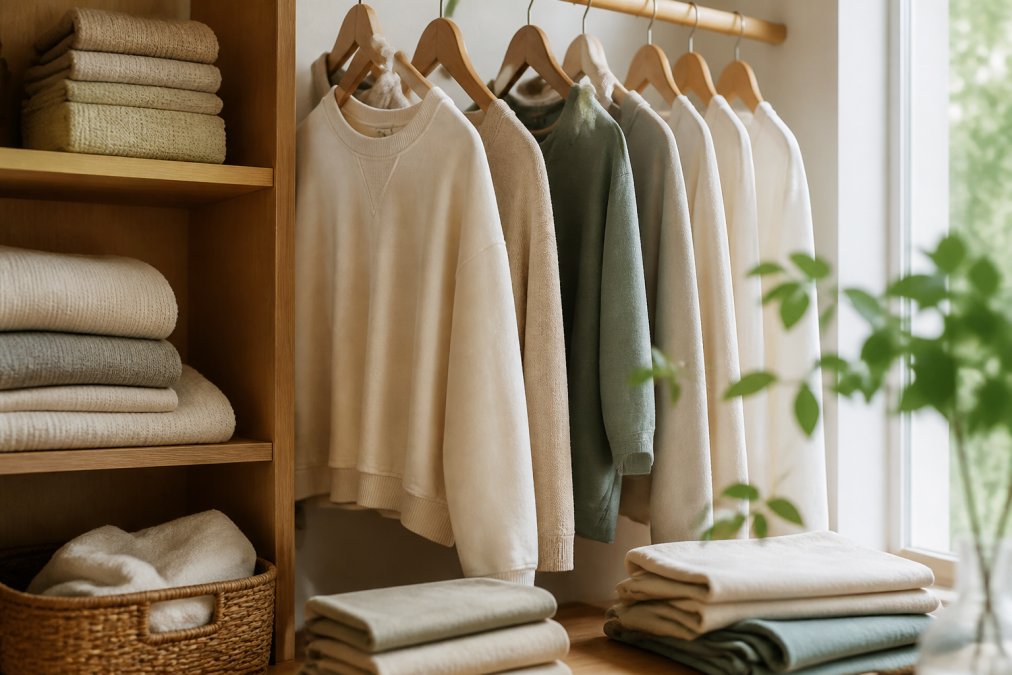
Comfort-Focused Design for Your Online Clothing Store
Table of Contents
- Why Comfort-Focused Design Decides Whether Shoppers Buy
- Fabric Selection and Material Science Behind Comfortable Clothing
- How to Describe Fabric Feel Online Without Sounding Generic
- Best Practices for Clothing Product Photography That Show Comfort
- UX Design for Fashion E-Commerce: Reducing Doubt at Every Step
- Loose vs. Semi-Fitted Silhouettes: Designing for Pressure Points
- Accessibility, Sustainability, and Post-Purchase Comfort Metrics
- Frequently Asked Questions
Last Updated: September 22, 2026
Why Comfort-Focused Design Decides Whether Shoppers Buy
Comfort-focused design for an online clothing store means building every product page, photograph, and checkout step around how a garment actually feels on the body. A shopper cannot touch the fabric, so your page has to do the touching for them. A shopper cannot touch the fabric, so your page has to do the touching for them.
The Gap Between How Clothing Feels and How It Looks Online
Sensory comfort is invisible in a flat product shot, a model can look relaxed in a stiff jacket and the photo will still convert clicks. The problem surfaces after delivery, when the customer feels the fabric and decides whether to keep it or send it back. Comfort-focused design closes that gap by translating touch into words, images, and interface cues, and stores that treat it as a design problem see fewer returns and stronger repeat purchases.
Fabric Selection and Material Science Behind Comfortable Clothing
Fabric selection starts with one question: how will this material behave against skin for eight hours? Four variables determine almost everything a shopper feels, fiber chemistry, yarn structure, fabric construction, and weight. Get them wrong and no amount of styling rescues the garment.
Fabric construction decides breathability and drape.
- Single jersey: one knit face, thin, stretchy, breathable, the classic tee fabric.
- Interlock: two knit faces, denser and smoother, less curl at the edges, better for structured tees and dresses.
- French terry: smooth face with loops on the back, midweight, absorbs sweat without clinging, the standard for comfort-focused sweatshirts.
- Fleece: brushed loops create a plush surface and trap air for warmth, but reduce breathability.
- Rib knit: alternating knit and purl columns create vertical stretch, used at cuffs, necklines, and hems where recovery matters.
- Woven (poplin, twill, oxford): interlocking warp and weft, minimal stretch, structured drape, better for shirts than for loungewear.
Natural Fibers, Jersey Knits, and the Fabrics That Breathe
A common mistake is assuming "soft" and "breathable" mean the same thing. A brushed polyester fleece feels plush but traps heat, while a lightweight cotton jersey feels cooler but offers less warmth. For cool-weather layering, a brushed knit with a relaxed fit gives warmth without restricting movement; for year-round wear, a waffle-textured pullover in a loose silhouette works across seasons.

How to Describe Fabric Feel Online Without Sounding Generic
Describing fabric feel online means replacing vague adjectives with concrete sensory language. "Soft" tells a shopper nothing. "Fuzzy brushed surface that feels plush against the skin" gives them something to imagine. The goal is tactile quality in words: weight, texture, stretch, and how the fabric moves.
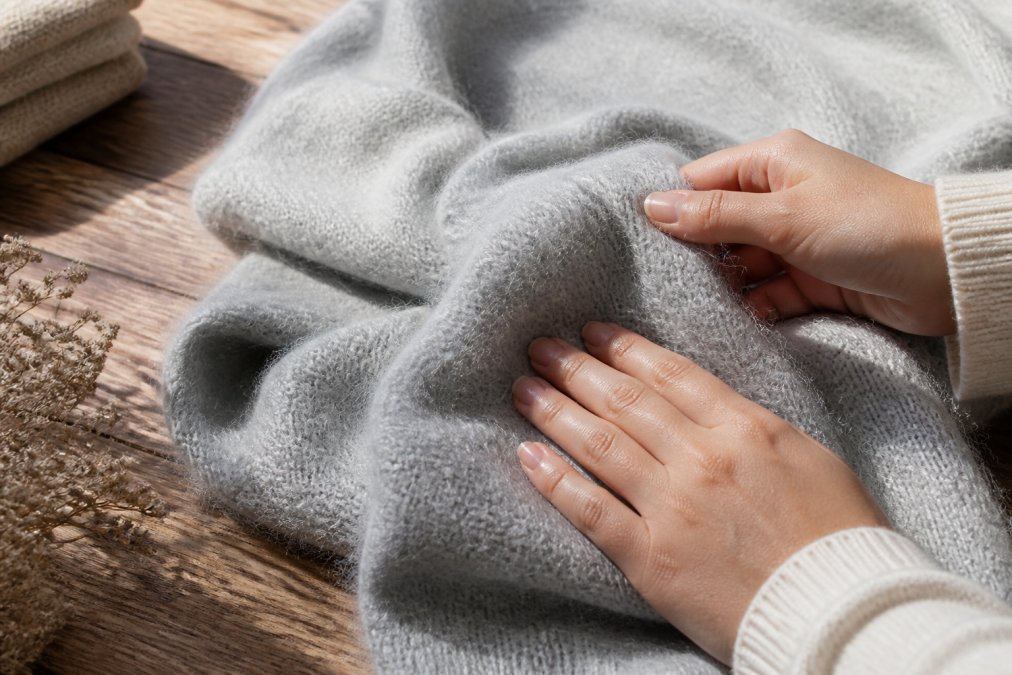
- Texture: Name the surface (brushed, ribbed, waffle, smooth).
- Weight: Lightweight, midweight, or substantial.
- Stretch: Does it give with movement or hold its shape?
- Drape: Does it fall softly or stand away from the body?
- Feel against skin: Cool, cozy, smooth, or textured.
Words That Build Tactile Quality and Sensory Comfort
Write like you're handing the garment to a friend. "The ribbed cuffs hold their shape after washing" beats "high-quality construction." Specificity builds trust, and trust reduces the hesitation that kills online clothing sales.
Best Practices for Clothing Product Photography That Show Comfort
Clothing product photography should show how a garment moves, drapes, and sits on a real body. Static mannequin shots hide the exact qualities comfort-focused shoppers care about. Photograph the garment in motion, in natural light, and from angles that reveal texture.
Best practices for clothing product photography that communicate comfort:
- Shoot fabric close-ups that show weave and surface texture.
- Use natural lighting to reveal how the material catches light.
- Include lifestyle shots of the garment in relaxed, natural poses.
- Show the fit on different body types to support size inclusivity.
- Capture detail shots of cuffs, hems, and seams, where comfort lives or dies.
UX Design for Fashion E-Commerce: Reducing Doubt at Every Step
UX design for fashion e-commerce is about removing doubt before it becomes an abandoned cart. Every interface element should answer a question the shopper hasn't asked yet: Will this fit? Will it feel right? Can I return it if it doesn't?
- Product page: Lead with comfort details, not just aesthetics.
- Size decision: Offer a fit-finder and clear measurements.
- Checkout: Keep it mobile-first and short.
Fit-Finders, Size Inclusivity, and the Mobile-First Checkout
A fit-finder reduces the single biggest source of returns: wrong size. Pair it with size inclusivity that reflects real bodies, not a narrow range. On mobile, where most fashion browsing happens, the interface must load fast and keep the path to purchase short. Design aesthetics matter, but function decides whether the sale completes.
Men's Abstract Knit Sweater With Fuzzy →
Loose vs. Semi-Fitted Silhouettes: Designing for Pressure Points
Silhouette choice determines where a garment touches the body and where it releases. Pressure points at the shoulders, waist, and underarms are where discomfort starts. Loose silhouettes remove pressure entirely, suiting casual dressing and layering; semi-fitted silhouettes follow the body's line without gripping, offering structure for professional settings. Ergonomic apparel design maps these pressure points and cuts fabric to avoid them.
Accessibility, Sustainability, and Post-Purchase Comfort Metrics
Three angles most stores ignore decide long-term loyalty: adaptive design for disability, the sustainability-comfort intersection, and the post-purchase data that tells you whether comfort actually delivered. Competitors cover comfort as a styling trend; almost none treat it as an accessibility, durability, and measurement problem.
Accessibility in Clothing Design: Adaptive Features That Belong in Every Collection
Adaptive clothing is designed for people with disabilities, chronic pain, limited dexterity, or sensory sensitivities, but its features improve comfort for everyone. Common adaptive design elements include:
- Magnetic closures and hook-and-loop fasteners in place of small buttons, which help people with arthritis, tremor, or limited hand strength.
- Seated-fit patterns with a higher back rise and lower front rise, so garments don't gap or bunch when someone is seated for long periods.
- Flat seams and tagless labels to reduce skin irritation, a benefit for anyone with sensory processing differences or eczema.
- Wider openings at neck, cuffs, and hems so garments slide on without forcing joints through tight tunnels.
- One-handed zippers and pull loops for people who dress with one hand.
- Front-closure and side-closure options for people who find back closures inaccessible.
The Sustainability and Comfort Intersection
The fibers that feel best against skin are often the same ones that age best. Cotton, linen, wool, and lyocell hold their hand-feel over many washes when well-constructed, while low-quality synthetics pill, stretch out, and lose softness quickly, which is why fast-fashion garments often feel worse after a month than on day one. Durable natural-fiber pieces stay comfortable longer, reducing the replacement cycle and textile waste.
A few practical levers connect comfort and sustainability:
- Fiber choice: Longer-staple cotton, two-ply yarns, and tighter twist all extend a garment's comfortable life.
- Construction: Reinforced seams, ribbed cuffs that recover, and stable hems prevent the sagging and twisting that make clothes feel worn out.
- Care guidance: Publishing cold-wash and low-dry instructions on the product page preserves both the garment and its comfort.
- Repair and resale: Offering repair guides or a resale channel keeps comfortable garments in use instead of in landfills.
Post-Purchase Comfort Metrics: Measuring What Customers Feel
Comfort is invisible on a product page, so the only way to know whether it delivered is to measure it after the sale. Four metrics do most of the work:
| Metric | What It Measures | Why It Matters |
|---|---|---|
| Return reason codes | Why items come back | Reveals fit and feel failures |
| Comfort mentions in reviews | How customers describe wear | Shows which fabrics delight |
| Repeat purchase rate | Whether they buy again | Proves comfort delivered |
| Size exchange rate | Fit accuracy | Tests your fit-finder |
A few operational details make these metrics useful:
- Tag return reasons at the SKU level, not the order level. "Didn't fit" and "uncomfortable fabric" are different problems with different fixes, one is a sizing issue, the other is a material or description issue.
- Mine review text for comfort vocabulary. Words like "scratchy," "itchy," "clings," "soft," "breathable," and "runs small" cluster around specific fabrics and fits. A monthly pass through review text surfaces patterns a star rating hides.
- Segment repeat purchase rate by fabric and silhouette. If relaxed-fit French terry repurchases at a higher rate than fitted poplin, that's a signal about what your customers actually find comfortable.
- Close the loop with product development. A high size-exchange rate on one style usually means the size chart, the fit-finder, or the grading is off, not that customers are wrong.
Frequently Asked Questions
How does website UX impact the perception of clothing comfort?
A store's interface shapes how shoppers judge comfort before they ever touch the fabric. Clear size charts, fit-finders, and zoomable close-ups of texture reduce uncertainty, while cluttered pages or slow mobile loading create doubt. When a shopper can see how a jersey knit drapes or how a relaxed silhouette sits on a model, they trust the comfort claim.
What visual elements communicate comfort in fashion e-commerce?
Soft lighting, natural poses, and fabric close-ups do most of the work. Show the garment in motion or on a model with a relaxed stance rather than stiff studio poses. Zoomed shots of brushed textures, ribbed cuffs, and plush linings signal tactile quality. Neutral backgrounds keep attention on the material. Adding lifestyle photos of the piece worn in everyday settings, like a hoodie on a weekend walk, reinforces the comfort message better than any written claim.
How can a store balance vintage aesthetics with modern comfort-focused design?
Vintage style and modern comfort are not opposites. A relaxed-fit pullover with a waffle-inspired texture, for example, carries a retro look while using a loose silhouette that moves easily. Pairing timeless patterns with breathable natural fibers and semi-fitted cuts gives shoppers the aesthetic they want without sacrificing wearability. The key is choosing fabrics and silhouettes that honor the vintage reference while updating the fit for all-day wear.
What are the best practices for displaying fabric quality online?
Use multiple angles: a full product shot, a macro close-up of the weave, and a photo of the fabric draped or held. Describe the material in plain terms, such as fuzzy brushed knit or breathable cotton blend, rather than vague words like premium. Include a short note on how the fabric feels against skin and how it performs across seasons. Transparent detail about material and construction builds trust and reduces returns.
Read more
How to Start an Ethical Men's Wardrobe: 2026 Guide
Learn how to start an ethical men's wardrobe in 2026 with capsule essentials, sustainable fabrics, mending tips, and Vinthentic's timeless footwear. Start.
Read more
How to Dress Stylishly While Staying Comfortable
Learn how to dress stylishly while staying comfortable. Explore fabric choices, capsule wardrobe essentials, and styling tips that keep you polished all.
Read more