Article: Best Vintage Clothing Eras for Beginners to Start With
Best Vintage Clothing Eras for Beginners to Start With
Last Updated: November 10, 2026
Quick Summary
The 1950s and 1960s are the easiest vintage clothing eras for beginners to start with, because their simpler cuts and proportions sit close to modern clothing. Choose the decade whose silhouette matches the shape you already dress well in.
- Pick an era that matches the garments you already wear most often.
- Measure chest and shoulders against a shirt you own, since vintage size labels can mislead.
- The 1950s suit broad shoulders with a fuller, boxier cut; the 1960s suit slimmer builds.
- Check an RN number against FTC records, then pair it with label style and construction clues.
- Ask sellers for close photos of labels, seams and interior finishing before buying.
Table of Contents
- Why Your First Vintage Era Decides How Easy Your Wardrobe Feels
- How We Chose These Eras: Wearability, Sizing and Availability
- 1930s to 1940s: Tailored Silhouettes for Structured Dressers
- 1950s to 1960s: Easy Entry Points With Clean Lines
- 1970s to 1990s: Relaxed Pieces That Layer Into Modern Outfits
- How to Date Clothing by RN Number Before You Buy
- Building Your First Vintage-Inspired Wardrobe With Vinthentic Staples
- Frequently Asked Questions
Why Your First Vintage Era Decides How Easy Your Wardrobe Feels
Choosing your first vintage era shapes how easy it is to build a wardrobe that works day to day. Vinthentic sells premium apparel, footwear and accessories that bridge vintage craftsmanship and modern design, and we have seen how easily a look can feel hard to wear outside a costume party. The right starting point is usually the one that fits how you already dress.
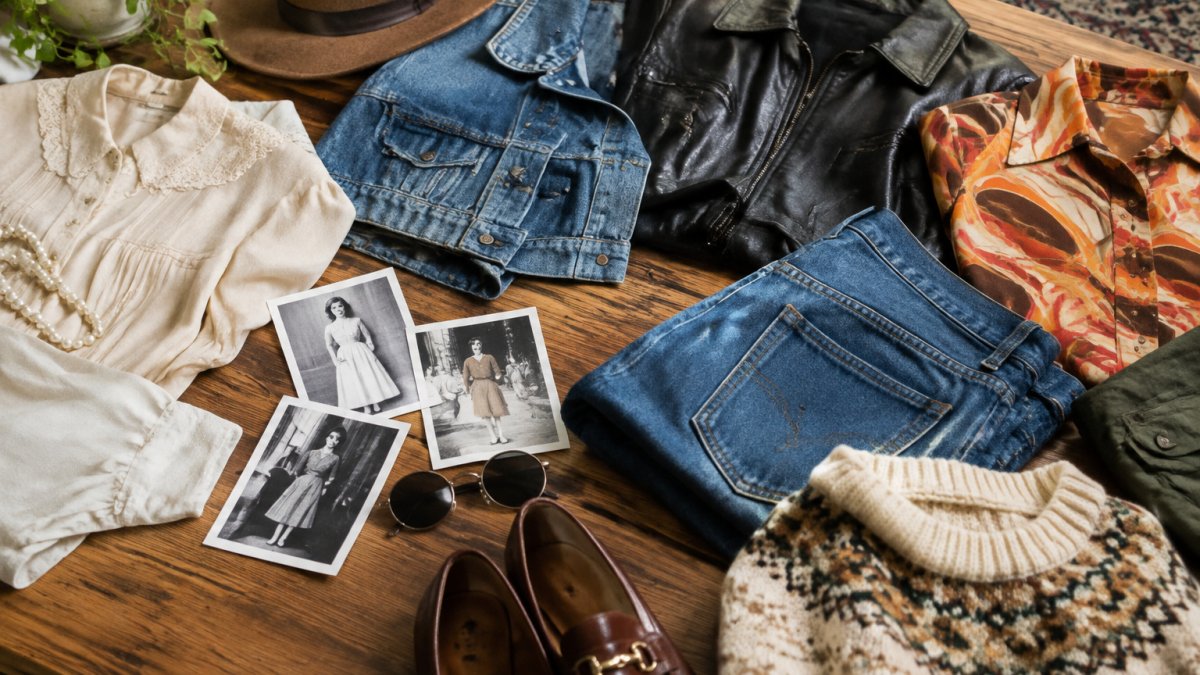
Start by asking what you wear most. If your week is built around jeans, knitwear and sneakers, a relaxed mid-century or 1970s starting point will slot in with less effort than a formal 1940s suit. Vintage clothing eras for beginners are easiest to adopt when the silhouettes match garments you already own. Pick one era, buy two or three pieces, and see how often you reach for them before expanding. Browse a curated set of authentic vintage clothing picks to see what is actually available.
The second question is how much you want to alter your routine. Some eras demand structured tailoring, while others, such as the 1950s and 1960s, offer straightforward shapes that need little adjustment. Choosing well at the start means fewer returns and less frustration.
How We Chose These Eras: Wearability, Sizing and Availability
We ranked eras on three practical factors: how easily their silhouettes work with modern clothing, how forgiving their sizing is, and how readily authentic pieces can be found. Fit matters most for beginners, so eras with clean lines and comfortable cuts scored higher than those built around rigid tailoring.
Availability also shaped the list. Pieces from some decades appear often in secondhand markets, while others are scarce and expensive. We kept the focus on eras where a beginner can realistically buy a few quality pieces without a large budget.
1930s to 1940s: Tailored Silhouettes for Structured Dressers
The 1930s and 1940s suit people who already like structure. Shoulders are defined, waists are defined, and trousers have a deliberate line. The style rewards a tailor's eye, so expect to pay closer attention to fit than you would with later eras.
This era works best if your everyday wardrobe already leans toward blazers, collared shirts and tailored trousers. Start with one structured jacket and a wide-leg trouser, then add accessories such as a leather belt or a hat. The look reads as deliberate rather than costume-like when the pieces are well made and fitted correctly.
Watch out: 1940s garments often run small by modern standards and can be tight through the shoulders and chest. Measure before you buy and compare measurements rather than relying on the size label.
1950s to 1960s: Easy Entry Points With Clean Lines
The 1950s and 1960s are the most forgiving starting point for most beginners because their cuts are simpler and their proportions sit close to modern ones. Shirts have a standard body length, trousers are often straight or lightly tapered, and knitwear follows the body without heavy structure. Those features make it easier to test an era without committing to a full period look.
Fit still matters, and the two decades differ in useful ways. Many 1950s women's dresses and skirts were built around a defined waist and a full skirt. Many 1960s pieces are straighter and shift the waist lower. Choosing the decade that matches the shape you already dress well in makes the first purchase more likely to suit you.
For men, the 1950s favor a fuller, boxier shoulder and a relaxed chest, while the 1960s introduce slimmer lapels and narrower trousers. A man with broad shoulders often finds the 1950s cut more comfortable, while a slimmer build tends to look better in the trimmer 1960s silhouette.
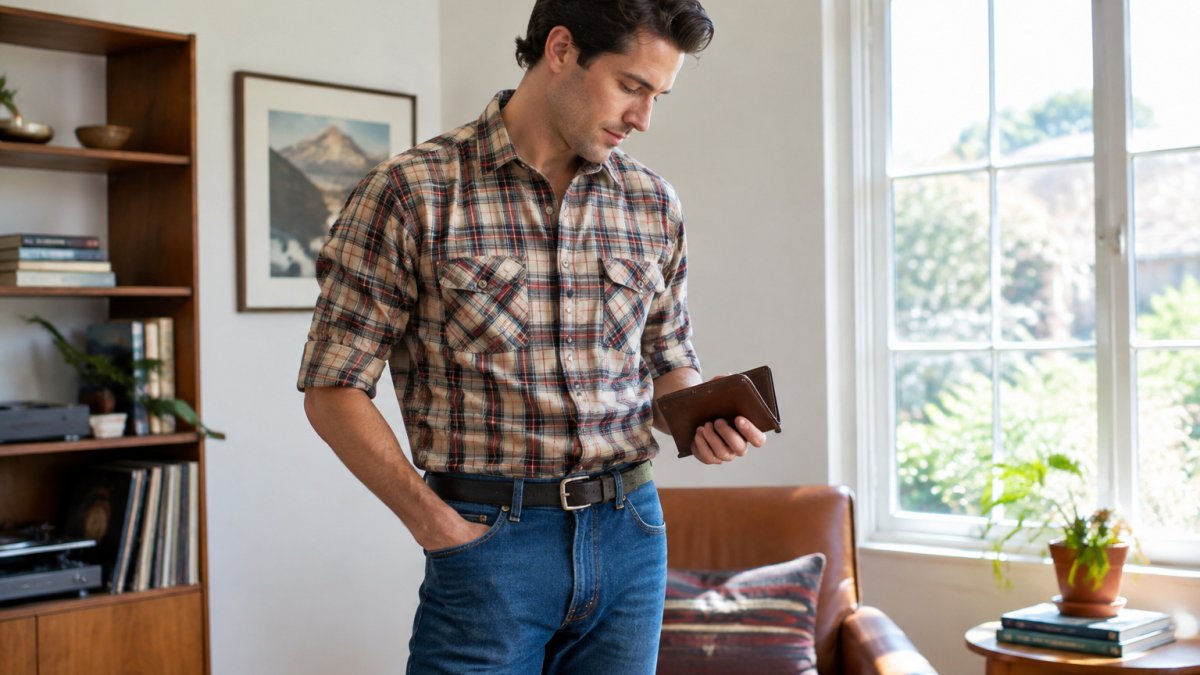
Try a long-sleeve plaid shirt with dark denim for a relaxed weekend look. The Vinthentic Mens Vintage Plaid Shirts Long Sleeve Shirt, priced at $49.99, works well as a first piece because its cut is close to a modern shirt. Pair it with a leather wallet such as the Men's RFID Blocking Pop-Up Card Wallet, $49.99, and you have a complete, low-effort outfit.
Measure the shirt across the chest and shoulders against a shirt you already own, rather than relying on the size label. Compare the length as well.
The table below summarises the key fit differences between the two decades, so you can see which silhouette suits your build.
| Decade | Silhouette | Best for |
|---|---|---|
| 1950s (women) | Defined waist, full skirt | Shapes built around a defined waist |
| 1960s (women) | Straighter, lower waist | Straighter, more relaxed shapes |
| 1950s (men) | Fuller, boxier shoulder | Broad shoulders and a relaxed chest |
| 1960s (men) | Slimmer lapels, narrower trousers | Slimmer builds |
1970s to 1990s: Relaxed Pieces That Layer Into Modern Outfits
These decades offer the most relaxed fits, which suits everyday dressing. Jackets, denim and outerwear from this period layer easily over modern basics, and the silhouettes are familiar enough that they rarely look out of place.
A denim jacket is a practical first buy here. The Alphons Denim Jacket, at $59.99, has a vintage-vibe fit that works over a T-shirt or a knit. For cooler days, the Men's Vintage Stand Collar Jacket, at $94.95, adds a defined neckline without a formal look. Both pieces suit the layering approach that makes this era easy to adopt.
How to Date Clothing by RN Number Before You Buy
An RN number is a Registered Identification Number issued by the United States Federal Trade Commission to companies that manufacture, import or sell wool, fur or textile products (the FTC). Because a single RN can stay in use for decades, the number tells you who was responsible for the garment, not exactly when it was made. Treat it as one clue to pair with other evidence rather than as a date stamp.
Start by locating the RN on the label, which usually appears on a printed or woven tag near the side seam or at the center back neck. Note the full number and look up the registrant through the FTC's public records. Pairing the registration with a label style that matches an era makes a stronger case than either clue alone.
The label itself carries more dating information than most beginners expect. Check whether the fiber content is printed in full or abbreviated, whether country-of-origin wording appears, and whether the tag is stitched, printed or heat-transferred. Federal textile and wool labeling rules have changed over time, and the Federal Trade Commission guidance on textile and wool labeling explains which fiber and origin disclosures were required and when. A label that includes a fiber disclosure the era would not have needed is a warning sign.
Construction can also offer clues. Look at the seams and the finishing, and compare them against reference examples from the era you are researching.
Watch out: a modern reproduction can carry a retro-styled label, so a label match alone is not proof of authenticity. Ask the seller for close photos of the label, the seams and the inside finishing, and compare them against your reference before you pay. Review the craftsmanship standards that back up dating a garment before you buy.
When a seller cannot or will not provide label, seam and interior photos, treat that as a reason to walk away. A clear set of photos is the beginner's most reliable protection against paying vintage prices for a new garment.
Building Your First Vintage-Inspired Wardrobe With Vinthentic Staples
Start with three to five pieces that work together, then build outward. A practical first set includes one layering jacket, one shirt, one pair of boots and one everyday accessory. The Armand Men's Vintage Leather Motorcycle Boots, at $369.95, and the Bastien Men Vintage Leather Motorcycle Boots, at $189.95, offer a heritage-inspired option with a rugged sole. The Léon Men's Leather Ankle Boots, at $89.99, offer a casual everyday option.
Add the Vintage Steampunk Round Sunglasses, at $39.99, for a finishing touch. They include UV400 sun protection. Keep the palette simple so pieces from different eras sit comfortably together. See which websites are trustworthy for buying vintage men's clothing when you are ready to shop. Once two or three items earn a place in your rotation, add the next piece. That approach keeps a vintage wardrobe practical rather than overwhelming.
Frequently Asked Questions
What is the easiest vintage era to wear for beginners?
The 1950s and 1960s are usually the easiest starting points because their silhouettes are clean and close to what people wear now. Simple shirts, straight-leg trousers and classic jackets from these decades layer into everyday outfits without much styling effort. Start with one or two pieces, such as a long sleeve plaid shirt or a stand collar jacket, and build around neutral basics you already own.
How do I know if a vintage piece will fit my body?
Vintage sizing runs smaller and cuts differ from modern clothing, so measure your shoulders, chest and sleeve length and compare them to the garment measurements instead of trusting the label. Check the size guide on each product page before ordering. Pieces such as the Alphons or Mario denim jackets list shoulder, chest, length and sleeve measurements, which makes comparison straightforward.
Is vintage fashion still in style?
Yes. Vintage-inspired pieces remain popular because classic cuts such as stand collars, plaid shirts and motorcycle boots keep returning to everyday wardrobes. The most wearable pieces tend to be the ones built on simple shapes and durable materials rather than strongly period-specific details. Choosing timeless silhouettes makes it easier for a piece to stay useful for years.
How can I mix vintage pieces with modern clothing?
Pair one vintage statement piece with contemporary basics. A vintage leather motorcycle boot works with modern jeans and a plain T-shirt, and a retro stand collar jacket looks current over a simple knit. Keep the rest of the outfit neutral so the vintage element stands out without competing with other details.
Men's Vintage Jacket and Boot Prices in the Article

Read more
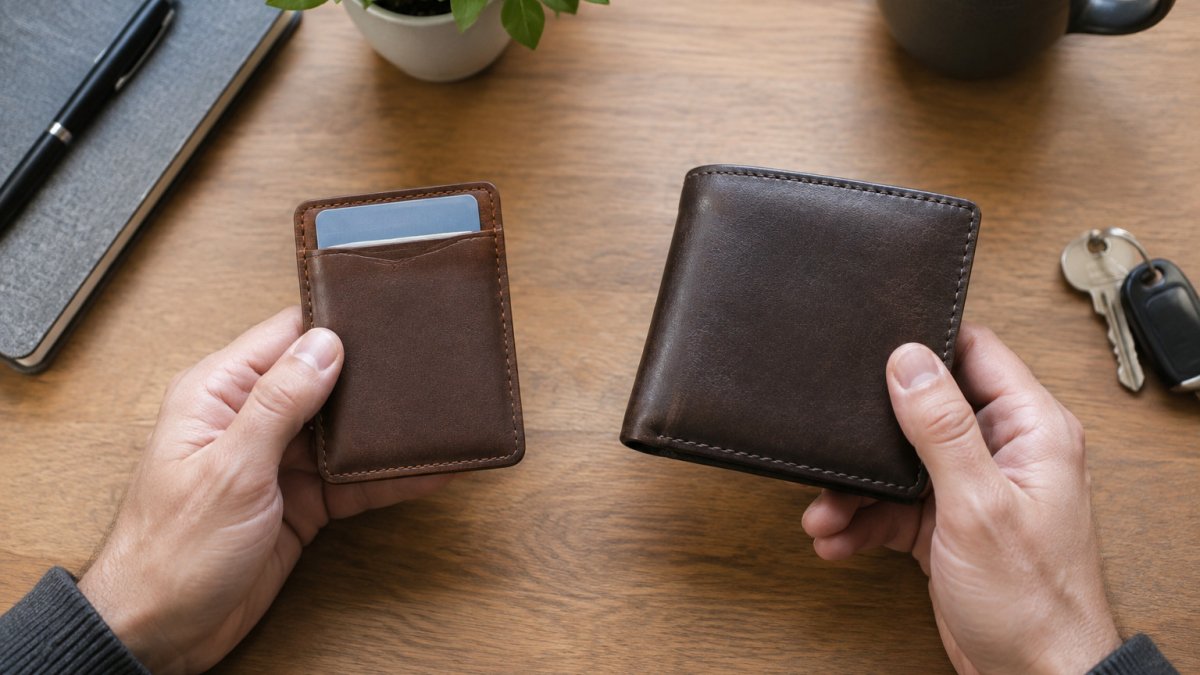
Minimalist Leather Wallet vs Traditional Bifold: Which Fits You
Minimalist leather wallet vs traditional bifold: compare thickness, card and cash capacity, pocket comfort and long-term wear to choose the right wallet.
Read more