

Why Premium Leather Goods Cost More
Table of Contents
- The True Cost of Premium Leather Goods
- How to Tell If Leather Is High Quality
- Full-Grain Leather vs. Genuine Leather: What's the Difference
- Breaking Down the Leather Goods Cost Breakdown
- Handmade vs. Machine-Made: Why Artisan Skill Commands a Premium
- Are Premium Leather Goods Worth It
- How to Verify Leather Quality Before Buying
- Frequently Asked Questions
Last Updated: October 10, 2026
The True Cost of Premium Leather Goods
Premium leather goods cost more due to material quality, production methods, and craftsmanship that separate genuine investments from mass-produced alternatives.
Premium leather goods reflect real costs across sourcing, processing, skilled labor, and construction techniques. A quality leather wallet or boot represents months of work, from selecting hides to finishing edges, rather than hours on an automated assembly line.
How to Tell If Leather Is High Quality
The grain pattern is the most reliable quality indicator: authentic leather shows natural variation and surface marks reflecting the animal's hide, while synthetic or lower-grade leather displays uniform, repetitive patterns.
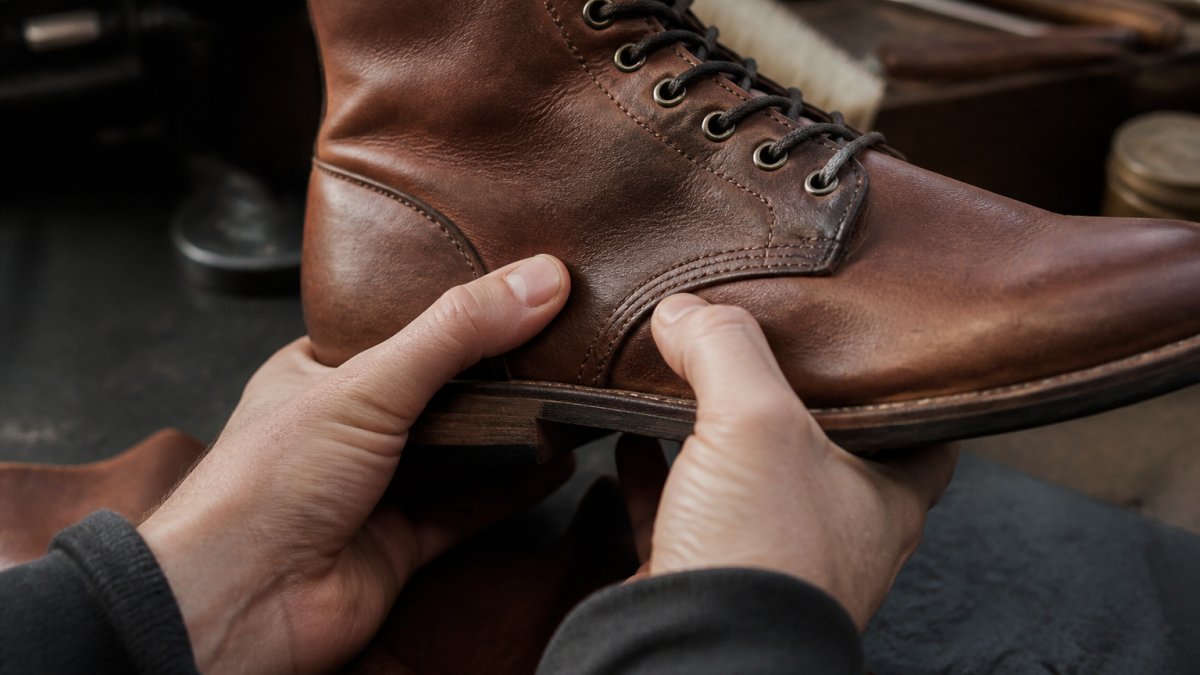
Premium leather feels supple, warm, and slightly textured; small scars or growth marks prove authenticity. Lower-quality leather feels plastic-like and cold because it's heavily processed or synthetic.

Check the back: genuine leather shows a fibrous, organic structure; plastic backing or uniform coating indicates corrected or synthetic material.
Full-Grain Leather vs. Genuine Leather: What's the Difference
Full-grain leather is the highest quality because it retains the complete hide surface with all natural markings, making it more durable and distinctive than alternatives.

"Genuine leather" is a legal term meaning the product contains real leather but could be split, corrected, or bonded scraps. The label doesn't indicate quality, many products labeled "genuine leather" are heavily processed lower-grade materials.
Top-grain leather removes the outer surface layer and applies a protective finish, making it more uniform but less durable long-term as the protective layer wears away.
Full-grain leather develops a rich patina over years, becoming more beautiful with time, while genuine and top-grain alternatives show wear as deterioration.
Breaking Down the Leather Goods Cost Breakdown
Premium leather goods costs distribute across multiple production stages. Understanding this breakdown reveals why premium pricing reflects investment in materials and skill rather than arbitrary markup.
Material Sourcing and Hide Selection
Premium producers source hides from tanneries with strict standards and inspect thousands to find those with minimal markings and consistent thickness.
A premium full-grain hide costs $40-$80 versus $8-$15 for commodity leather. Premium producers accept only 60-70% of available hides, distributing rejection costs across accepted ones.
Established makers work with specific tanneries, commanding premium pricing for reliable supply chains. Traceability adds 10-20% to material costs.
Tanning and Processing
Vegetable tanning, the premium method, uses natural tannins and requires 4-6 months, producing leather that ages beautifully. It costs 2-3 times more than chrome tanning due to longer facility time and specialized labor.
Chrome tanning completes in 1-2 days but creates leather that doesn't develop patina and deteriorates faster. Premium goods use vegetable tanning despite higher costs.
Processing includes washing, stretching, conditioning, and oiling stages requiring skilled labor. Premium tanneries employ 3-5 quality inspectors per 20 workers versus none at commodity tanneries.
Responsible tanneries invest in waste treatment and fair wages, adding 15-25% to processing costs.
Craftsmanship and Labor
A premium boot requires 8-12 hours of direct labor from multiple craftspeople, representing 25-40% of retail price in regions with higher labor standards.
Hand-stitching requires years of skill development and lasts 2-3 times longer than machine stitching, though it takes 2-4 times longer to produce.
Hand-finished edges take 15-30 minutes per item and last longer because sealant penetrates properly and can be re-sealed during repairs.
Hardware, Linings, and Components
Premium goods use solid brass or stainless steel hardware costing $2-$8 per piece versus $0.25-$0.50 for mass-produced equivalents.
Premium goods use full leather or cotton canvas linings costing $3-$8 versus $0.50-$1.50 for polyester, affecting durability and aging.
Overhead, Distribution, and Retail Margin
Premium workshops have 40-50% overhead as a percentage of production costs; large factories achieve 20-30% through scale.
Direct-to-consumer brands keep 50-60% of retail price; wholesale brands keep 30-40% with retailers taking 40-50%.
Putting It Together: A Realistic Example
For a premium full-grain leather wallet retailing at $120:

- Hide and material: $18-$24
- Tanning and processing: $12-$18
- Hardware and lining: $6-$10
- Direct labor (cutting, stitching, finishing): $20-$28
- Subtotal production cost: $56-$80
- Overhead (facility, management, equipment): $16-$24
- Wholesale/direct margin and profit: $24-$40
A $40 mass-produced wallet allocates $8 to materials, $4 to labor, $2 to overhead, and $26 to margin, a different structure than premium goods.
Handmade vs. Machine-Made: Why Artisan Skill Commands a Premium
Handmade leather goods cost more because artisans produce 2-4 items per day versus dozens per hour for machines.
Handmade construction allows artisans to adjust techniques for specific leather characteristics; machines follow fixed parameters regardless of variation.
Artisans can customize designs and sizing; machines require standardized specifications.
Artisans inspect work throughout production, catching issues immediately; factories rely on end-stage inspection.
Are Premium Leather Goods Worth It
Premium leather goods justify their cost for daily-use items over multiple years; for occasional-use or fashion pieces, premium pricing may not align with your needs.
Walker Evans Full Grain Leather Boots →
Cost-Per-Wear and Lifespan Comparison
A $120 premium wallet used daily for 5 years costs $0.07 per day. A $30 mass-produced wallet failing after 1.5 years costs $0.13 per day over 5 years when replacements are factored in.
Premium goods deliver lower cost-per-wear if they last, depending on:
Full-grain leather lasts 5-10 years; top-grain lasts 3-5 years; mass-produced bonded leather lasts 1-2 years.
Premium goods can be resoled for $40-$80, extending life 2-3 years. Mass-produced boots cannot be economically repaired.
Character Development and Aesthetic Value
Full-grain leather darkens and patinas, reflecting your lifestyle and adding sentimental value. Many owners find premium goods become more attractive over time.
Full-grain leather's patina is caused by natural oils darkening the surface and softening the grain, a visible, measurable process most owners prefer.
Mass-produced leather shows wear as deterioration; new items look better than old ones.
Premium leather's aging justifies premium pricing if you value timeless design; it doesn't apply if you prefer items to look new.
Repairability and Extended Lifespan
Premium boots can be resoled for $50-$80, extending life 2-3 years. Premium wallets can be restitched for $15-$30. These repairs are economically viable because the underlying leather justifies the labor.
A $30 wallet with a torn seam costs $15-$25 to repair, nearly the price of a new one, so most people replace rather than repair.
Premium producers often offer repair services or warranty programs, reflecting confidence in construction quality.
Environmental and Ethical Considerations
Premium goods often use vegetable-tanned leather with fewer chemicals and responsible tanneries investing in waste treatment and fair wages. Premium producers often maintain traceability.
Responsible sourcing and production add 15-25% to material and labor costs.
Conversely, durability itself is an environmental argument for premium goods. A wallet that lasts 5 years requires fewer replacements and generates less waste than three 1.5-year wallets. Over a 10-year period, buying one premium item versus six mass-produced replacements reduces material consumption and waste significantly.
When Premium Pricing Reflects Brand Positioning Rather Than Production Value
Not all premium pricing reflects production costs. Some brands charge premium prices primarily for brand positioning, marketing, or perceived status rather than superior materials or craftsmanship. Distinguishing production-based premiums from brand premiums is critical.
Production-based premiums are grounded in measurable differences: full-grain versus top-grain leather, vegetable versus chrome tanning, hand-stitching versus machine-stitching, responsible sourcing versus commodity sourcing. These differences are verifiable and affect durability, aesthetics, and longevity.
Brand premiums reflect marketing, heritage, exclusivity, or perceived status. A $500 leather wallet from a luxury brand might use the same full-grain leather and hand-stitching as a $150 wallet from an emerging maker; the $350 difference is brand positioning, not production value.
To evaluate which premium you're paying:
- Ask about materials, tanning methods, and production techniques. Vague answers suggest brand positioning.
- Compare specifications across brands at different price points. If two wallets use identical full-grain leather and hand-stitching but one costs 3× more, you're paying a brand premium.
- Check return policies and warranties. Confidence in quality (generous returns, repair guarantees) suggests production-based premiums. Restrictive policies suggest brand positioning.
- Research the maker's history and production location. Established makers with verifiable production often justify higher prices; newer brands with limited transparency may be charging for positioning.
The Bottom Line: When Premium Leather Goods Make Financial Sense
Premium leather goods justify their cost when:
- You'll use the item regularly for 5+ years.
- Durability and repairability matter to you.
- You value the aesthetic of aged leather.
- You can verify that premium pricing reflects production value (materials, craftsmanship, responsible sourcing) rather than brand positioning alone.
- The item serves a core function in your life (daily-use wallet, work boots, everyday bag) rather than occasional or fashion-driven use.
Premium leather goods may not make sense if:
- You replace items frequently or follow fashion trends.
- You prioritize lowest upfront cost.
- You don't value the aging characteristics of full-grain leather.
- The brand's premium pricing is primarily marketing-driven rather than production-driven.
- The item is occasional-use or experimental (you're unsure you'll like it long-term).
The decision hinges on alignment between the product's durability and your actual use pattern. A premium leather boot is a sound investment if you wear it 4 days per week for 5 years; it's wasteful if you wear it 4 times per year. Honest self-assessment of your usage patterns is the first step to evaluating whether premium pricing delivers genuine value.
How to Verify Leather Quality Before Buying
Before purchasing premium leather goods, verify quality through direct inspection whenever possible.
Ask about tanning methods. Premium producers specify whether they use vegetable tanning or chrome tanning.
Check stitching patterns. Premium hand-stitching shows consistent spacing, proper tension, and secure knots. Machine stitching should be uniform and tight.
Examine edge finishing. Premium leather goods show sealed, finished edges with color-matched stain or natural leather finish.
Review return policies. Reputable premium producers offer generous return windows because they're confident in quality. Restrictive policies suggest the producer doubts durability.
Ask about warranty or guarantee. Some premium producers offer repair guarantees or warranties. This confidence in construction quality reflects genuine craftsmanship.
| Quality Indicator | Premium Goods | Mass-Produced |
|---|---|---|
| Grain Pattern | Natural variation, visible marks | Uniform, repetitive, corrected |
| Stitching | Hand-stitched or heavy-duty machine | Light machine stitching |
| Edge Finish | Hand-sealed, color-matched | Raw or plastic-coated |
| Hide Selection | Selective sourcing, high rejection rate | Commodity leather, minimal sorting |
| Tanning Method | Vegetable tanning (months) | Chrome tanning (days) |
| Cost-Per-Wear | Lower over product lifetime | Higher due to shorter lifespan |
Premium leather goods represent a deliberate choice to invest in durability, character, and timeless design.
Frequently Asked Questions
How can I tell if leather is genuinely premium quality?
Genuine premium leather shows consistent grain patterns, develops a natural patina over time, and feels supple rather than plastic-like. Check for natural imperfections, full-grain leather retains surface marks from the hide, which indicates authenticity. Run your hand across the surface; quality leather feels smooth and slightly textured, not uniform. Products like the Walker Evans Full Grain Leather Boots display these hallmarks, with their natural grain and handcrafted construction revealing true material quality.
What's the difference between full-grain leather and genuine leather?
Full-grain leather uses the entire hide with the surface intact, preserving the natural grain and developing character over time. Genuine leather is a broader term that includes lower-grade options where the surface has been sanded or corrected and covered with polyurethane. Full-grain is superior because it's more durable, ages beautifully, and maintains its structural integrity. Genuine leather may feel softer initially but wears less gracefully and offers shorter lifespan, making full-grain the better investment for premium goods.
Are premium leather goods worth the higher price?
Premium leather goods justify their cost through durability, longevity, and cost-per-wear economics. A $90 pair of full-grain leather boots worn regularly for five years costs roughly $3.60 per wear, while cheaper alternatives may need replacement in two years. Premium pieces develop patina and character, often becoming more valuable over time. They're repairable and maintainable, extending their lifespan further. For professionals and style-conscious individuals building a lasting wardrobe, the investment pays dividends in both function and aesthetics.
Why do leather goods cost so much compared to synthetic alternatives?
Premium leather costs more because of material sourcing, labor-intensive production, and superior longevity. Quality hides are expensive and require careful selection; only 60-70% of a hide yields usable material. Tanning, whether vegetable or chrome, is a complex, time-consuming process. Handcrafted construction involves skilled artisans performing cutting, stitching, and edge finishing by hand, which takes significantly longer than machine production. These factors compound into higher retail prices, but they also explain why premium leather goods outlast and outperform cheaper alternatives.
Read more

Vintage Footwear for Office Wear: 10 Styles That Work
Discover vintage-inspired office footwear that blends timeless style with professional comfort. Shop loafers, oxfords, boots, and more starting at $42.95.
Read more
How to Spot High Quality Clothing: 7 Checks
Learn how to spot high quality clothing with 7 practical checks for fabric, stitching, and labels. Use this guide before your next purchase.
Read more