
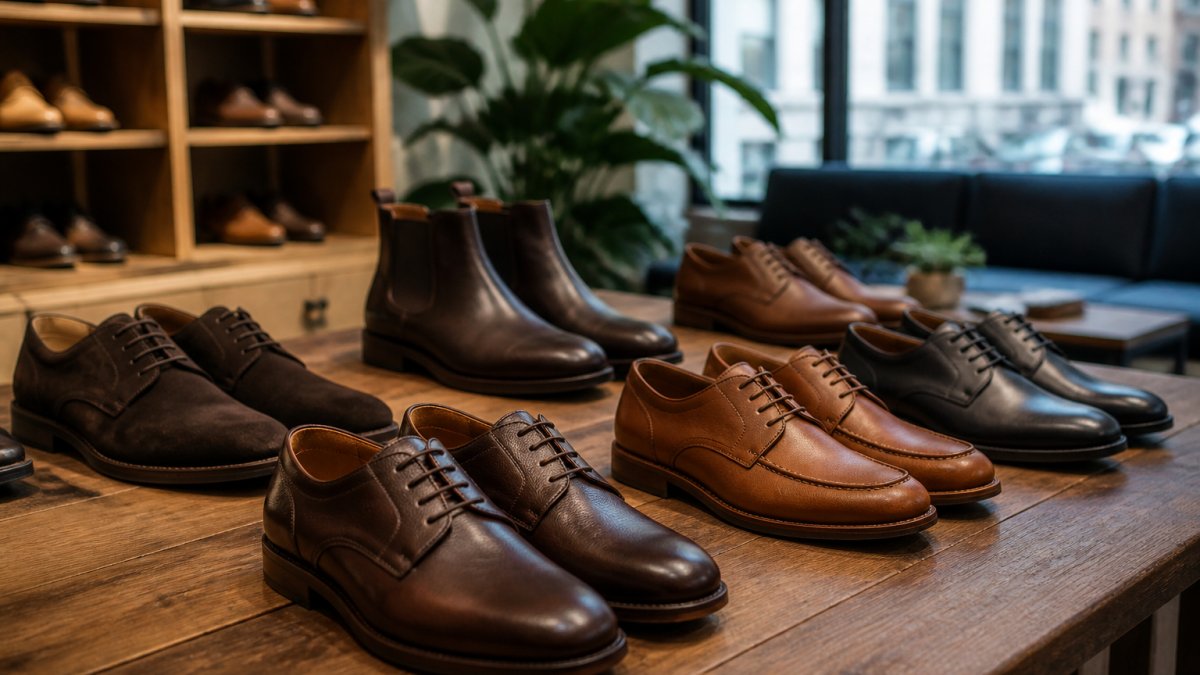
Premium Footwear Brands: 2026 Guide to Quality Shoes
Table of Contents
- What Makes Premium Footwear Brands Different
- Luxury Shoe Brands and What You Actually Pay For
- High-Quality Shoe Brands: Reading Construction, Leather, and Soles
- Comfortable Shoe Brands: Fit, Sizing, and Width Guidance
- Premium Footwear Brands by Category and Use Case
- How to Choose Quality Shoes: Cost Per Wear and Long-Term Value
- Frequently Asked Questions
Last Updated: October 6, 2026
What Makes Premium Footwear Brands Different
Premium footwear brands are defined by how the shoe is built, not by the logo on the box. Genuine leather uppers, stitched construction, and a replaceable sole separate a shoe that lasts a decade from one that lasts a season.

Most shoppers assume premium footwear means expensive, and that assumption costs them money. A $400 shoe can wear out in two years, while a well-constructed pair at a fraction of the cost holds its shape far longer.
Here is what actually separates a premium shoe from a mass-market one:
- Upper material: Full-grain or genuine leather that creases and recovers, not a corrected-grain or synthetic blend that cracks.
- Construction: Stitched or welted assembly, which allows resoling, rather than cemented layers that separate.
- Insole and lining: Leather linings that breathe, plus a cushioned insole that supports long days on your feet.
- Sole: Rubber or leather that can be replaced by a cobbler instead of discarded with the shoe.
The Federal Trade Commission's guidance on leather labeling is worth knowing here. It sets out when a product may legally be described as leather, which is why "genuine leather" on a label is a claim you can check rather than a marketing word.
That distinction matters more than any brand name. Once you can read construction, the category becomes easier to navigate.
Luxury Shoe Brands and What You Actually Pay For
Luxury shoe brands charge for three things: materials, labor, and positioning. The first two show up in the shoe; the third only in the receipt.
The clearest way to understand the category is to separate three tiers that shoppers routinely blur together:
- Mass-market: Cemented construction, corrected-grain or synthetic uppers, fabric linings, glued soles. Built to a price, replaced when they wear out. Typical retail runs from roughly $60 to $150.
- Premium: Genuine full-grain leather, stitched or welted construction, leather linings, resolable soles. Built to a standard, repaired when they wear. Typical retail runs from roughly $200 to $600.
- Luxury: Everything premium offers, plus rarer hides, more handwork, and a brand premium that can double or triple the price of a comparable premium shoe. Typical retail runs from roughly $600 into four figures.
The line between premium and luxury is positioning, not quality. A luxury house and a premium maker can use leather from the same tanneries and finish to a similar standard, yet the luxury pair costs two to three times as much because of the name on the insole.
Here is where the money actually goes in a luxury shoe:
| Cost Component | What It Buys | Whether You Can See It |
|---|---|---|
| Leather and materials | Denser hides, better tanning, fewer defects | Yes, in the crease and finish |
| Labor and handwork | Clean stitching, aligned panels, secure welt | Yes, on close inspection |
| Brand positioning | Advertising, retail space, prestige | No, only in the price |
| Packaging and presentation | Box, bags, extras | Partly, but rarely worn |
A few houses show how differently that positioning plays out. Italian makers such as Santoni and Silvano Sassetti are known for hand-finished uppers and patina work difficult to replicate at scale.
You are paying for materials and labor, and those determine how the shoe ages. Positioning is real, but it does not keep your feet comfortable at hour ten.
A useful rule: if a shoe costs more than about twice a comparable premium pair and you cannot point to a specific material or construction difference, you are paying for the label. Buy it knowingly, not blindly.
High-Quality Shoe Brands: Reading Construction, Leather, and Soles
High-quality shoe brands share recognizable construction signatures. Learning to spot them takes five minutes in a store and saves years of replacing worn-out pairs.
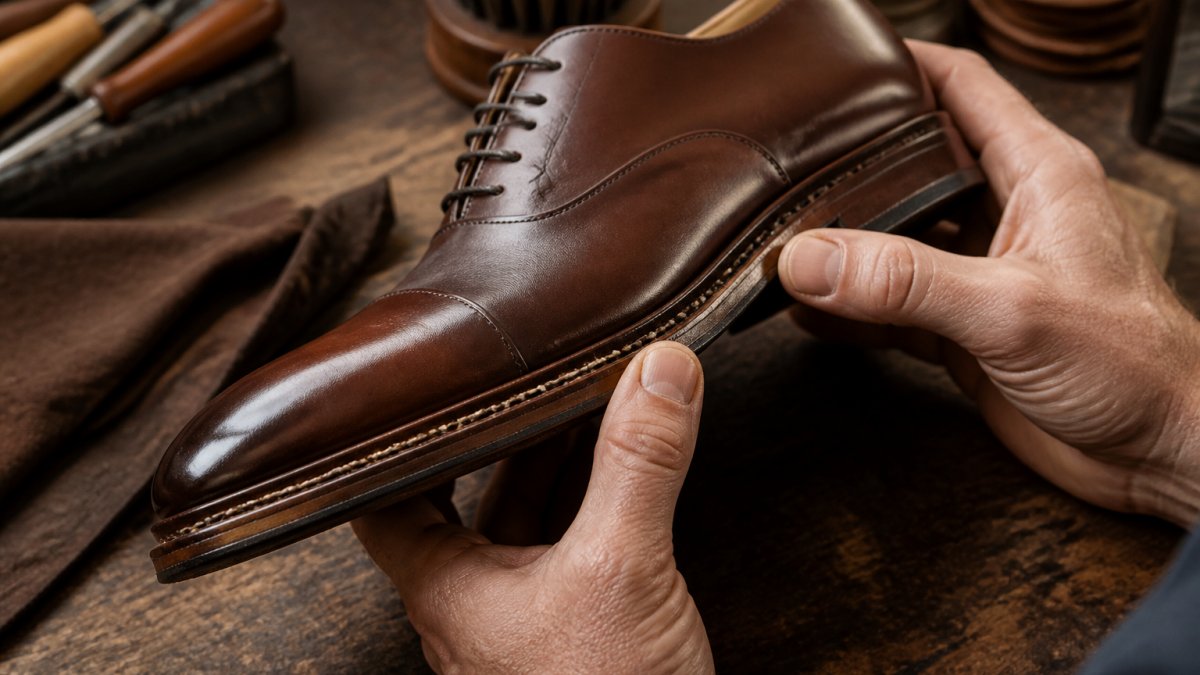
Start with the leather. Press your thumb into the upper near the toe.
Then check the sole attachment. On a stitched or welted shoe, you can see a line of stitching running around the edge where the upper meets the sole.
Finally, look at the lining. A smooth leather lining manages moisture and molds to your foot over time.
A common mistake is judging a shoe by weight. Heavier does not mean better: a dense leather sole and steel shank add weight, but so does cheap filler board.
Comfortable Shoe Brands: Fit, Sizing, and Width Guidance
Comfortable shoe brands get the fit right before the styling. Fit is where premium footwear delivers or fails, and it is the factor online shoppers most underestimate.
Sizing is not consistent across makers or countries. A US size 9 is roughly a UK 8 and an EU 42, but last shapes vary enough that you should treat every brand's chart as its own.
Width is the variable most shoppers ignore. A shoe that pinches across the ball of the foot is usually too narrow, not too small. Sizing up to fix width creates heel slip, which causes blisters and uneven wear.
Three fit checks before you commit:
Italica Pelle Genuine Leather Shoes →
- Heel: Your heel should sit locked with minimal slip when you walk.
- Ball of the foot: The widest part of your foot should align with the widest part of the shoe.
- Toe: Leave roughly a thumb's width between your longest toe and the front.
Leather uppers break in and adapt; synthetic uppers do not. That is why genuine leather footwear feels better in month three than in week one.
Premium Footwear Brands by Category and Use Case
Premium footwear brands sort naturally by what you need the shoe to do. A single pair rarely covers a formal event, a commute, and a weekend, so buy by use case rather than brand loyalty alone.
Dress Shoes and Formal Footwear
For office and formal wear, the Oxford is the benchmark: closed lacing gives a clean, formal line. The Derby, with open lacing, is more relaxed and easier to fit across a high instep. A monk strap sits between the two, with a buckle instead of laces.
Our recommendation for most wardrobes is to start with one Oxford in a dark, versatile color and add a Derby or monk strap second. Vinthentic's formal Oxford in classic design is built for exactly that role, with a comfortable fit intended for long office hours. The Condriano Oxford Leather Shoes take the same idea further, with an antique-leather finish, decorative wingtip stitching, and a rubber sole that handles pavement better than a leather sole does.
Boots, Loafers, and Everyday Casual Shoes
Everyday footwear is where comfort and durability matter most, since you wear these four or five days a week. Chelsea boots, loafers, and ankle boots cover nearly every casual situation.
For a Chelsea boot, look for a cushioned insole and a slip-resistant sole. Vinthentic's Antonio Alciati Leather Chelsea Boots pair a premium Italian leather upper with a durable, slip-resistant sole and a cushioned insole for all-day wear.

Loafers are the easiest entry point into leather footwear. The Lionel Portavani Men's Leather Slip-On Loafers use a genuine leather finish, a slip-on design, and a lightweight build that suits travel and casual outings. The Vinthentic Milano Men's Loafers lean further into Italian styling, with a cushioned insole and a handcrafted finish.
Matching the Shoe to the Situation
Most buyers do not need more brands; they need a clearer sense of which shoe fits which part of their week. The table below maps common use cases to the best category.
| Use Case | Best Category | What to Look For |
|---|---|---|
| Business and formal wear | Oxford | Closed lacing, leather lining, resolable sole |
| Smart-casual and high insteps | Derby | Open lacing, rubber or leather sole |
| Everyday wear, cooler months | Chelsea boot | Cushioned insole, slip-resistant sole |
| Travel, casual, easy on-off | Loafer | Genuine leather, lightweight build |
| Cold weather, suede styling | Ankle boot | Plush lining, non-slip sole |
| Long walking days, commuting | Derby or cushioned loafer | Rubber sole, padded insole, roomy toe box |
| Wet or slushy conditions | Rubber-soled boot | Water-resistant upper, deep tread |
A few notes on the less obvious rows. For commuting and long walking days, a rubber sole absorbs impact better than leather and grips wet pavement, which matters more than formality. For travel, a lightweight loafer that slips off at security and packs flat beats a heavier boot. For wet weather, suede is the wrong choice no matter how well made; smooth leather with a rubber sole holds up far better.
If you live in a climate with real winters, add a rubber-soled boot as a third pair. If you travel often, prioritize the loafer. Own the two or three categories that match how you actually spend your days.
How to Choose Quality Shoes: Cost Per Wear and Long-Term Value
Cost per wear is the honest way to compare footwear. Divide the price by the number of times you expect to wear the pair.
The math rewards durability, versatility, and repairability.
Sustainability sits in the same place. A pair worn for years and resoled once or twice uses far fewer resources than four pairs bought and discarded. EPA guidance on reducing waste through reuse and repair makes the same point about durable goods generally: keeping something in service longer is one of the most effective ways to cut waste.
A simple scoring method for any pair you are considering:
- Upper is genuine leather, confirmed by the crease test
- Sole is stitched or welted, not only cemented
- Lining is leather, not fabric
- Color works with at least three outfits you already own
- Size matches your measured foot, not your old shoe size
- Width fits across the ball without pinching
Score six out of six and the pair will likely outlast two cheaper alternatives. Score three or fewer and the price is doing the talking, not the shoe.
The real challenge with premium footwear is not finding brands, it is judging them before you buy. Construction, leather, and fit decide whether a pair earns its place in your wardrobe, and none show up in a marketing photo.
That is the standard we hold at Vinthentic. Our leather footwear is built on genuine leather craftsmanship, handcrafted precision, and timeless design, with comfort-focused construction for everyday wear.
Shop now and step into a pair that still looks right in three years.
Frequently Asked Questions
What makes a footwear brand premium?
A premium footwear brand earns that label through materials and construction, not marketing. Look for full-grain or genuine leather uppers, stitched or welted soles rather than glued ones, leather linings, and consistent sizing across the range. Price alone does not qualify a brand. A $59.99 pair with genuine leather and a durable rubber sole can outperform a $300 pair built from corrected-grain leather and cemented construction. The deciding factors are what the shoe is made of and how it holds up after a year of regular wear.
Which premium footwear brands are known for comfort?
Comfort comes down to the insole, lining, and last shape rather than the logo. Brands that prioritize cushioned insoles, smooth leather linings, and true-to-size lasts tend to score best. In practice, a leather Oxford with a breathable design and rubber sole handles long office days, while a Chelsea boot with a cushioned insole and slip-resistant sole works for commutes. Check the size chart before ordering: most premium footwear runs true to size, and getting the width right matters as much as the length.
Are premium shoes worth the investment?
Run the cost-per-wear math. A $60 pair of genuine leather shoes worn three times a week for two years costs roughly $0.19 per wear. A $200 pair that lasts four years at the same frequency costs about $0.32 per wear, but if the cheaper pair falls apart in six months, the math flips hard. Premium footwear that uses quality leather and durable soles usually wins on long-term value because you replace it less often and it keeps its shape. Resoling and conditioning extend that further.
How can you tell if premium shoes are well made?
Check four things. First, the leather: genuine leather should feel supple and show a natural grain, not a uniform plastic sheen. Second, the sole: a stitched or welted sole can be repaired, while a glued sole usually cannot. Third, the lining: smooth leather lining signals better construction than synthetic fabric. Fourth, the stitching: even, tight rows with no loose threads. Flex the shoe at the ball of the foot; it should bend there naturally, not in the middle of the arch.
Read more
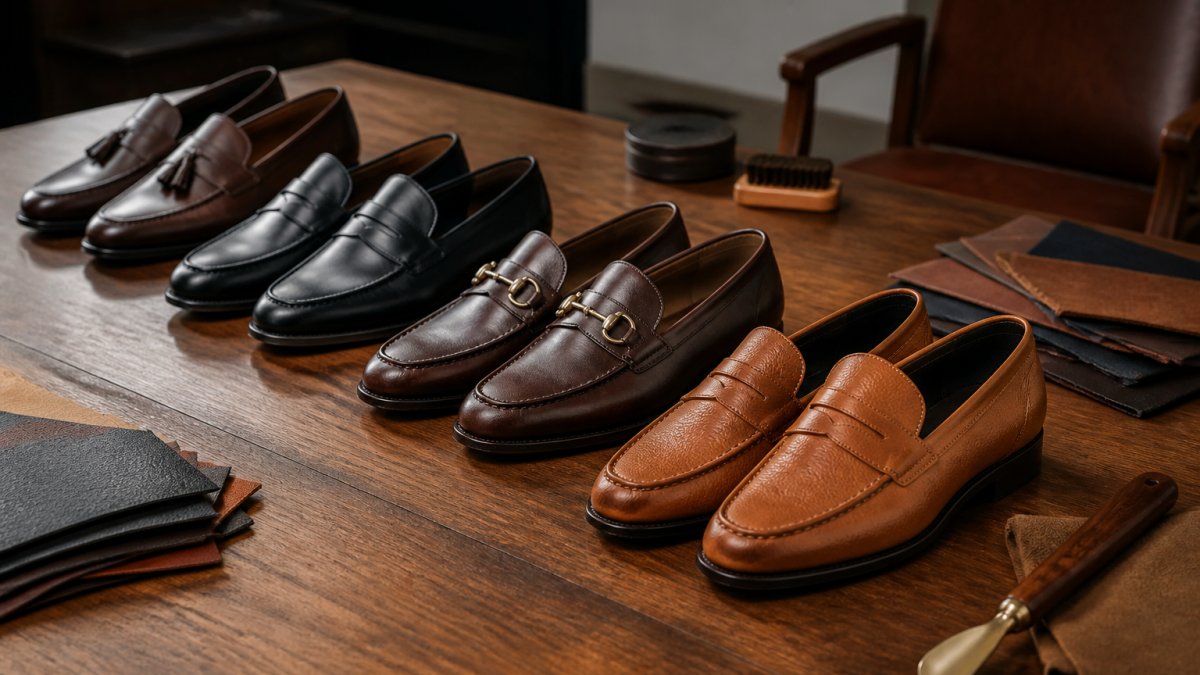
Luxury Leather Loafers: A 2026 Comparison Guide
Luxury leather loafers compared by leather type, construction, fit, and care. Find your pair with real prices and honest guidance.
Read more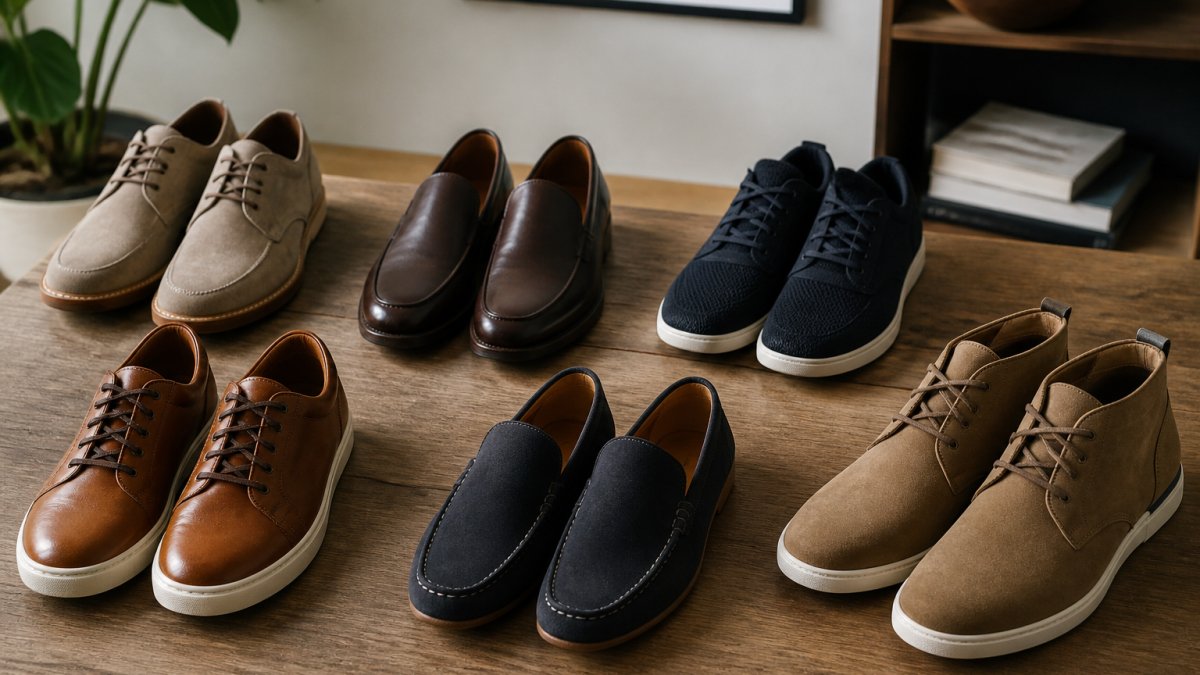
7 Best Comfortable Smart Casual Shoes for Men
Discover the 7 best comfortable smart casual shoes for men. Compare pricing, cushioning, and style for loafers, boots, and sneakers.
Read more