Article: How to Choose the Right Polo Shirt Fit for Men?

How to Choose the Right Polo Shirt Fit for Men?
Quick Summary
A well-fitting polo shirt fits smoothly across the shoulders, skims the chest without pulling, and ends at a length that covers your waistband. Check each zone in turn, because a polo shirt fit problem usually starts at the shoulders.
- The shoulder seam should sit right at the edge of your shoulder bone.
- Pinch about an inch of fabric at the side of your chest; more than that billows, less pulls.
- Measure your chest and compare it to the brand's size chart, not the size label.
- Choose the larger size if your shoulders fall between two sizes, since shoulders cannot be widened.
- Check the hem by bending forward and sitting; it should stay over your waistband.
Table of Contents
- What a Well-Fitting Polo Shirt Looks Like
- Measure Yourself Before You Shop
- Men's Polo Shirt Size Guide: Matching Measurements to Sizes
- Checking Shoulder Seams, Chest and Torso
- Polo Shirt Sleeve Length and Sleeve Opening
- Polo Shirt Body Length and Hem Placement
- Slim Fit vs Classic Fit Polo: Which Cut Suits You
- Fabric Shrinkage, Fit Troubleshooting and Your Next Polo
- Frequently Asked Questions
What a Well-Fitting Polo Shirt Looks Like
Last Updated: November 17, 2026
A well-fitting polo shirt sits smoothly across your shoulders, skims your chest without pulling, and ends at a length that covers your waistband. These checks are easier to make when you know your measurements, and Tim Cosgriff Art's measuring guide can help you establish them before choosing a polo.
The polo shirt fit should feel comfortable the moment you put it on.
Here are the zones that matter most:
- Shoulders: The seam sits right at the edge of your shoulder bone.
- Chest: Enough room to move, with no gaping or tight pulling.
- Torso: A gentle taper that follows your waist without clinging.
- Sleeves: Hit about mid-bicep, with openings that sit snug, not tight.
- Length: Covers your waistband, even when you raise your arms.
Sizing charts only tell part of the story. A shirt can match your chest measurement and still fit poorly through the shoulders.
Watch out: a shirt that looks loose on the hanger often looks baggy once worn, because the knit relaxes after a few hours. Try it on and move around before you decide.
Measure Yourself Before You Shop
Taking a few measurements at home makes shopping faster and returns less likely.
Start with your body measurements:
- Chest: Wrap the tape around the fullest part of your chest, under your arms, keeping it level across your back. Keep the tape snug but not tight enough to compress.
- Shoulder width: Measure from the edge of one shoulder bone to the other, across your upper back. Have a helper do this one if you can; reaching across your own back distorts the number.
- Waist: Measure around your natural waistline, usually just above your belly button.
- Torso length: Measure from the highest point of your shoulder down to where you want the hem to sit, your belt line for a tucked look, or the widest part of your hips for an untucked look.
Then measure the polo you already own, laid flat and buttoned:
- Chest width: Measure straight across from one underarm seam to the other, then double it. This is the garment's chest circumference.
- Shoulder seam to shoulder seam: Measure across the back from the top of one shoulder seam to the other.
- Body length: Measure from the base of the collar at the back down to the hem.
- Sleeve opening: Measure across the sleeve hem, then double it.
Write each number down and take the measurements twice to catch mistakes. Keep the notes on your phone so you can check them while shopping online.
A common pattern is that your body chest measurement plus about 2 to 4 inches of ease equals a comfortable garment chest width for a classic fit; a slim fit runs closer to 1 to 2 inches of ease. Use your own well-fitting polo as the reference point rather than trusting a general rule.
Before you commit to a shirt, run a five-minute try-on test in front of a mirror:
- Shoulder check: The seam should sit at the edge of your shoulder bone. Raise your arms overhead and lower them; the seam should return to the same spot.
- Chest check: Pinch about an inch of fabric at the side of your chest. More than that and the shirt will billow; less and it will pull when you reach.
- Torso check: Sit down and lean forward. The fabric should not strain across the buttons or gap at the placket.
- Sleeve check: Lift one arm to shoulder height. The sleeve opening should stretch slightly without riding up over your shoulder.
- Length check: Bend forward and then sit. The hem should stay over your waistband the whole time.
A shirt that measures correctly on the flat can still feel tight in motion, so always run the movement checks before you cut off the tags.
Men's Polo Shirt Size Guide: Matching Measurements to Sizes
Compare your numbers to the brand's size chart, not to a size label like "M" or "L." Sizes vary between brands, so a medium from one label can fit like a large from another.
Match your chest measurement first, since it is the hardest area to alter later.
A quick way to choose:
- Chest matches the size chart: Start with that size.
- Shoulders are wider than the chart: Size up.
- Waist is much smaller than the chest: Consider a slim or tapered cut.
- Between two sizes: Pick the one that matches your shoulders.
Our shoppers often find the Men's Lightweight Breathable Polo Shirt Black useful when they want a tailored shape in a breathable fabric.
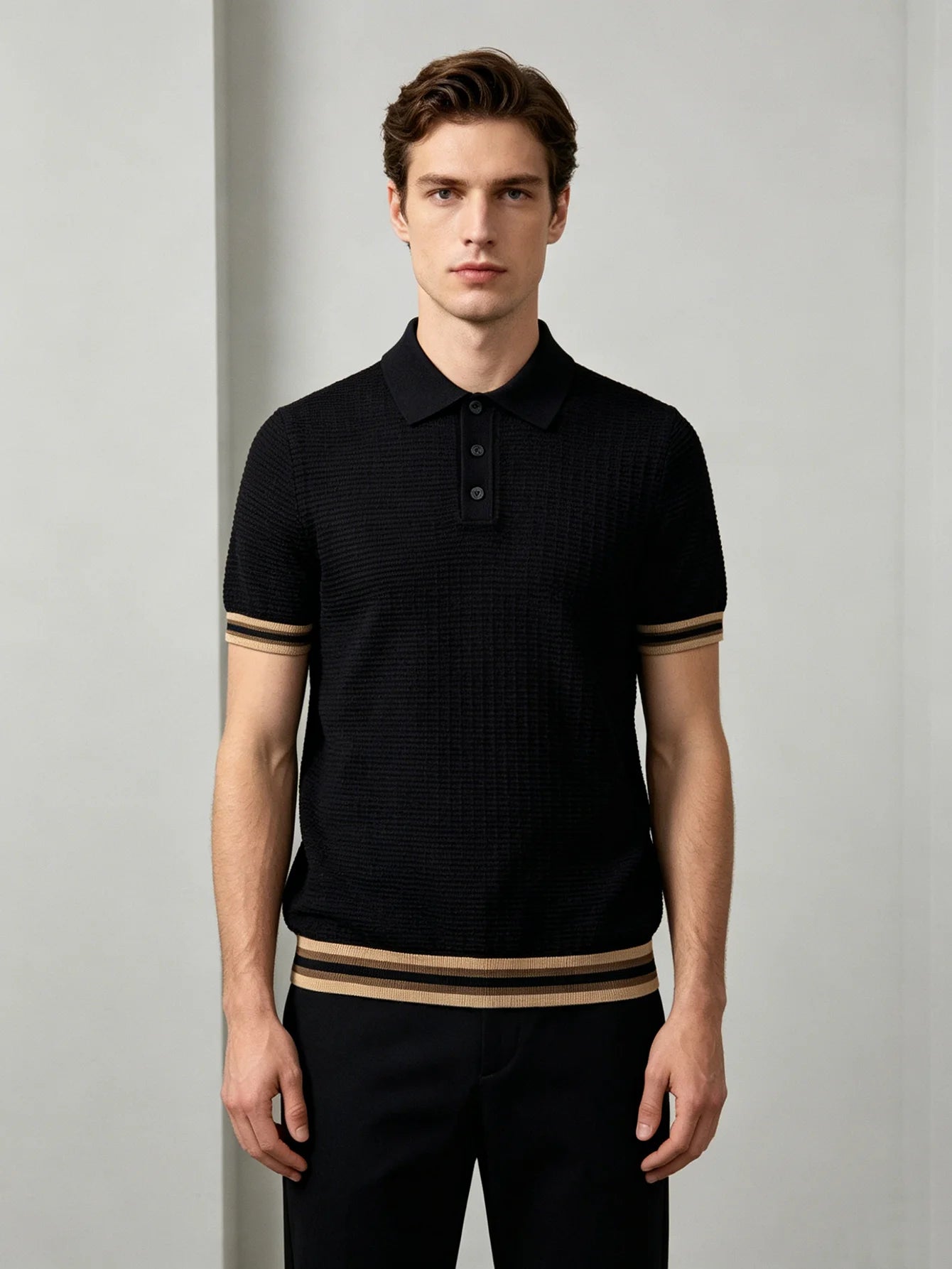
Use this quick reference to match your measurements to the right size and cut.
| Situation | What to do | Note |
|---|---|---|
| Chest matches the size chart | Start with that size | Chest is hardest to alter later |
| Shoulders wider than the chart | Size up | Tailors cannot widen shoulders |
| Waist much smaller than chest | Consider a slim or tapered cut | Fits the torso more closely |
| Between two sizes | Pick the size that matches your shoulders | Sizes vary between brands |
Checking Shoulder Seams, Chest and Torso
Fit problems often start at the top of the shirt. Stand in front of a mirror with the polo on and check each area in turn.
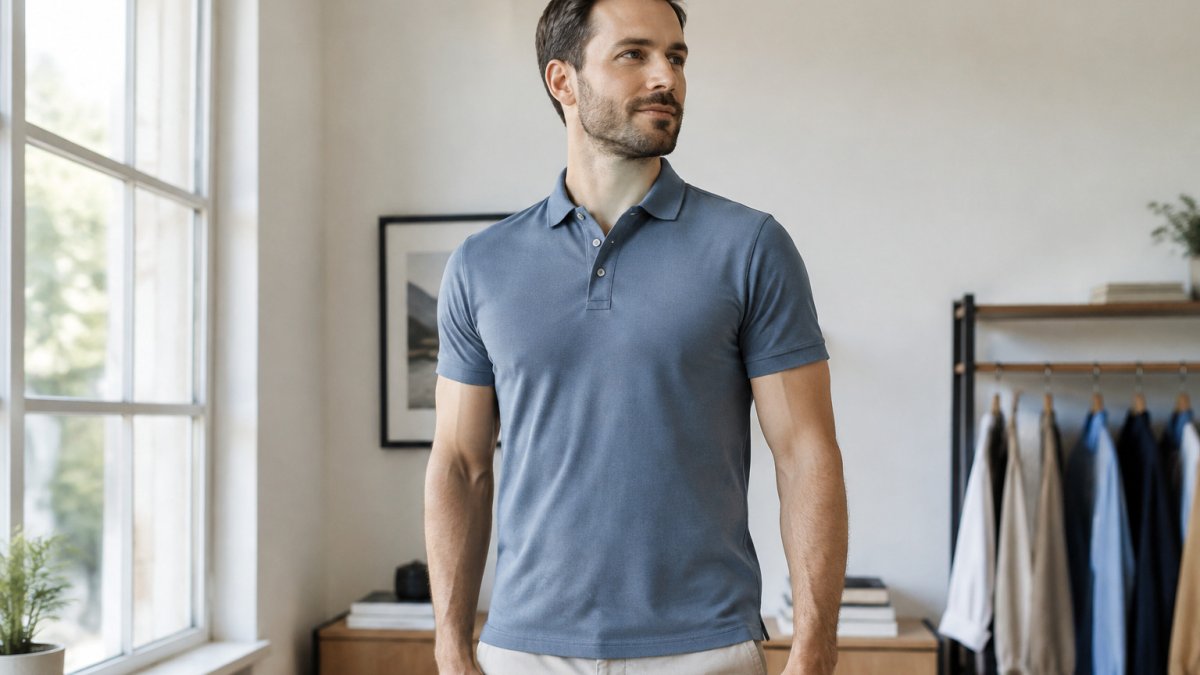
Shoulder seam placement
The shoulder seam should land right where your shoulder ends. If it slides down your arm, the shirt is too large in the shoulders. If it sits up on the shoulder bone or pulls toward the neck, the shirt is too small.
Raise your arms and lower them again. The seam should move with you and stay in place. A seam that rides up or drops out of position will feel uncomfortable all day.
Chest ease and torso taper
Chest ease is the small amount of extra room that lets you move. You want enough fabric to breathe, but not so much that the front billows out.
The torso should taper gently toward the waist. A straight, boxy shape looks sloppy on most builds, while a fitted torso that clings tightly shows every bulge.
Pull the polo down at the front to check the length.
Polo Shirt Sleeve Length and Sleeve Opening
Sleeves are one of the easiest areas to judge in the mirror. Check both length and width.
For short sleeves, the hem should land about mid-bicep, roughly where a short-sleeve dress shirt would end.
The sleeve opening should sit snug around your upper arm without squeezing it. Lift your arm to shoulder height and check.
For long sleeves, the cuff should reach the base of your thumb when your arm hangs naturally.
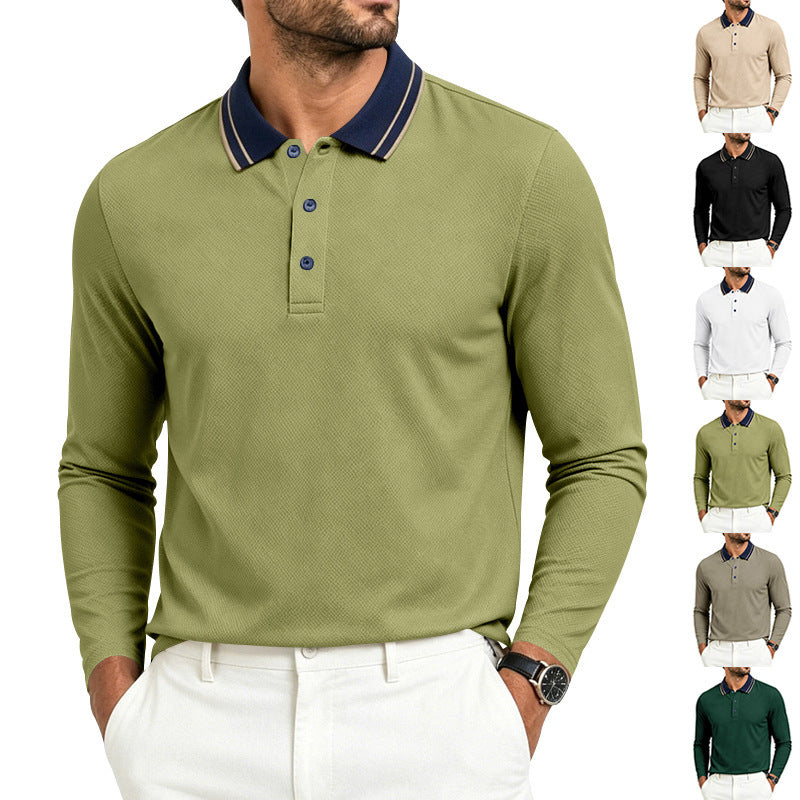
Our Men's Long-Sleeve Pique Polo Shirt Contrast Collar has a regular fit with clean-finish sleeve edges, so check the sleeve measurements on the product page before you order.
Polo Shirt Body Length and Hem Placement
Body length decides whether the shirt stays tucked, untucked, or in the middle. A shirt that is too short pulls out of your pants every time you sit down.
Most polos work best when the hem reaches the top of your belt line or the bottom of your waistband.
Check the length by bending forward and then sitting down. The hem should stay put and cover your waistband the whole time.
Slim Fit vs Classic Fit Polo: Which Cut Suits You
The polo cut changes how the shirt sits on your body. Most brands use three main names: slim, classic (or regular), and relaxed.
- Slim fit: Closer through the chest and torso, with narrower sleeves. Works well for leaner builds or a sharp, modern look.
- Classic fit: More room through the chest and body. Suits most builds and everyday wear.
- Relaxed fit: Extra room throughout, with a looser drape. Good for comfort and layering.
Our Textured Relaxed Fit Polo offers an easy, roomy shape if you prefer more movement through the body.
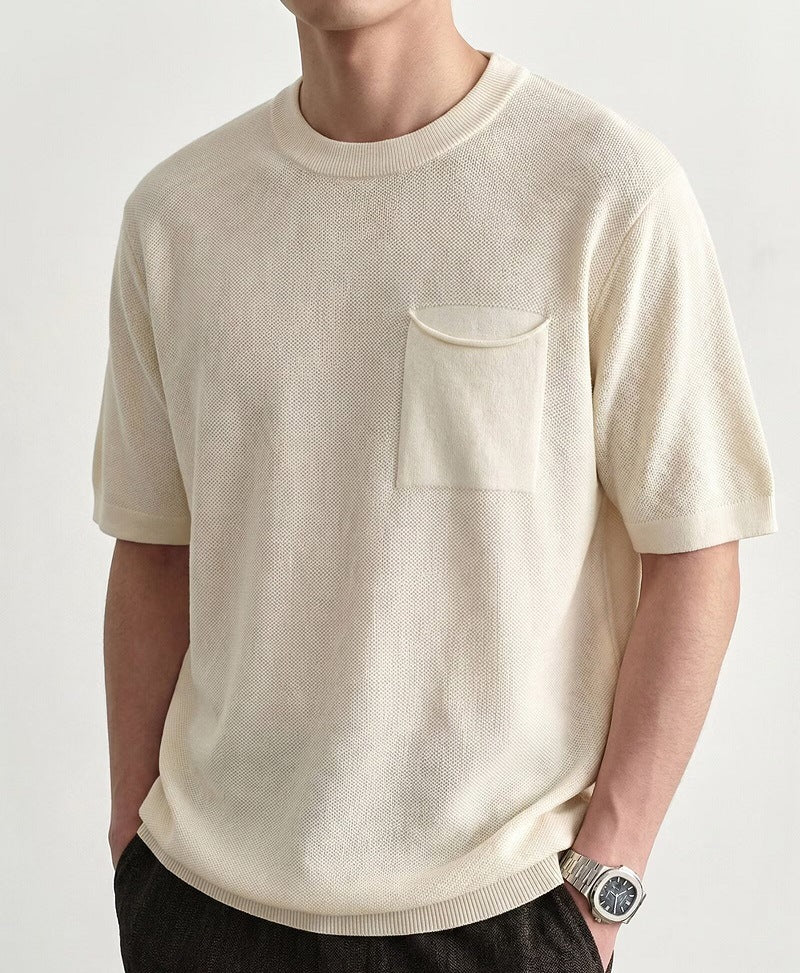
Plenty of men wear a classic fit for work and a slim fit for weekends, so pick the cut that fits your routine.
Fabric Shrinkage, Fit Troubleshooting and Your Next Polo
Most polos are knit from cotton, cotton blends, or performance synthetics, and each behaves differently after washing.
Use this troubleshooting guide to diagnose a poor fit and decide what to do:
- Placket buttons pull open or gape: The chest is too small. Size up rather than altering; letting out a placket is difficult and rarely looks clean.
- Shoulder seam hangs past your shoulder bone: The shoulders are too wide. Size down or switch to a slimmer cut; taking in shoulders is a major alteration that changes the armhole shape.
- Shoulder seam sits on top of your shoulder and pulls toward the neck: The shoulders are too narrow. Size up; a tailor cannot add shoulder width.
- Sleeve opening squeezes your bicep: The sleeve is too narrow. Size up or choose a cut with a wider sleeve; shortening a sleeve is easy, widening one is not.
- Excess fabric billows at the waist: The torso is too roomy. A tailor can take in the side seams relatively inexpensively, or you can try a slim or tapered cut.
- Hem pulls out of your waistband when you sit: The body is too short. Size up in length if the brand offers tall sizes, or choose a longer cut; adding length is not practical.
- Hem bunches below the waistband when tucked: The body is too long. A tailor can shorten the hem, though this can change the position of the side vents.
A simple rule: problems at the shoulders, chest, and sleeve opening are hard to fix, so return the shirt for a different size or cut.
Before you order, check the brand's size chart and, if available, its garment measurements.
Still unsure which size to pick? Contact us and our team can help you match your measurements to the right fit before you order.
Frequently Asked Questions
How should a polo shirt fit a man?
A well-fitting men's polo sits with the shoulder seams landing at the edge of the shoulder, not drooping down the arm. The chest should allow comfortable movement without billowing, the torso should taper gently toward the waist, and the hem should reach the upper hip or just below the belt line. Sleeves should end around mid-bicep with a snug but unrestricted opening. If you can pinch more than a small amount of fabric at the waist or sleeve, the fit is probably too loose.
Should polo shirts be baggy or tight?
Neither extreme works well. A polo should skim the body with enough room to move your arms freely, which is what a regular or classic fit provides. Tight polos pull at the buttons and show the placket stretching, while baggy polos look unfinished and hide your shape. A slim fit suits leaner builds, and a relaxed fit suits casual weekend wear, but both should still keep the shoulder seams in place.
How do you choose the right polo shirt size?
Start with your chest and shoulder measurements, then compare them to the brand's size chart, since sizing varies between labels. Measure your chest at the fullest point under the arms, and your shoulders from edge to edge across the back. If you fall between sizes, choose the larger one for a classic fit or the smaller one for a slim fit. Before wearing it out, check the shoulder seams, sleeve length and hem length in a mirror.
How long should a men's polo shirt be?
A men's polo should typically end between the top of the hip and the bottom of the belt, which keeps it tucked-in or untucked looking neat. Shirts that are too short ride up when you raise your arms, and shirts that are too long bunch around the hips. Consider how you plan to wear it: a slightly longer hem works better untucked, while a shorter hem suits tucking into chinos or tailored shorts.

Read more

7 Leather vs Canvas Sneaker Comfort Truths for Daily Wear
Leather vs canvas sneakers decide everyday comfort more than style does. Compare breathability, support, durability, and care to pick the right pair.
Read more