Article: Capsule Wardrobe Color Palette for Every Skin Tone
Capsule Wardrobe Color Palette for Every Skin Tone
Last Updated: October 23, 2026
Quick Summary
A capsule wardrobe color palette is a curated set of colors that work together harmoniously, allowing every piece in your closet to mix and match effortlessly. A functional palette typically includes 5-7 colors: 2-3 neutrals and 3-4 accent colors, chosen based on your skin undertone to ensure every piece coordinates with multiple others.
- Identify your undertone using the vein test, metal test, or by comparing white shades against your skin in natural daylight.
- Warm undertones work best with warm beige, greige, cognac, and camel neutrals paired with warm reds and golden yellows.
- Cool undertones need cool gray, cool black, and bright white neutrals paired with jewel tones and icy pinks.
- Neutral and olive undertones work with true gray, olive, and taupe paired with earth tones and muted jewel tones.
- Ensure every accent color works with at least 2 neutrals before purchasing to maximize outfit combinations.
Table of Contents
- Why Capsule Wardrobe Color Palettes Matter
- How to Find Your Skin Undertone
- Best Neutral Colors for Every Skin Tone
- How Many Colors in a Capsule Wardrobe
- Capsule Wardrobe Color Combinations That Work
- Applying Seasonal Color Analysis to Your Capsule
- Color Coordination Rules for a Functional Capsule
- Frequently Asked Questions
Why Capsule Wardrobe Color Palettes Matter
A capsule wardrobe color palette is a curated set of colors that work together harmoniously, allowing every piece in your closet to mix and match effortlessly.
The problem isn't quantity, it's coordination. When your wardrobe lacks a cohesive color strategy, you end up with expensive pieces that sit unworn because they don't match anything else.
The real power of a color palette is that it forces intentionality. You're not shopping randomly; you're building a system.
How to Find Your Skin Undertone
Your undertone, the subtle hue beneath your skin's surface, determines which colors will make you look vibrant and which will wash you out. This isn't about your overall skin depth or tone; it's about whether your skin leans warm, cool, or neutral.
Many people confuse undertone with skin tone. You can have deep skin with cool undertones, or fair skin with warm undertones. They're independent variables. Once you know yours, every color choice becomes easier.
The Vein Test
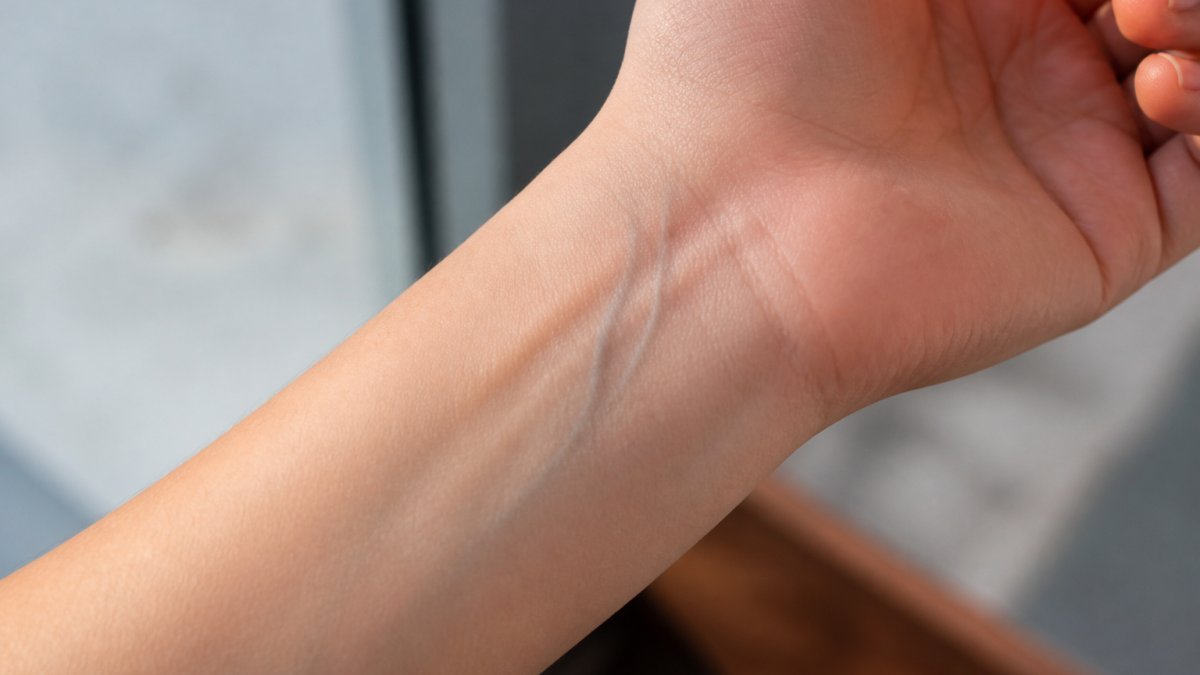
Look at the veins on your inner wrist in natural daylight. This is the most reliable at-home method for most people.
- Warm undertones: Your veins appear greenish or olive-toned
- Cool undertones: Your veins appear blue or purple
- Neutral undertones: Your veins appear a mix of both green and blue, roughly equal
The vein test works because veins reflect your undertone directly. If you see predominantly green, warm colors (oranges, warm reds, golden yellows) will harmonize with your skin.
The Metal Test
Hold a piece of gold jewelry and a piece of silver jewelry next to your skin, ideally on your face or neck. Pay attention to which one looks more natural against your complexion.
- Warm undertones: Gold looks more harmonious; silver can appear harsh
- Cool undertones: Silver looks more natural; gold may seem too warm
- Neutral undertones: Both metals look equally flattering
This test works because metals reflect undertone directly. Gold has warm reflective properties, while silver has cool ones. If one metal consistently looks better against your skin, that's your undertone direction.
Testing Colors in Natural Light
Undertone identification isn't always black and white, especially for people with neutral or olive undertones.
Grab a white shirt, a warm cream or ivory, and a cool white or stark white. Hold each against your neck and face in natural daylight.
This step is essential for olive and neutral undertones especially, since the vein and metal tests can be inconclusive.
Best Neutral Colors for Every Skin Tone
Neutral colors form the foundation of any functional capsule wardrobe. These are your workhorse pieces, the basics that appear in nearly every outfit. Choosing the right neutrals for your undertone is non-negotiable because you'll wear them constantly.
Warm Undertones
For warm undertones, your neutral palette should lean toward earthy, golden, and warm-based shades. These colors harmonize with your skin's natural warmth rather than fighting against it.
Core neutrals for warm undertones:
- Warm beige or tan
- Warm gray (greige) with golden undertones
- Warm brown or cognac
These neutrals allow warm accent colors to pop while keeping your palette cohesive. When you wear a warm beige or camel base, warm reds, oranges, and golden yellows will feel natural and flattering.
Cool Undertones
Cool undertones need neutrals with blue or gray undertones to look their best. Cool grays, cool blacks, and icy neutrals create harmony with cool-toned skin.
Core neutrals for cool undertones:
- Cool gray (true gray without warmth)
- Cool black (pure black or black with blue undertones)
- Cool white or bright white
With these neutrals as your base, cool jewel tones, icy pinks, and cool blues will sing. A cool gray paired with a jewel tone creates an effortlessly sophisticated look.
Neutral and Olive Undertones
Neutral and olive undertones are the most flexible but also the trickiest to navigate. Olive undertones especially, a mix of green and brown or green and gray, need careful color selection.
Core neutrals for neutral/olive undertones:
- True gray (neither too warm nor too cool)
- Olive or khaki
- Warm-leaning taupe
Olive undertones work beautifully with earth tones, muted jewel tones, and colors that have a slightly desaturated quality.
Choose the right neutral colors for your undertone to create a cohesive foundation for your capsule wardrobe.
| Undertone | Core Neutral Colors | Best For |
|---|---|---|
| Warm | Warm beige, greige, cognac, camel, charcoal | Warm reds, oranges, golden yellows |
| Cool | Cool gray, cool black, bright white, taupe, navy | Jewel tones, icy pinks, cool blues |
| Neutral/Olive | True gray, olive, warm taupe, cool taupe | Earth tones, muted jewel tones, desaturated colors |
How Many Colors in a Capsule Wardrobe
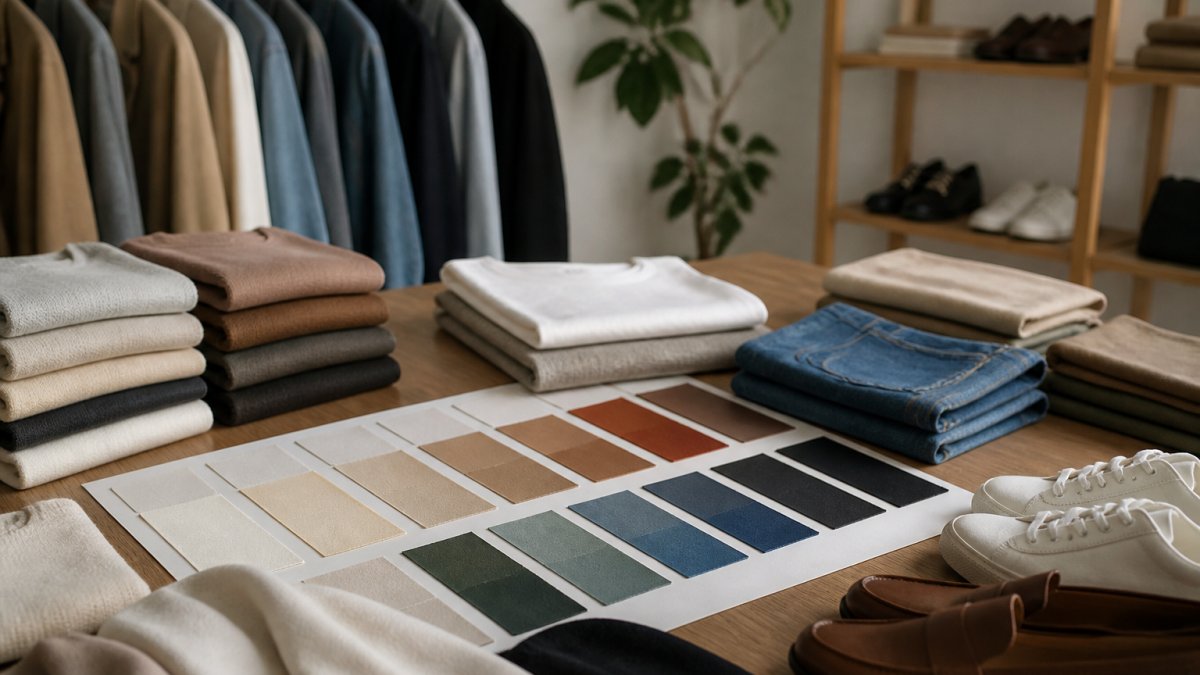
A capsule wardrobe color palette typically includes 5-7 colors: 2-3 neutrals and 3-4 accent colors. This range gives you enough variety to express personal style without overwhelming coordination.
Why this number works:
- Fewer than 5 colors can feel too restrictive, potentially limiting outfit combinations.
- More than 7 colors can become difficult to coordinate, potentially making pieces less cohesive.
- The sweet spot allows for seasonal rotation while maintaining cohesion
Your 2-3 neutrals should be your most-worn colors, the foundation of almost every outfit. Your 3-4 accent colors are where personality comes through. These might include a jewel tone, a warm accent, a cool accent, and perhaps a pattern-friendly neutral like navy or olive.
Starting with 5 colors and adding a sixth after a few months can be a good approach. This can help prevent decision paralysis while allowing your palette to grow intentionally.
Capsule Wardrobe Color Combinations That Work
The magic of a capsule wardrobe is that intentional color combinations mean every piece works with multiple others. This section breaks down the strategy.
Men's Ribbed Knitted Striped Polo Sweater Chocolate Brown →
Building Around Your Base Neutrals
Start by choosing your 2-3 core neutrals based on your undertone. These are the colors that will appear in your most-worn pieces: jeans, basic tees, cardigans, blazers, and neutral sweaters.
Once your neutrals are locked in, every other color choice builds from them. A warm beige neutral pairs beautifully with warm reds, oranges, and golden yellows.
The Men's Striped Wool V-Neck Cardigan With Pockets in classic striped design can serve as a foundation for various combinations.

Adding Main and Accent Colors
After establishing your neutrals, introduce 1-2 "main" colors, these appear frequently but less than your neutrals. Main colors might be navy, olive, warm brown, or a muted jewel tone. These colors bridge your neutrals and your accent colors.
Then add 1-3 accent colors. These are your personality colors, the brighter or more distinctive shades that make outfits interesting. Learn which accessories complete your coordinated outfits. Accent colors appear less frequently, often in one or two pieces, but they're what make your capsule feel intentional rather than boring.
A functional combination might look like:
- Neutral: Warm beige, warm gray, camel
- Main color: Warm brown or rust
- Accent colors: Warm red, golden yellow, warm green
Every piece in warm tones works together, creating effortless outfit combinations.
Sample Palettes by Undertone
Warm undertone palette:
- Neutrals: Warm beige, warm gray (greige), camel
- Main: Warm brown
- Accents: Terracotta, warm red, golden mustard
Cool undertone palette:
- Neutrals: Cool gray, cool black, soft white
- Main: Navy
- Accents: Jewel purple, icy pink, cool teal
Neutral/olive undertone palette:
- Neutrals: True gray, olive, warm taupe
- Main: Soft olive or muted navy
- Accents: Muted burgundy, soft sage, warm terracotta
These aren't rigid rules, they're starting points. Personal preference always matters. If you love a color that technically doesn't match your undertone, incorporate it thoughtfully as an accent rather than rejecting it entirely.
Teams building their first capsule wardrobe: start with one neutral palette and add accent colors slowly over 2-3 months. This prevents overwhelm and lets you discover what you actually wear.
Applying Seasonal Color Analysis to Your Capsule
Seasonal color analysis is a framework that groups colors into four seasons based on how they interact with undertone and contrast level. Understanding your season can refine your capsule wardrobe color palette further.
The 12-season system (a more detailed version) divides undertones into warm, cool, and neutral, then adds contrast levels. Most people fall into one of these four broad categories:
- Spring: Warm undertone with clear, bright coloring
- Summer: Cool undertone with soft, muted coloring
- Autumn: Warm undertone with deep, rich coloring
Your season doesn't replace undertone analysis, it complements it. A warm undertone person might be Spring (bright, clear) or Autumn (deep, rich).
For a capsule wardrobe, you don't need to be rigid about seasonal color analysis. Use it as a guide to understand which colors feel most natural to you, then build your palette accordingly.
Color Coordination Rules for a Functional Capsule
These rules ensure every piece in your capsule wardrobe works together:
Rule 1: Stick to your undertone family. All neutrals and main colors should align with your undertone. Mixing warm and cool neutrals (like a warm beige with a cool gray) makes coordination harder. Choose one direction and commit.
Rule 2: Limit your accent colors to 3-4. More than this and you'll have pieces that don't coordinate with others.
Rule 3: Ensure every accent color works with at least 2 neutrals. Before buying an accent piece, verify it pairs well with multiple bases. If a color only looks good with one neutral, it's too limiting.
Rule 4: Choose one neutral for 60% of your basics. Your most-worn neutral (usually a versatile beige, gray, or navy) should dominate your basics.
Rule 6: Test new pieces against your existing palette. Before buying anything, hold it against your existing pieces in natural light. Does it coordinate?
Vinthentic's Textured Stripe Crewneck Sweater exemplifies functional capsule design.

Building a capsule wardrobe color palette that works for your skin tone removes the guesswork from getting dressed. Discover how to curate a cohesive wardrobe that works together as a complete system.
Frequently Asked Questions
How do I know if I have warm, cool, or neutral undertones?
The vein test is reliable: look at the veins on your wrist in natural light. Green veins suggest warm undertones, blue or purple veins indicate cool undertones, and a mix of both suggests neutral or olive undertones. The metal test also works: if gold jewelry looks better than silver, you likely have warm undertones; if silver looks better, you're probably cool. When testing colors in natural light, warm undertones typically look best in warm reds, oranges, and golden tones, while cool undertones shine in jewel tones, cool blues, and pinks.
What are the best neutral colors for every skin tone?
Warm undertones pair beautifully with warm neutrals like warm grays, camel, warm browns, and olive. Cool undertones look best in cool grays, navy, charcoal, and cooler blacks. Neutral and olive undertones can wear both warm and cool neutrals effectively, making them the most versatile. The key is testing each neutral against your skin in natural light. One neutral can become a go-to wardrobe staple; for example, a warm brown or navy can anchor an entire capsule wardrobe.
How many colors should I include in a capsule wardrobe?
A capsule can include 3-5 base neutrals, 2-3 main colors, and 1-2 accent colors. This structure, roughly 6-10 colors total, can offer enough variety to create multiple outfit combinations while keeping coordination simple. Base colors like navy, camel, or warm gray form the foundation; main colors add personality; accent colors provide visual interest. Starting with just 5-7 colors and adding gradually helps you identify which combinations you actually wear and enjoy.
Can a capsule wardrobe include bright colors?
Yes, but bright colors work best as accents rather than base pieces. A bright jewel tone, warm red, or bold orange can energize a neutral capsule when used in smaller pieces like scarves, shoes, or layering items. Bright base pieces (like bright sweaters or pants) can require more coordination and may limit outfit combinations. If you love bright colors, choose one or two that flatter your undertone and build your capsule around them as secondary colors, not foundation pieces.
How do I test if a color actually flatters me before buying?
Hold the piece up to your face in natural daylight, ideally near a window. Look at how the color affects your skin tone, the brightness of your eyes, and your overall appearance. Does it make you look tired or radiant? Do you feel confident wearing it? Try the same color in different lighting, fluorescent office lights, warm indoor lighting, and outdoor sunlight, since colors shift depending on the light source. If a color doesn't make you feel good in natural light, it may not work well in your capsule wardrobe.
What's the difference between warm, cool, and neutral undertones?
Warm undertones have golden, peachy, or olive hues beneath the skin surface and look best in warm colors like warm reds, oranges, and golden tones. Cool undertones have pink, red, or blue hues and shine in jewel tones, cool blues, and cool pinks. Neutral undertones (sometimes called balanced) have a mix of warm and cool hues, making them versatile in both warm and cool colors. Olive undertones are a specific type of neutral with greenish hues and benefit from warm, earthy tones and muted jewel tones. Understanding your undertone is the foundation of building a capsule wardrobe color palette that actually works.
Should my capsule wardrobe colors match my seasonal color type?
Seasonal color analysis (spring, summer, autumn, winter, or the 12-season system) refines your color choices within your undertone category. If you have warm undertones, you might be a warm spring or warm autumn, each with slightly different color recommendations. Seasonal analysis helps you pick the exact shades of warm neutrals, reds, or oranges that flatter you most. It's a helpful additional layer, but undertone is the more fundamental starting point. You can build a functional capsule with just undertone knowledge, then refine with seasonal guidance if you want more precision.

Read more
Essential Capsule Wardrobe Accessories for Every Outfit
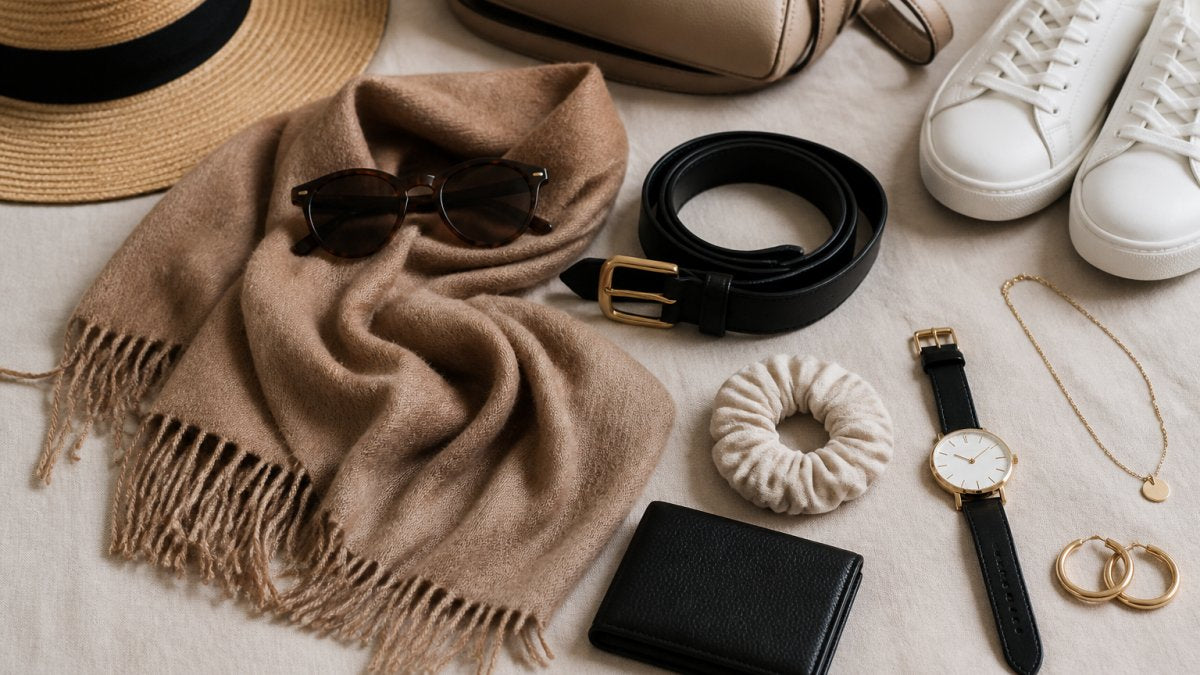
Capsule wardrobe accessories: Build a capsule wardrobe with versatile accessories.
Read more