
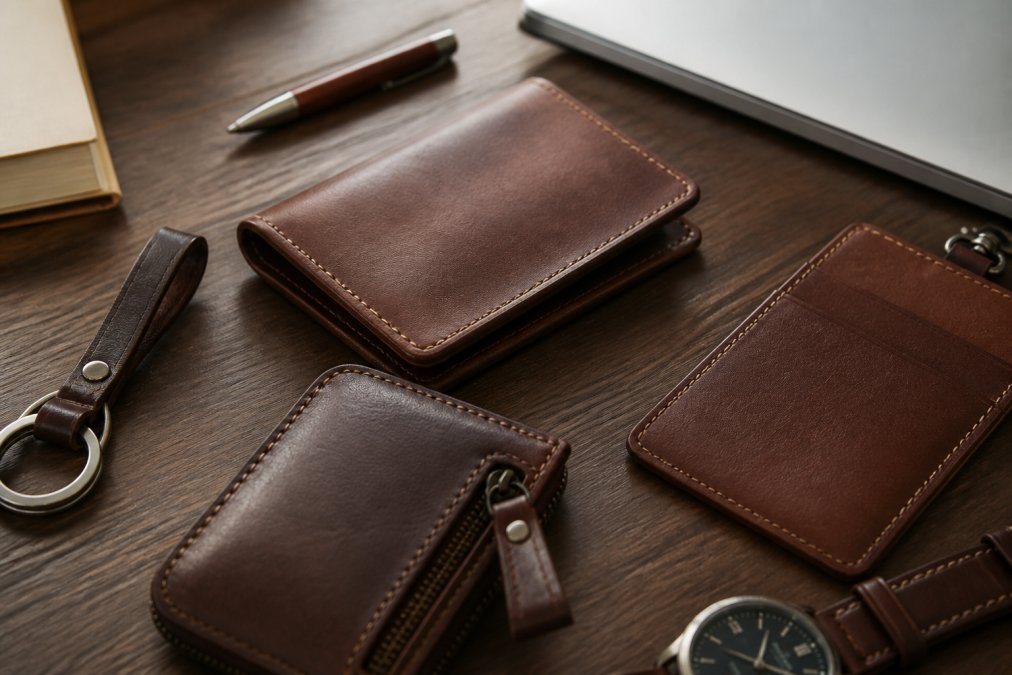
Buying High Quality Leather Accessories: A 2026 Guide
Table of Contents
- What Makes High Quality Leather Accessories Worth the Investment
- Full Grain vs. Top Grain Leather: Which Delivers Real Durability
- How to Identify Quality Leather: The Tactile and Visual Markers
- Craftsmanship Details That Signal Real Investment Pieces
- Leather Care and Maintenance Tips for Long-Term Wear
- Repairability, Warranty, and Ethical Sourcing Considerations
- Choosing the Right Leather Accessory for Your Lifestyle
- Frequently Asked Questions
Last Updated: August 31, 2026
What Makes High Quality Leather Accessories Worth the Investment
The difference between a leather accessory that lasts five years and one that lasts twenty comes down to a few critical decisions made before you buy. Buying high quality leather accessories is fundamentally different from buying fast fashion. You're not just purchasing an object; you're investing in something that should develop character over time, become more comfortable with use, and potentially outlive the person who bought it. This shift in mindset changes everything about how you evaluate quality.
The leather industry thrives on confusion. Manufacturers use terms like "genuine leather" and "premium leather" interchangeably, often to describe materials that are neither premium nor particularly durable. The marketing language obscures the real distinctions that matter. When you understand what actually separates a quality leather accessory from a mediocre one, you stop being fooled by price tags and branding. You start seeing the real value.
Full Grain vs. Top Grain Leather: Which Delivers Real Durability
Full-grain leather is the entire hide with the surface intact, nothing removed, nothing added. Top-grain leather has the outer surface sanded or buffed away, then treated with pigment and finish to create a uniform appearance. This distinction matters far more than most retailers admit.
Full-grain leather develops a patina over time. The surface darkens and changes texture with wear, sun exposure, and handling. Some people love this evolution; others find it unpredictable. Full-grain is also more prone to scratches and water marks in the short term, though these often fade or blend into the patina. It's tougher, more durable, and typically more expensive because the tannery doesn't need to hide flaws, the hide's natural character is part of the appeal.
Top-grain leather looks perfect out of the box. The uniform finish hides imperfections, and the protective coating resists staining better than full-grain. But here's what matters: the protective layer is finite. Once it wears through, and it will, you're left with a weaker substrate underneath. Top-grain accessories typically last 3-7 years with regular use before showing significant wear (peer-reviewed research). Full-grain pieces often reach 10-20 years, sometimes longer (peer-reviewed research).
Understanding Hide Quality and Tannery Methods
Not all leather comes from the same place, and the source matters. Italian leather, particularly from regions like Tuscany, has a reputation for quality that's often justified. But the real story isn't about geography, it's about the tannery's practices.
Vegetable-tanned leather uses natural tannins from tree bark. The process is slower, more expensive, and the resulting leather is firmer and develops a richer patina. Chrome-tanned leather uses chemical accelerants, producing softer leather faster and more cheaply. Both are legitimate, but they age differently. Vegetable-tanned leather improves with time; chrome-tanned leather simply wears.
The hide quality itself, the grade of the raw material before tanning, determines how much flawing you'll see. Premium tanneries source Grade A hides with minimal scarring and blemishing. Budget tanneries use lower grades and cover flaws with heavy pigmentation. When you run your hand across a leather accessory, you're feeling the result of these choices. Smooth, consistent texture usually means heavy processing and pigment. Slight variation and visible grain usually means better raw material and lighter finishing.
How to Identify Quality Leather: The Tactile and Visual Markers
The first test happens before you look at anything else: smell. Genuine leather has a distinctive, warm scent, earthy and slightly sweet. Synthetic leather smells chemical or plastic-like. Cheap leather treated with heavy finishes smells sharp and artificial. This isn't foolproof, but it's a reliable first filter.
Next, examine the grain. Full-grain leather shows natural variation, the grain isn't perfectly uniform because it's the actual surface of the hide. Run your finger across it. You should feel slight texture variation, small imperfections, and a surface that feels alive. Top-grain leather feels smoother and more uniform because it's been processed. Neither is automatically better, but they're distinctly different.
Look at the edges. On quality leather accessories, the edges are burnished, sanded smooth and treated to seal them. The edge should feel smooth, not raw or rough. On Vinthentic's Pelle Italiana Genuine Leather Shoulder Bag, the edges are hand-finished, which is why they feel refined and durable. Budget leather often has raw or poorly finished edges that fray and deteriorate.

Check the stitching. Hand-stitched seams use saddle stitching, a technique where two needles work in opposite directions, creating a thread on both sides of the seam. This creates redundancy; if one thread breaks, the other holds. Machine-stitched seams use a single thread that, if broken, can unravel the entire seam. Look for tight, even stitching with no loose threads. Count the stitches per inch, quality leather typically has 6-8 stitches per inch, while budget pieces often have 3-4.
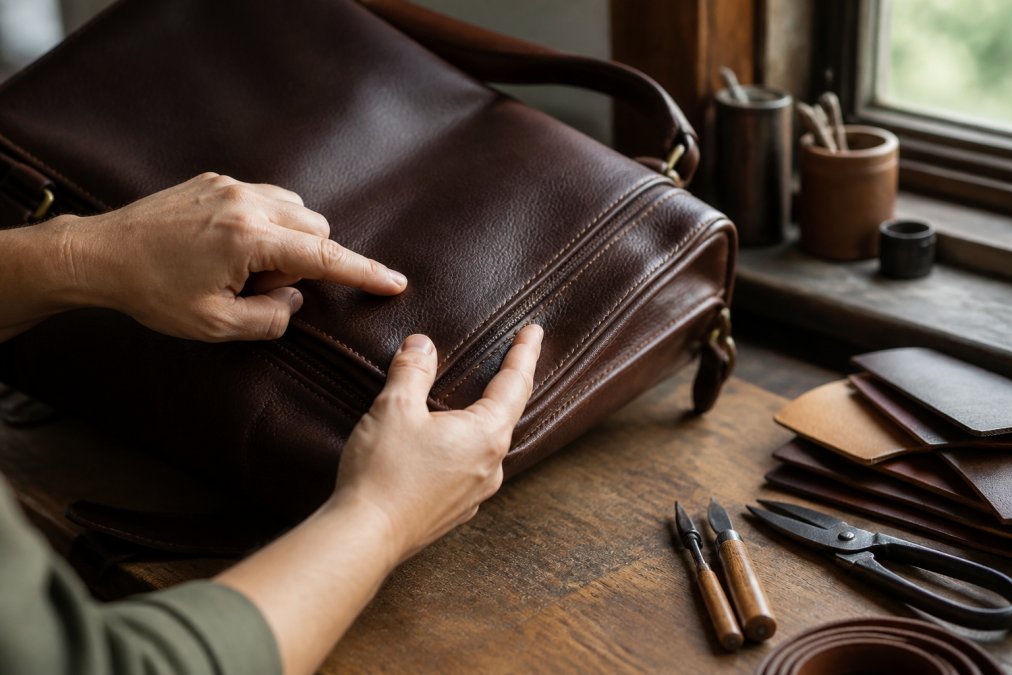
Leather Smell and Texture Identification
The smell test works because it's chemical. Real leather is a protein-based material that retains its natural scent even after tanning. Synthetic leather, typically made from polyurethane or PVC, has no natural aroma. When manufacturers try to mask cheap leather's chemical smell, they add fragrance, which is actually a warning sign.
Texture tells another story. Press your thumb into quality leather and release. It should spring back, showing resilience. Cheap leather either stays indented or feels stiff and unyielding. This is because quality leather retains some of the hide's natural flexibility, while heavily processed leather becomes brittle.
Temperature is revealing too. Leather naturally adjusts to room temperature. Synthetic materials stay cold or warm longer. Hold a leather accessory in your hand for thirty seconds. It should warm up and feel alive. Synthetic materials feel plasticky and temperature-resistant.
Craftsmanship Details That Signal Real Investment Pieces
Hardware quality separates investment pieces from disposable ones. Quality leather accessories use brass, copper, or stainless steel fittings. These metals develop patina and improve with age. Look at the attachment points. Are the rivets or screws secure? Do they sit flush? Cheap hardware looks thin, feels loose, and corrodes quickly.
The lining matters more than most people realize. Budget accessories use thin synthetic lining that tears and peels. Quality pieces use linen, canvas, or quality cotton lining that ages well. Run your hand inside the accessory. The lining should feel substantial and well-attached.
Construction method reveals intent. Goodyear welt construction, where the sole is stitched to a welt that's attached to the upper, is repairable. If the sole wears out, a cobbler can replace it. Glued soles cannot be repaired; when they fail, the accessory is done. This is why heritage-style construction matters for longevity. long-lasting fashion pieces.
Stitch density and pattern matter. Quality leather accessories use consistent stitch density throughout, with no skipped stitches or loose threads. The pattern should be intentional, whether it's straight seams or decorative stitching, and executed precisely. Uneven stitching, skipped stitches, or loose threads indicate rushed manufacturing.
The Matra Women's Leather Crossbody Bag demonstrates these principles. The hand-stitched construction, quality hardware, and attention to edge finishing show that craftsmanship matters. These details don't affect how the bag looks in a product photo, but they determine whether it lasts three years or fifteen.

Leather Care and Maintenance Tips for Long-Term Wear
Leather is a living material. Neglect it and it dries out, cracks, and deteriorates. Care for it properly and it improves. The maintenance routine is simple, but consistency matters.
Start with conditioning. Leather needs moisture to stay supple. Every 3-6 months, apply a quality leather conditioner with a soft cloth (the FDA). Work it in with circular motions and let it absorb overnight. This prevents cracking and maintains the leather's natural suppleness. Use a conditioner formulated for your specific leather type, vegetable-tanned leather needs different conditioning than chrome-tanned.
Protection comes next. A water-resistant treatment protects against staining and moisture damage. Apply it before you use the accessory for the first time, then reapply annually. This creates a barrier without changing the leather's appearance or feel.
Storage matters more than people realize. Store leather accessories in a cool, dry place away from direct sunlight and heat sources. Sunlight fades leather and accelerates aging. Heat dries it out. Use dust bags or breathable cloth covers, plastic traps moisture and promotes mildew. Stuff bags with acid-free paper to maintain their shape.
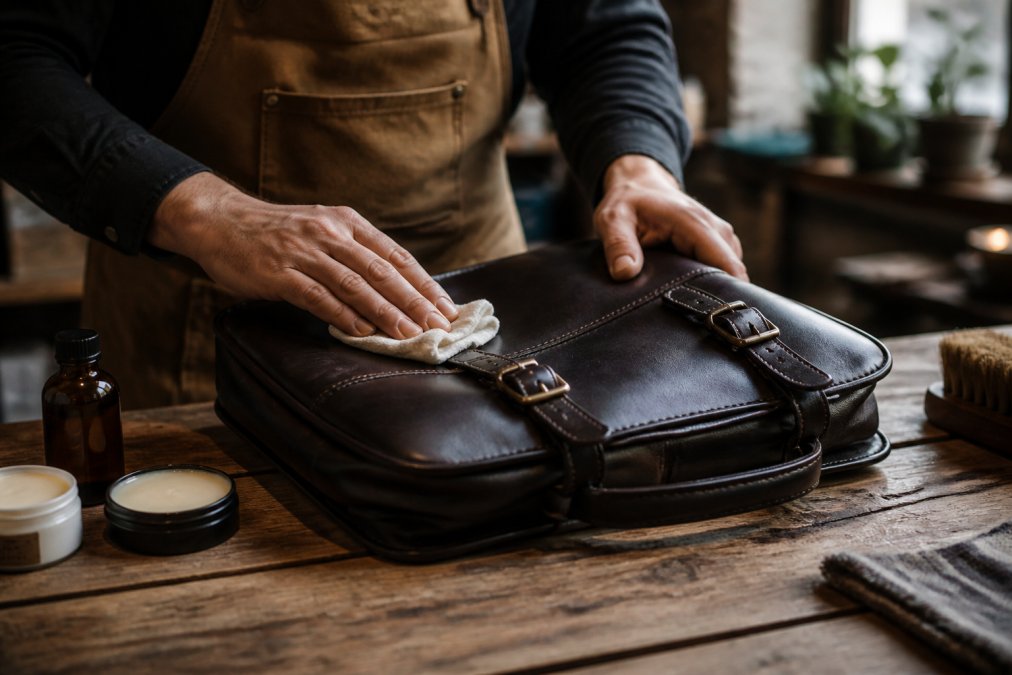
Clean regularly but gently. Use a soft, dry cloth for dust and light dirt. For stubborn stains, use a slightly damp cloth with mild soap and water. Never use harsh chemicals or abrasive scrubbing. Let the leather air dry naturally, never use heat.
Address damage immediately. A small scratch or scuff that you ignore becomes a crack that spreads. A water stain that sits becomes permanent. Treat these issues when they're small. A quality cobbler or leather repair specialist can fix most problems if caught early.
Repairability, Warranty, and Ethical Sourcing Considerations
Repairability is an underrated measure of quality. A leather accessory that can be repaired is one that can have a long life. Check whether the manufacturer uses construction methods that allow repair. Goodyear welt construction in shoes, for example, means the sole can be replaced. Glued construction means it cannot.
Ask about warranty before you buy. Quality manufacturers stand behind their products. A warranty isn't just about getting a replacement; it's a signal that the maker is confident in their craftsmanship. Some manufacturers offer lifetime warranties on construction defects. Others offer one year. The difference reflects confidence in quality.
Ethical sourcing has become essential. Where does the leather come from? How are hides sourced and processed? Responsible tanneries minimize chemical runoff, treat workers fairly, and maintain environmental standards. This isn't just about morality, it affects the leather's quality. Tanneries that cut corners on environmental practices often cut corners on material quality too.
Transparency is the key indicator. Reputable manufacturers can tell you where their leather comes from and how it's processed. They're not vague about sourcing or tanning methods. When a brand won't answer questions about supply chain practices, that's a red flag.
Choosing the Right Leather Accessory for Your Lifestyle
The best leather accessory is the one that fits your actual life, not the one that looks best in a photograph. This requires honest assessment of how you'll use it.
If you work in a conservative corporate environment, you need accessories that look professional and refined. The Monica Women's Leather Shoulder Bag works here, it's structured, elegant, and made from quality materials that age well. The vegan leather option makes it durable and practical for daily professional use.

If you travel frequently, durability and water resistance matter more than appearance. You need full-grain leather with protective treatment. A structured bag that holds its shape is essential. The Pelle Italiana Genuine Leather Shoulder Bag's Italian leather construction and spacious design serve this use case well.
If you prioritize versatility, you need neutral colors and classic design. Avoid trendy styles that will feel dated in two years. Stick with black, brown, tan, or cognac. Choose simple designs without heavy ornamentation. The Matra Women's Leather Crossbody Bag's adjustable strap and roomy interior make it work across multiple outfits and occasions.
Consider maintenance requirements honestly. Full-grain leather requires more care and shows wear more visibly. If you're unwilling to condition it regularly or you want a pristine appearance, top-grain or quality vegan leather might suit you better. If you love the patina and character development, full-grain is worth the extra effort.
Budget matters, but not in the way most people think. A $200 leather accessory that lasts ten years costs $20 per year. A $60 accessory that lasts three years costs $20 per year. The real question isn't the price, it's the cost per year of use. Quality leather accessories are often cheaper over time than budget alternatives.
Buying high quality leather accessories requires understanding what separates real quality from marketing language. When you know the difference between full-grain and top-grain leather, when you can spot hand-stitched construction and burnished edges, when you understand tannery methods and maintenance requirements, you stop overpaying for mediocrity. You start buying pieces that improve with age and outlast trends.
At Vinthentic, we build leather accessories designed to become part of your life for years. The Pelle Italiana Genuine Leather Shoulder Bag, the Matra Women's Leather Crossbody Bag, and the Monica Women's Leather Shoulder Bag each represent genuine craftsmanship and material quality. They're built to be repaired, to develop character, and to earn their place in your wardrobe through actual use. That's what real investment in leather accessories means. Shop NOW and discover pieces built to last.
Frequently Asked Questions
Q: How can you tell if leather is high-quality versus just labeled that way?
A: Genuine high quality leather accessories feel supple and have natural grain texture variations. Examine the back of the leather, genuine hides show natural imperfections and grain patterns, not uniform plastic-like surfaces. Check for hand-stitched seams with consistent stitch density (typically 6-8 stitches per inch), brass or quality hardware, and burnished edges. Full-grain leather shows a natural patina over time, while lower-grade materials remain static. Request transparency on tannery methods; vegetable-tanned and chrome-tanned leathers from established tanneries signal authentic craftsmanship.
Q: What is the difference between full-grain and top-grain leather for accessories?
A: Full-grain leather retains the complete hide surface with all natural markings and imperfections intact, offering superior durability and developing character through patina over years of wear. Top-grain leather has the outer layer sanded and finished, removing natural grain but creating a more uniform appearance and faster break-in period. Full-grain costs more but lasts significantly longer, often 10+ years with proper care. Top-grain suits those prioritizing immediate aesthetics and faster softening. For investment pieces, full-grain delivers better long-term value and longevity.
Q: How should you care for high-quality leather accessories to ensure longevity?
A: Condition leather every 3-6 months using quality leather conditioner to maintain suppleness and water resistance. Store items in breathable cloth bags away from direct heat and sunlight, which causes cracking and fading. Wipe spills immediately with a soft, dry cloth. For stubborn stains, use a specialized leather cleaner before conditioning. Avoid over-treating, excess conditioner creates sticky buildup. Let leather air-dry naturally after exposure to moisture; never use heat. Proper maintenance extends lifespan significantly and enhances the natural patina development that makes quality leather more valuable over time.
Q: Are handcrafted leather accessories worth the higher price point?
A: Handcrafted leather accessories justify premium pricing through superior construction, material selection, and longevity. Artisan-made pieces feature hand-stitched seams with higher stitch density, individually selected hides, and meticulous attention to details like burnished edges and hardware placement. These items typically outlast mass-produced alternatives, and the investment amortizes through extended wear. Handcrafted accessories also develop unique patina and character, increasing sentimental and functional value. For professional wardrobes or daily-use items, the durability and timeless aesthetic make handcrafted leather a practical long-term investment rather than a luxury indulgence.
This article was written using GrandRanker
Read more

Professional Vintage Style Office Outfits
Vintage style office outfits: Master professional vintage style for the office. Learn to blend timeless pieces with modern workwear, avoid costume looks.
Read more
Vintage Aesthetic for Corporate Office: A Styling Guide
Vintage aesthetic corporate office: Learn how to style a vintage aesthetic for corporate office settings. Discover professional vintage outfit ideas.
Read more