Article: Best Fabrics for Versatile Men's Jackets
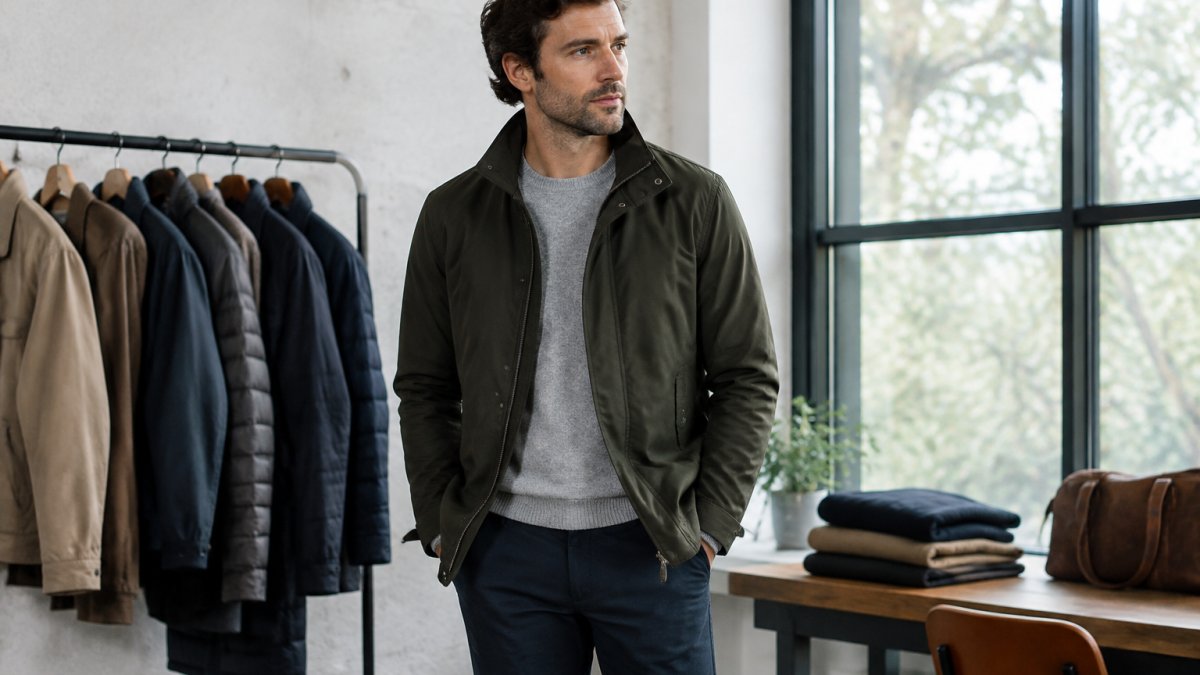
Best Fabrics for Versatile Men's Jackets
Last Updated: November 21, 2026
Quick Summary
The best fabrics for versatile men's jackets are wool, cotton, and tightly woven synthetics, which balance warmth without bulk, breathability, and durability. Blends such as cotton-nylon or wool-polyester often make the smartest single-jacket choice, while pure synthetic shells suit rain and travel. Match the fabric to your climate, care habits, and how you actually wear the jacket.
- Wool resists wrinkles and odors, but needs airing rather than frequent washing.
- A cotton-nylon blend of roughly 60/40 to 70/30 adds water resistance and tear strength.
- Elastane at 2 to 5 percent adds stretch without changing the outer look.
- Water resistant handles drizzle, while waterproof keeps you dry in sustained rain.
- Store every jacket on a wide hanger to protect the shoulders.
Table of Contents
- What Makes a Fabric Work for Versatile Men's Jackets
- Natural Fibers: Wool, Cotton, and Linen Compared
- Synthetic Fibers and Fabric Blends: Nylon, Polyester, and Trade-Offs
- Winter Jacket Fabric Types for Cold-Weather Layering
- Waterproof Jacket Material: What Actually Keeps Rain Out
- The Best Fabric for an Unstructured Jacket
- Men's Lightweight Sports Jacket Fabric for Warmer Days
- How to Choose a Jacket Fabric by Climate, Care, and Use
- Frequently Asked Questions
What Makes a Fabric Work for Versatile Men's Jackets
The best fabrics for versatile men's jackets balance three things at once: warmth without bulk, breathability without flimsiness, and a surface that holds up to regular wear. Wool, cotton, and tightly woven synthetics dominate for good reason. At Vinthentic, we look at fabric the way a tailor does, starting with how it drapes and how it ages.
Fabric choice decides everything that follows. A dense weave resists wind and light rain. A loose weave breathes but snags. Weight determines whether a jacket works in October or January. Below, we compare the fibers, weaves, and blends that matter, plus the care each one demands.
Natural Fibers: Wool, Cotton, and Linen Compared
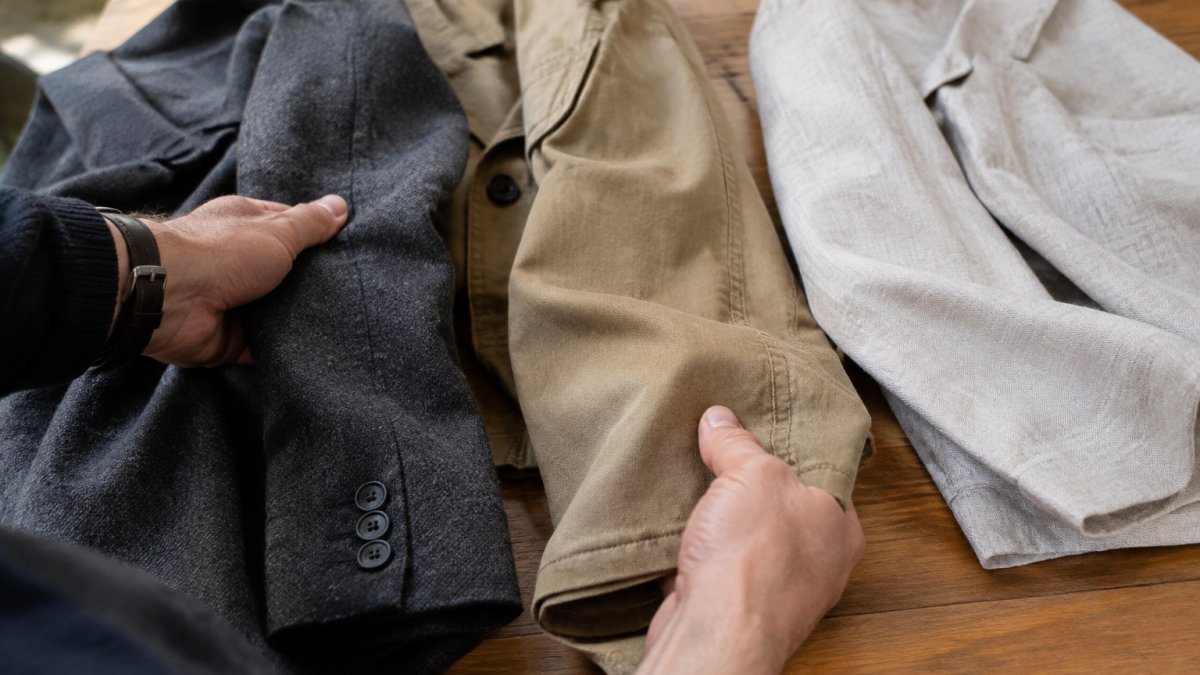
Natural fibers remain the backbone of a versatile jacket wardrobe. Wool, cotton, and linen each solve a different problem, and most men end up owning at least two of the three.
Wool for Warmth and Structure
Wool is the strongest choice for cold-weather structure. Its natural crimp traps air, so a mid-weight wool jacket feels warmer than its thickness suggests. Wool also resists wrinkles and odors, which makes it the fabric that looks sharpest after a long day.
The trade-off is care. Wool needs airing rather than frequent washing, and coarse grades can itch. Look for a dense twill weave for wind protection. If you want the look in practice, our Giulio Romano premium wool jacket shows how a wool outer layer holds its shape at the shoulders.
Cotton Twill, Canvas, and Moleskin for Everyday Wear
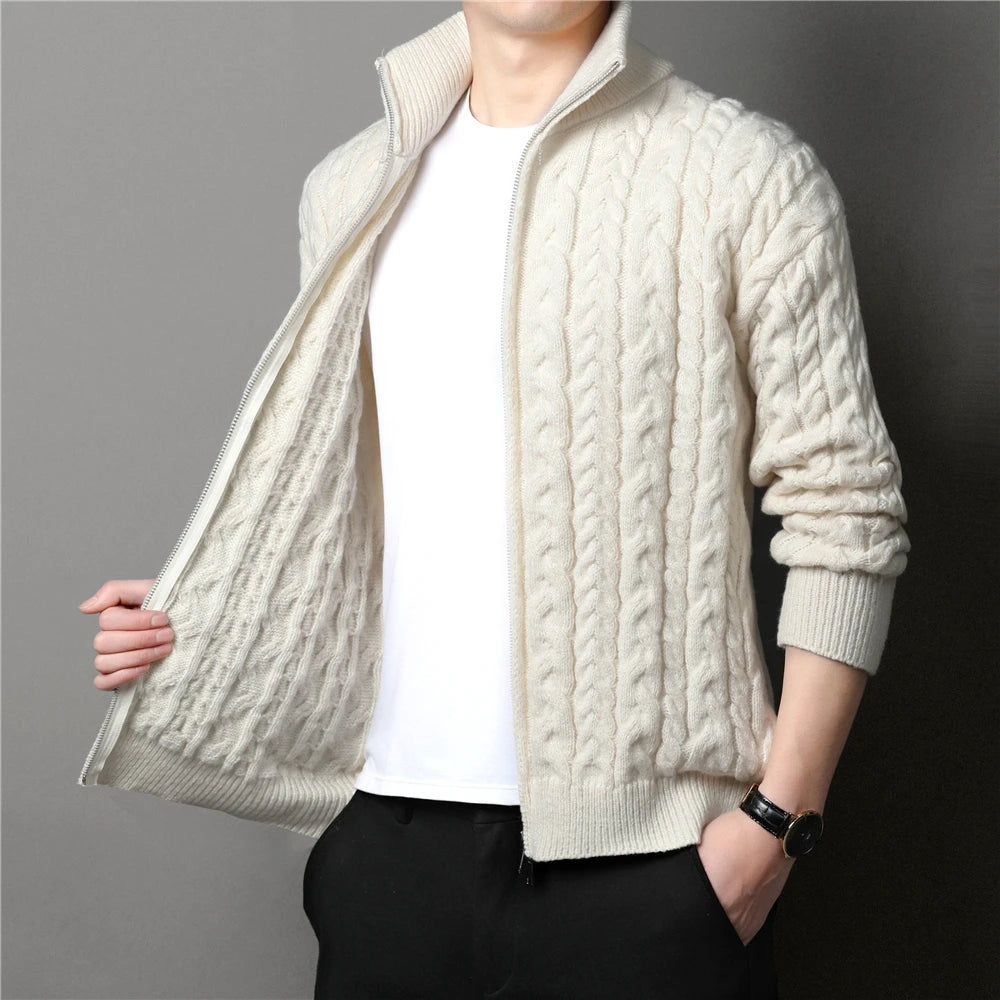
Cotton twill, cotton canvas, and cotton moleskin are the workhorses of everyday wear. Twill's diagonal weave hides scuffs and resists abrasion. Canvas is heavier and tougher, ideal for chore jackets and barn jackets. Moleskin is brushed for a soft, suede-like hand feel that keeps its warmth on cool mornings.
Cotton breathes well and washes easily, but it absorbs water and dries slowly. For a relaxed layer that handles daily wear, the cotton blend utility jacket is a good place to start.
Synthetic Fibers and Fabric Blends: Nylon, Polyester, and Trade-Offs
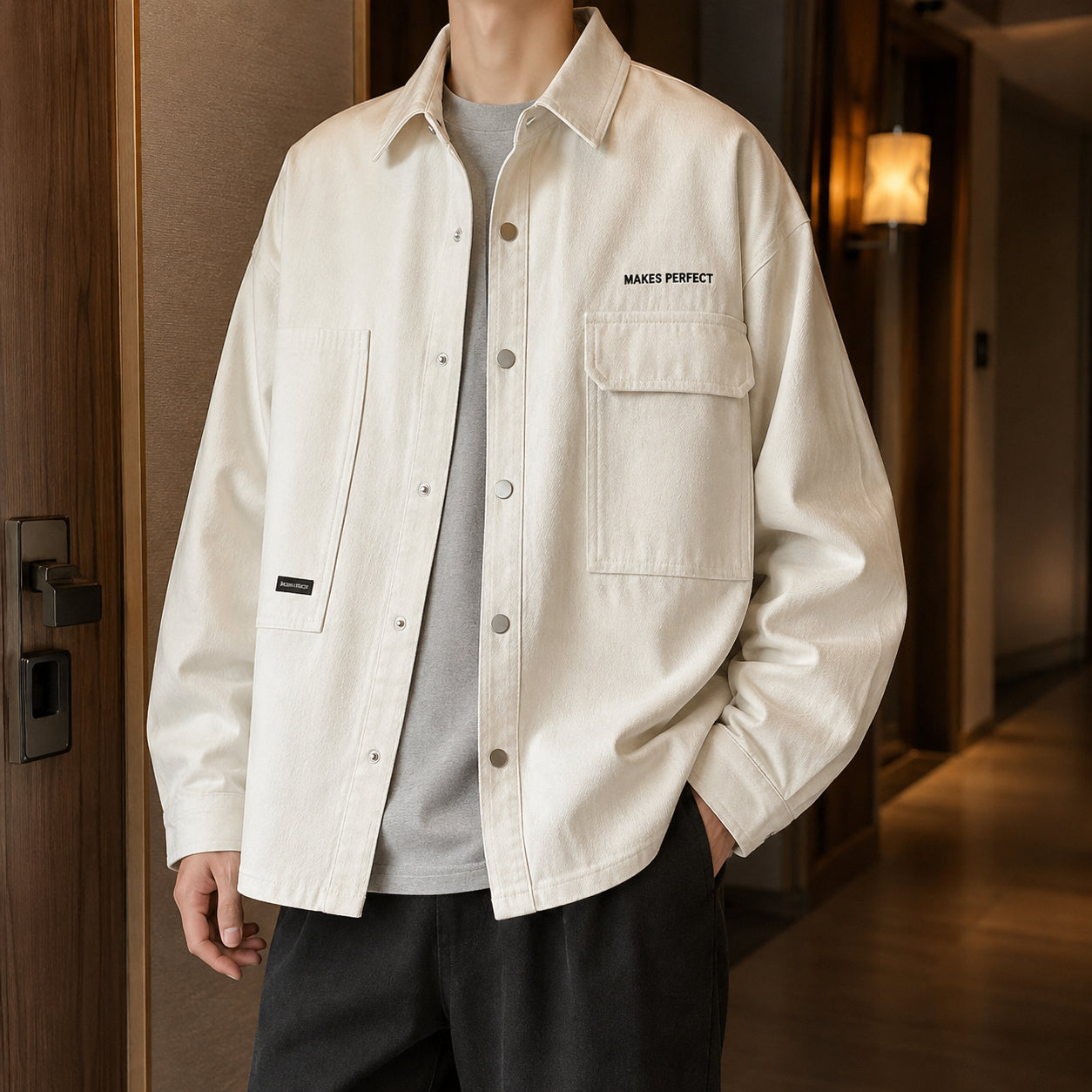
Synthetic fibers earn their place in weather protection, but the fiber name alone tells you little. What matters is the denier (fiber thickness), the weave, and whether a coating or membrane sits behind the face fabric. Nylon brings high abrasion resistance and a smooth surface that sheds water; polyester holds color well, dries fast, and costs less. Neither breathes as naturally as wool or cotton on its own, which is why most versatile jackets use a blend rather than a single synthetic.
How Blends Actually Change Performance
A blend is a ratio, and the ratio decides the trade-off. A cotton-nylon mix in the range of roughly 60/40 to 70/30 gains water resistance and tear strength while keeping most of cotton's soft hand. A wool-polyester blend in the range of roughly 70/30 to 80/20 improves durability and lowers cost, but polyester reduces wool's natural odor resistance and can make the surface feel flatter.
The mechanism is straightforward: the stronger or more weather-resistant fiber carries the load, while the softer fiber keeps the jacket comfortable against the body. That is why a cotton-nylon shell feels tougher than plain cotton but still drapes like a casual jacket.
Reading the Label Before You Buy
The fiber content listed on the care label is often more useful than marketing language. Look for the percentage breakdown, not just the fiber names. A jacket labeled "water resistant" usually means light rain, not a storm, and a blend with a high synthetic share will dry faster but feel less breathable. If breathability matters, check for a mesh lining or pit vents rather than trusting the outer fiber alone.
Watch out: a blend that lists nylon first but pairs it with a non-breathable coating can feel clammy on a mild day, so match the shell to the season you actually wear it in.
When a Single Synthetic Beats a Blend
For sustained rain and wind, a pure nylon or polyester shell with a durable water-repellent finish and taped seams outperforms most blends. For travel, a lightweight synthetic packs small and dries overnight. For everyday versatility across mild weather, a blend is usually the smarter compromise because it balances comfort, durability, and cost in one jacket.
Winter Jacket Fabric Types for Cold-Weather Layering
Winter jacket fabric types fall into two camps: shells that block wind and wet, and insulators that trap heat. Canvas, dense wool, and heavy nylon work as shells. Sherpa, flannel, and quilted linings work as insulation.
Layering beats a single heavy coat. A canvas shell over a sweater handles dry cold; a quilted layer under a shell adds warmth without bulk. Our Sherpa-lined canvas cargo jacket pairs a durable exterior with a full warm lining, which is the combination that holds up on genuinely cold days. Look for a dense weave and a wind-blocking outer layer before you worry about thickness.
Waterproof Jacket Material: What Actually Keeps Rain Out
Waterproof jacket material works by combining a tight weave with a coating or membrane. Nylon and polyester shells with a durable water-repellent finish bead water on contact. Taped seams stop leaks at the stitching, which is where most jackets fail first.
Watch out: "water resistant" and "waterproof" are not the same claim. A water-resistant jacket handles drizzle and brief showers. A waterproof jacket keeps you dry in sustained rain. Cotton and wool absorb water and get heavy, so they suit light weather only. For real rain, choose a synthetic shell with sealed seams, like our weather resistant outdoor jacket with hood.
The Best Fabric for an Unstructured Jacket
The best fabric for an unstructured jacket is one with enough body to hold a soft shape without stiff interlining. Cotton twill, corduroy, and mid-weight wool all work. They drape cleanly and soften with wear instead of collapsing.
Unstructured jackets, sometimes called sports jackets or soft blazers, skip the rigid canvas lining of tailored tailoring. That makes fabric weight critical: too light and the shoulders sag, too heavy and the jacket feels like armor. Corduroy is a strong pick here because its ribbed surface adds visual texture while staying pliable. Our quilted hybrid knit jacket takes a similar approach with knit sleeves for movement.
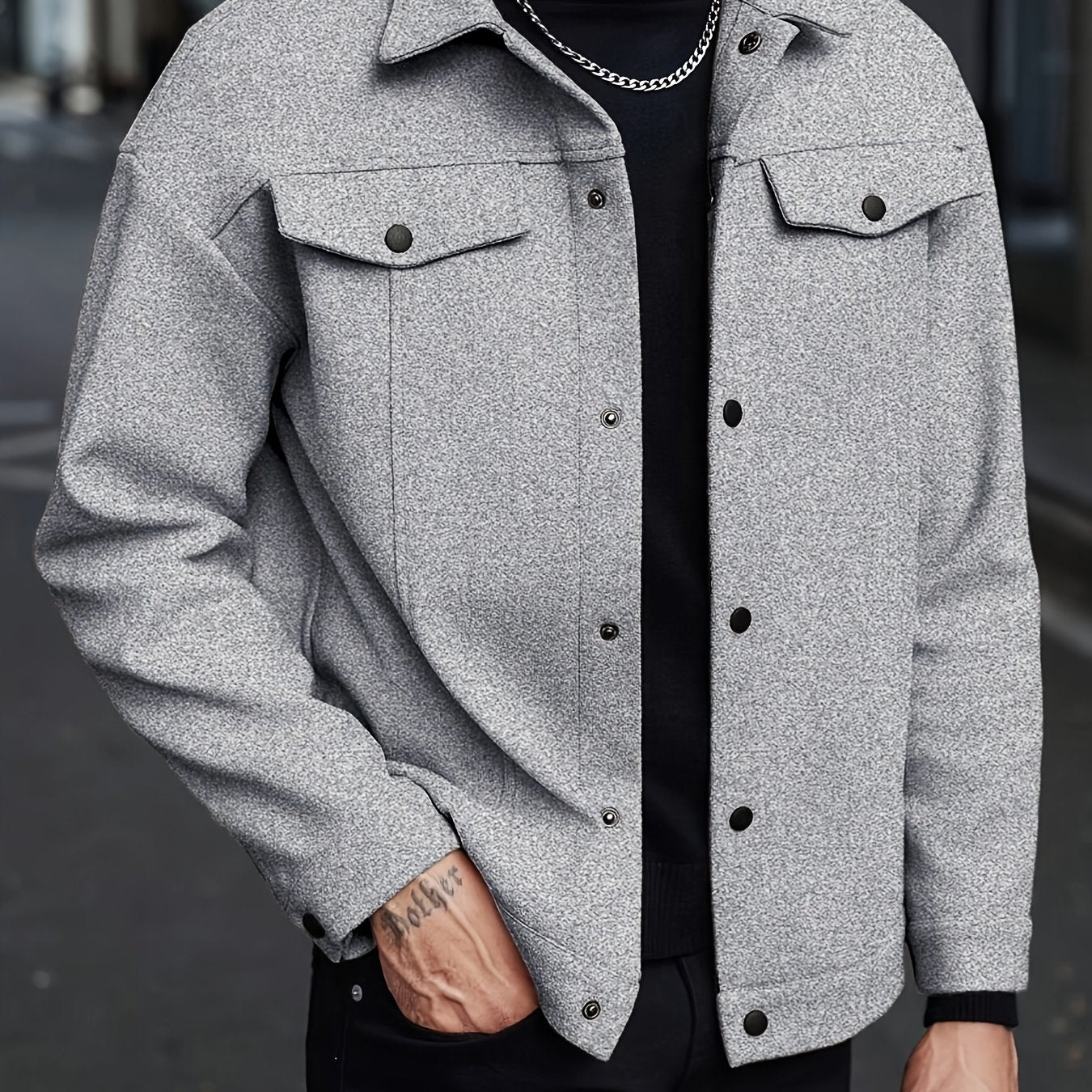
Men's Lightweight Sports Jacket Fabric for Warmer Days
Men's lightweight sports jacket fabric should breathe first and insulate second. Linen, lightweight cotton, and unlined synthetics lead for warm weather. Linen, including Irish linen, moves air beautifully and dries fast, though it wrinkles by design.
Plain weave cotton is the cooler, crisper option. For active days, a mesh-lined synthetic keeps the interior from feeling clammy. Our men's lightweight transitional jacket is built for exactly this window: warm afternoons, cool evenings, and the layering in between.
How to Choose a Jacket Fabric by Climate, Care, and Use
Choosing well comes down to matching fabric to your climate, your care habits, and how you actually wear the jacket. Most guides stop at a fiber list; this framework connects fabric properties to real wardrobe needs so you can pick one jacket that earns its place.
| Fabric | Warmth | Weather Protection | Care Level | Best For |
|---|---|---|---|---|
| Wool | High | Moderate | Medium | Fall and winter, office wear |
| Cotton twill/canvas | Medium | Low | Low | Everyday wear, spring and fall |
| Linen | Low | Low | Low | Warm days, casual settings |
| Nylon/polyester | Varies | High | Low | Rain, wind, travel |
| Blends | Medium | Medium | Low | One jacket for most of the year |
Matching Fabric to Climate and Season
Cold, dry climates reward wool and canvas with insulation; a mid-weight wool in the 12- to 16-ounce range handles fall and mild winter, while a heavier canvas shell blocks wind. Wet climates call for a synthetic shell with sealed seams, because cotton and wool absorb water and get heavy. Warm, humid regions suit linen and lightweight cotton, which move air and dry fast.
A common pattern is to own one weather shell for rain and one softer layer for dry cold, rather than expecting a single jacket to do both well.
Care, Cleaning, and Longevity by Material
Care determines how long a jacket lasts and what it costs to own. For a deeper look at durable everyday fabrics, see our guide to vintage fabrics for everyday wear that last. Wool needs brushing and airing, with dry cleaning only when soiled; frequent washing breaks down the fiber. Cotton washes cold and air-dries flat to avoid shrinkage. Linen tolerates machine washing but softens and wrinkles with every cycle. Synthetics wash easily but lose water repellency over time, and a spray-on treatment restores it.
Watch out: washing a coated synthetic shell in hot water or running it through a hot dryer can break down the water-repellent finish faster than normal wear.
A Use-Case Buying Framework
Match the fabric to where the jacket will actually go. For commuting, a mid-weight wool or wool blend holds shape and resists wrinkles. For travel, a lightweight synthetic or blend packs small and dries overnight. For casual wear, cotton twill, canvas, and corduroy take abuse and soften with age. For smart-casual outfits, unstructured wool or a cotton-blend sports jacket drapes cleanly without stiffness.
A versatile jacket wardrobe starts with fabric you understand. Vinthentic builds outerwear around genuine leather craftsmanship, handcrafted precision, and timeless design made for everyday comfort. Explore the collection to find a layer that fits how you actually dress. Get started with Vinthentic and build a wardrobe that lasts.
Frequently Asked Questions
What is the most versatile fabric for a men's jacket?
Cotton twill and wool are the two most versatile choices for versatile men's jackets. Cotton twill, seen in chore jackets and utility styles, works across spring and fall and pairs with denim or chinos. Wool, especially in a dense twill weave, handles cooler weather and dresses up for business casual. If you want one fabric that covers the most situations, start with a mid-weight cotton twill and add a wool layer for winter.
Is wool or cotton better for a men's jacket?
Wool wins on warmth, structure, and wrinkle resistance, which suits blazers and unstructured jackets worn to the office. Cotton is lighter, breathes better in mild weather, and costs less, making it the practical pick for chore jackets, canvas outerwear, and everyday layering. Many men keep both: cotton for spring and fall, wool for winter and dressier outfits. Check the fabric weight before buying, since a heavyweight cotton can rival light wool for warmth.
What jacket fabric is best for wet weather?
For wet weather, look for a waterproof jacket material such as tightly woven nylon or polyester with a water-repellent finish, or waxed cotton canvas. These fabrics shed rain and dry quickly. Untreated wool resists light drizzle but soaks through in steady rain, and plain cotton absorbs water fast. If you face frequent rain, prioritize a synthetic shell with sealed seams over a fashion fabric, then layer a wool or knit piece underneath for warmth.
How do I care for different jacket fabrics?
Cotton canvas and twill tolerate machine washing on cold, though canvas stiffens and softens again with wear. Wool needs cold hand washing or dry cleaning to avoid shrinkage, and should be air dried flat. Leather requires conditioning and should never go in a machine. Nylon and polyester wash easily but lose water repellency over time, which a spray-on treatment restores. Always check the care label, and store jackets on wide hangers to hold their shape.

Read more

5 Steps to Style a Leather Jacket Smart Casual
Learn how to style a leather jacket for a smart casual look with outfit formulas, the right trousers and shoes, and fit tips for work and weekend.
Read more