Article: 5 Steps to Layer for Transitional Weather Like a Pro
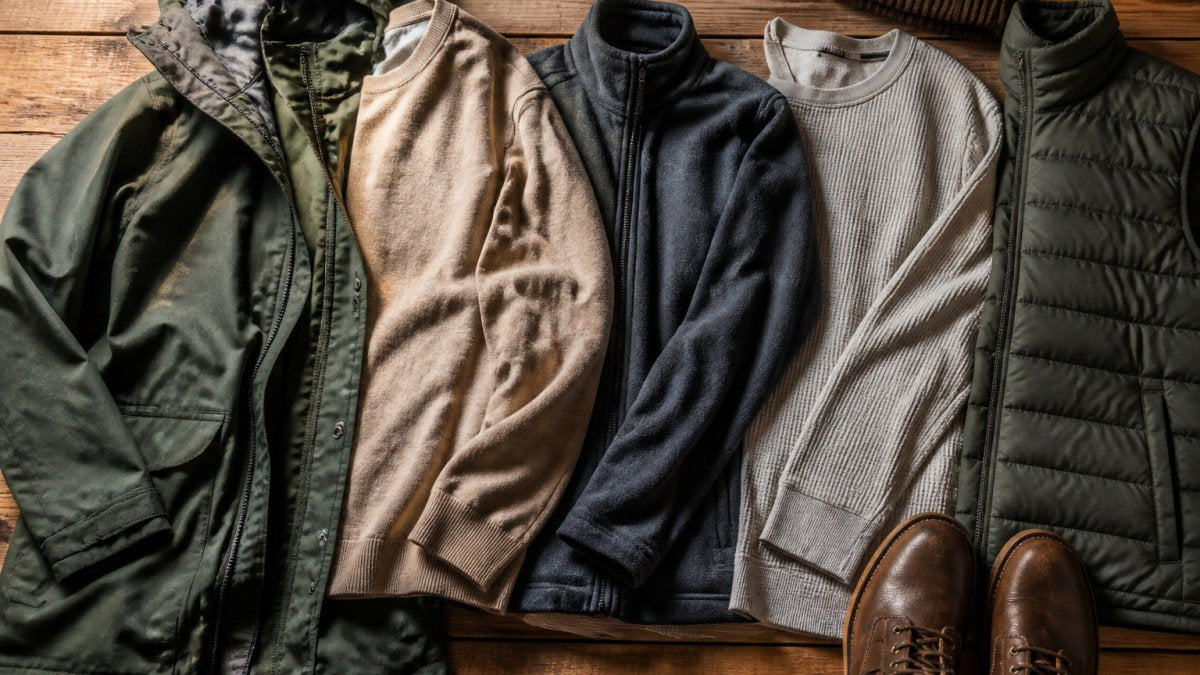
5 Steps to Layer for Transitional Weather Like a Pro
Quick Summary
Transitional weather layering means wearing a base, mid, and outer layer that you can add or remove as temperatures shift through the day. Start with a fitted base, add a knit mid layer for warmth, and finish with a wind-resistant outer jacket. Remove pieces as you warm up, and carry them when you do.
- A morning start of 45°F and afternoon high of 68°F shows why one heavy coat fails.
- Use the morning low and afternoon high to choose your layer stack.
- Remove the outer layer first, then the mid layer, and the base layer last if sweating.
- Merino wool and fleece keep some warmth when damp; cotton does not.
- Avoid heavy cotton base layers under a waterproof shell on mild, rainy days.
Table of Contents
- Why Layering Beats One Heavy Coat in Spring and Fall
- The Three-Layer System: Base, Mid, and Outer Layers
- How to Layer Clothes for Changing Weather Throughout the Day
- Best Fabrics for Layering Clothes in Mild and Wet Weather
- How to Layer Without Looking Bulky
- Men's Spring Layering Guide: Three Outfit Formulas
- Build Your Transitional Wardrobe Starting With the Utility Jacket
- Frequently Asked Questions
Why Layering Beats One Heavy Coat in Spring and Fall
Spring and fall can bring changing temperatures throughout the day. A morning starts at 45°F, the afternoon hits 68°F, and the evening drops back down. A single heavy coat either bakes you by noon or leaves you shivering at the bus stop. Transitional weather layering lets you add or remove pieces as the day changes.
The idea is simple. Each layer can come off as conditions change.
This guide walks you through layering with a base, a mid layer, and an outer piece.
The Three-Layer System: Base, Mid, and Outer Layers
A three-layer system is one approach to transitional dressing. Each layer can serve a different purpose.
- Base layer: Sits against your skin. Its job is to move sweat away from your body.
- Mid layer: Adds warmth and insulation. Knits and fleece work well here.
- Outer layer: Blocks wind, light rain, and cold air.
Start with a fitted tee or henley as your base. Try the everyday layering jacket as a lightweight mid layer to test the system. A knit mid layer, such as a quarter-zip sweater, adds warmth without bulk. Finish with a light outer jacket that can handle the wind. You can remove any layer when you warm up and put it back on when the temperature drops.
How to Layer Clothes for Changing Weather Throughout the Day
The outfit that handles changing temperatures is one you can adjust as the day changes. This section covers temperature bands, layer removal, and how to carry what comes off.
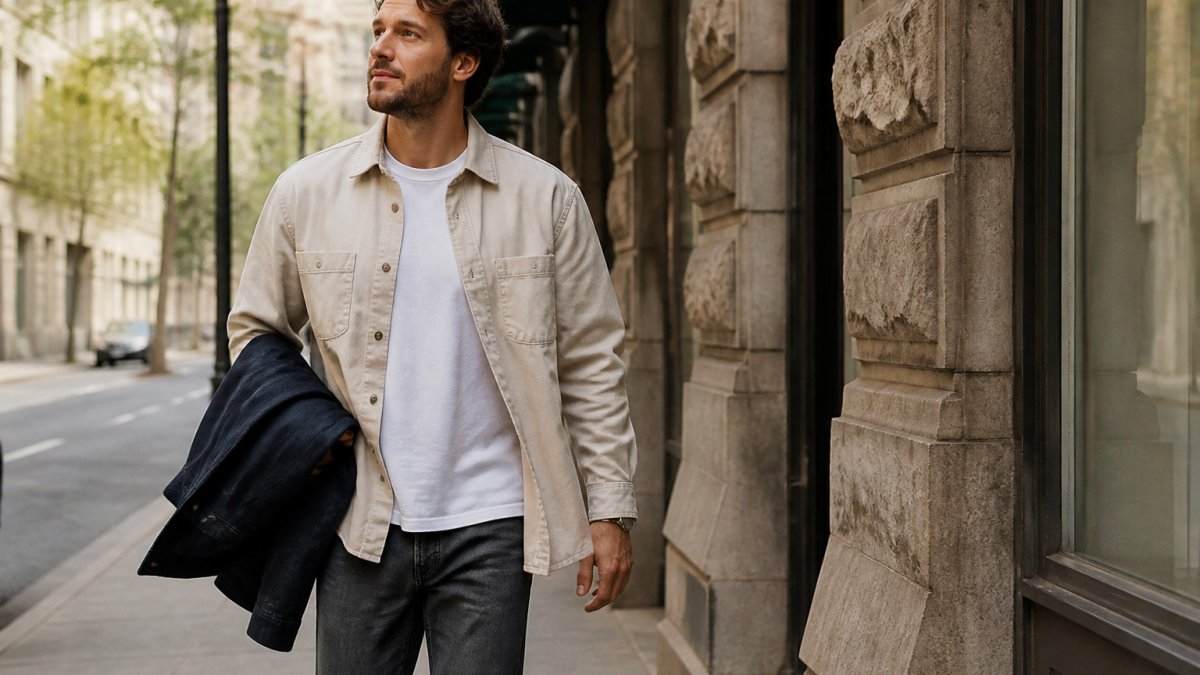
Match Your Layers to the Temperature Band
Use the morning low and the afternoon high to pick your stack.
- Low 40s°F to low 50s°F: Base layer, mid layer, and a wind-resistant outer jacket. Keep the mid layer on until you are moving steadily.
- Mid 50s°F to mid 60s°F: Base layer plus a light outer layer (overshirt, utility jacket, or unlined bomber). A mid layer is optional and should be thin.
- Mid 60s°F to low 70s°F: Base layer plus a packable outer shell for wind and rain. Skip the mid layer unless you run cold.
- Above low 70s°F: Single breathable layer, with a shell in the bag for evening.
The Removal Order That Prevents Overheating
Remove layers in this order:
- Outer layer first if it is dry and you are only mildly warm. This vents heat without losing your insulation.
- Mid layer second if you are still warm after a few minutes. Unbutton or unzip it before taking it off, a half-open mid layer often solves the problem.
- Base layer last and only if you are sweating.
Reverse the order as the afternoon cools: base, then mid, then outer. Add the outer layer before you feel cold.
How to Carry and Store Layers
Plan how you will carry removable layers before you leave:
- Packable shell: Most unlined nylon shells fold into their own pocket or a small stuff sack and clip to a bag strap.
- Knit mid layer: Fold it flat and lay it over the top of a tote or backpack rather than stuffing it, this reduces stretching at the shoulders.
- Overshirt or utility jacket: Roll it loosely and secure it with a strap; folding along the button line prevents creasing.
- Around the waist: Fine for a light sweater for short periods, but it stretches cuffs and hems over a full day.
A Worked Example
Morning low of 46°F, afternoon high of 69°F, evening back to 54°F, with a 30% chance of rain after 4 p.m. Start with a breathable base, a thin quarter-zip, and a water-resistant shell. Remove the shell by 10 a.m., remove the quarter-zip by noon, and carry both in a bag. Add the quarter-zip back around 6 p.m. and the shell if the rain arrives. That is three configurations from three pieces, the core advantage of layering over a single coat.
Use this quick reference to match your layers to the day's temperature band and removal order.
| Temperature band | Layers to wear | Note |
|---|---|---|
| Low 40s°F to low 50s°F | Base, mid layer, wind-resistant outer jacket | Keep mid layer on until moving steadily |
| Mid 50s°F to mid 60s°F | Base plus light outer layer | Mid layer optional, keep it thin |
| Mid 60s°F to low 70s°F | Base plus packable outer shell | Skip mid layer unless you run cold |
| Above low 70s°F | Single breathable layer | Shell in the bag for evening |
Best Fabrics for Layering Clothes in Mild and Wet Weather
Fabric choice is one consideration when selecting layers. The comparison below covers breathability, drying time, warmth when damp, and care.
Fabric Comparison for Transitional Layers
- Merino wool: High breathability, moderate drying time, retains warmth when damp, and resists odor, which matters if you wear the same mid layer several days a week. Care: hand wash or gentle cycle, dry flat. Best as a base or thin mid layer.
- Cotton: High breathability when dry, slow to dry, loses insulation when wet, and holds odor. Care: machine wash and tumble dry. Best as an outer overshirt or a casual base in dry conditions, not as a sweat-facing layer on a rainy day.
- Cotton-synthetic blends: Moderate breathability, faster drying than pure cotton, and better shape retention. Care: machine wash. A practical compromise for utility jackets and overshirts.
- Polyester fleece: Moderate breathability, fast drying, good warmth for its weight, but can trap odor. Care: machine wash, avoid high heat. Best as a mid layer under a shell.
- Nylon shell fabric: Low breathability unless it has a breathable membrane or vents, very fast drying, blocks wind, and sheds light rain. Care: wipe or machine wash cold, re-proof periodically. Best as the outer layer.
- Linen: Very high breathability, fast drying, low warmth. Care: machine wash, wrinkles easily. Best for warm-afternoon base layers in late spring.
The Trade-Offs That Actually Matter
Breathability versus rain protection. A fully waterproof shell blocks vapor as well as rain, so you sweat inside it. For transitional weather, a water-resistant shell with pit zips or a back vent is often more comfortable than a fully waterproof one, because most spring and fall rain is light and intermittent.
Warmth when wet. Wool and fleece keep some insulating value when damp; cotton and down do not. If your day includes a real chance of rain, put the moisture-tolerant fabric in the mid layer and keep cotton away from your skin.
Drying time on the go. A shell that dries in 20 minutes can go back in the bag; a soaked cotton jacket cannot. If you are commuting or traveling, favor fast-drying synthetics and wool blends for the layers you will remove and carry.
Care and longevity. Wool needs more careful washing but lasts for years; cheap polyester fleece pills quickly. Buy fewer mid layers in better fabrics rather than stacking several low-cost ones.
Quick Selection Guide
- Warm and dry day: Linen or cotton base, light overshirt.
- Mild with rain likely: Merino or synthetic base, fleece mid, water-resistant shell with vents.
- Cold morning, warm afternoon: Merino base, thin wool or fleece mid, packable nylon shell.
- Humid and warm: Linen or lightweight synthetic base, no mid layer, packable shell for evening.
The Cotton Blend Utility Jacket has a relaxed overshirt fit and soft cotton-blend fabric, with a snap-button front and asymmetric utility pockets. Available at $57.95. For the mid layer, choose a knit that stretches and recovers so it moves with you and stays flat under a shell.

How to Layer Without Looking Bulky
To create a less bulky look, choose lightweight layers and keep the silhouette trim.
- Pick fitted base layers, not loose ones
- Choose a mid layer with a slim cut
- Wear an outer layer one size up only if it still lays flat over your shoulders
- Avoid stacking more than three pieces at the torso
The Men's Quarter-Zip Stand Collar Sweater features a stand collar and soft, elastic knit. Available at $32.95.
Men's Spring Layering Guide: Three Outfit Formulas
These outfit formulas offer examples of combinations.
- Casual weekend: Fitted tee, textured woven overshirt, and jeans. Add a light jacket if the wind picks up.
- Smart office: Button-down shirt, quarter-zip sweater, and chinos. Finish with a tailored outer layer.
- Rainy day: Thermal base, soft fleece mid layer, and a hooded jacket with an adjustable hem.
The Textured Woven Relaxed Overshirt has a relaxed fit, soft woven blend, and button front; it can be worn open or fastened. Available at $47.95.

Build Your Transitional Wardrobe Starting With the Utility Jacket
A utility jacket can be one option for a transitional wardrobe. Browse the four-pocket relaxed-fit denim utility jacket to see how a denim version fits into the same plan. Consider how it fits with the other pieces you wear.
The Hooded Woven Jacket With Adjustable Hem has a fixed drawcord hood, high collar, and adjustable hem and cuffs. Available at $74.95.

Start small. Pick a base layer, a mid layer, and an outer layer. Then add pieces over time.
Frequently Asked Questions
How should men layer clothes for unpredictable weather?
Start with a base layer, add a mid-layer such as a knit quarter-zip or a light overshirt, and finish with an outer layer. Build the outfit so each piece can be removed or added independently. Check the hourly forecast before leaving.
What should men wear when mornings are cold and afternoons are warm?
Dress for the cold start and plan to shed layers. A knit sweater or overshirt over a tee gives you pieces to adjust as the day changes.
Which fabrics work best for transitional weather layering?
The catalog includes products made from a soft cotton blend, a soft woven blend, and soft, elastic knit. Choose among the listed products based on your style preferences.
How can men layer clothes without looking bulky?
Choose layers that suit your style preferences. The catalog includes relaxed-fit outerwear and a relaxed-fit overshirt.
Ready to build your layering system? Shop the full range at Vinthentic and start with the pieces that match your week.

Read more
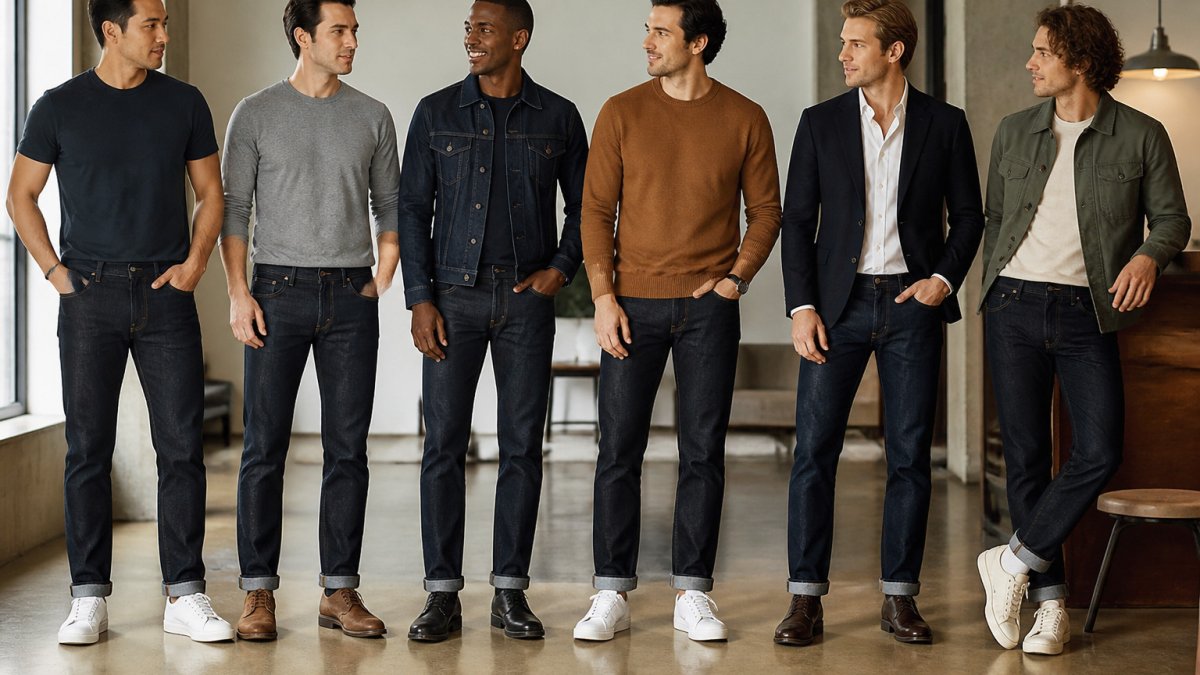
How to Style Dark Wash Jeans for Any Occasion
Learn how to style dark wash jeans for work, weekends and nights out, with shoe pairings, blazer ideas and tips for keeping them looking sharp.
Read more