

How to Identify Genuine Leather Quality
Table of Contents
- Why 'Genuine Leather' on a Label Doesn't Guarantee Quality
- How to Tell If Leather Is Real: Five Quick Checks
- Genuine Leather vs Faux Leather: Reading the Label and the Surface
- Full-Grain vs Top-Grain Leather: The Grade That Decides Durability
- Your Leather Quality Checklist: Grain, Edges, Stitching, and Backing
- Care, Repair, and How Genuine Leather Quality Shows Over Time
- Conclusion: Buy Leather You Can Inspect and Trust
- Frequently Asked Questions
Last Updated: October 9, 2026
Why 'Genuine Leather' on a Label Doesn't Guarantee Quality
The word "genuine" on a leather label tells you almost nothing about quality. It only confirms that some part of the material came from an animal hide.
That gap between the label and reality is where most buyers get burned.
Here is the core problem: "genuine leather" is a legal and marketing term, not a quality grade.
The Federal Trade Commission, which polices how leather products are labeled in the United States, requires that a product described as leather actually be leather.
So the label is a floor, not a ceiling. Learning how to identify genuine leather quality means looking past the word and reading the material itself.
How to Tell If Leather Is Real: Five Quick Checks
You can tell if leather is real by using your senses before you trust any tag. Real leather has a natural grain, a soft flexibility, and a warm, earthy smell. These five checks take under a minute.
- Look at the surface. Real hide has small pores and slight variation. Fake leather repeats the same pattern.
- Press the surface. Genuine leather wrinkles softly and springs back. Synthetic material stays stiff or creases sharply.
- Smell it. Real leather smells earthy. Faux leather smells like plastic or chemicals.
- Feel the warmth. Leather warms to your hand. PU and vinyl stay cool.
- Check the cut edge. Real leather shows a fibrous, fuzzy cross-section. Faux shows a fabric or foam core.
What Real Leather Smells and Feels Like
Real leather has a warm, natural scent from the tanning process. It softens as you hold it and drapes rather than resisting. Faux leather often smells like plastic and feels slick or rubbery to the touch.
Safe Tests and Their Limits: The Water Drop and Beyond
A common trick is to drop water on the surface. Real leather usually absorbs it slowly; treated or synthetic leather beads it up. This test has limits. A pigmented or coated finish can repel water just like plastic, so a bead does not prove the material is fake. Use this test only as one clue among many, never as final proof.
Genuine Leather vs Faux Leather: Reading the Label and the Surface
Genuine leather comes from an animal hide, while faux leather is made from synthetic materials like polyurethane. The label alone will not tell you which is better, so read the surface and the edge together.
Watch for these label terms:
- "Genuine leather" means real hide, but says nothing about grade.
- "PU leather" or "faux leather" means synthetic material.
- "Bonded leather" means scraps glued together with a binder.
- "Split leather" means the lower layer of the hide, not the top.
Faux, PU, and Bonded Leather: What You Are Actually Buying
PU leather is a fabric base coated with polyurethane. It looks uniform and costs less, but it does not develop the patina real leather does over time. Bonded leather is made from leftover fibers pressed and glued into a sheet. It can peel and crack within a year or two of regular use. Neither ages the way a real hide does.
Full-Grain vs Top-Grain Leather: The Grade That Decides Durability
Grade is the single biggest driver of how a leather item ages, and it is also the term most often stretched by marketing. "Genuine leather" tells you a hide is real. Grade tells you which part of that hide you are holding and how much of it was altered.
What the grades actually mean
- Full-grain: The entire top surface of the hide, including the grain layer where the fibers are densest. Nothing is sanded off. The natural pores, scars, and tone variation stay visible. This is the strongest and most breathable grade, and the only one that develops a true patina.
- Top-grain: The top layer is sanded down to remove surface imperfections, then finished or embossed. It is smoother and more uniform than full-grain, but sanding removes the densest fiber layer, so it is slightly weaker and less breathable.
- Corrected-grain: A top-grain or full-grain hide that has been heavily sanded and stamped with an artificial grain pattern to hide flaws. It can look flawless, but the stamped finish sits on the surface and can wear through to reveal a flatter, duller layer underneath.
- Split: The lower layers of the hide, below the grain. Split has a looser fiber structure, so it is usually coated, embossed, or turned into suede to give it a usable surface. It is real leather, but it is not the durable part of the hide.
- Bonded: Leather fibers and scraps bound with adhesive and rolled into a sheet. It contains real leather content, but there is no continuous fiber structure, which is why it peels and cracks.
Why full-grain lasts longer: the mechanism
Durability in leather comes from fiber density and fiber length. The grain layer at the top of the hide has the tightest, most interwoven fibers. When you sand that layer off, you expose the looser corium below it. That is why a top-grain or corrected-grain surface tends to show wear faster at flex points like the toe box of a boot or the elbow of a jacket: the finish is doing the work, not the fiber structure.

Full-grain also has an advantage that is easy to miss. Because the surface is intact, conditioning oils can penetrate and move through the fibers. On a heavily finished or corrected-grain surface, conditioner mostly sits on top. Over years, that difference shows up as suppleness versus stiffness.
Walker Evans Full Grain Leather Boots →
The trade-offs nobody mentions
Full-grain is not automatically the right choice for every product.
- Full-grain shows character, including flaws. Scars, insect bites, and tone shifts are part of the surface. If you want a perfectly uniform look, top-grain or corrected-grain will match that expectation better.
- Full-grain starts stiffer. It breaks in over weeks or months. Top-grain feels softer out of the box.
- Full-grain needs more care. It is more absorbent, so it stains more readily and benefits from regular conditioning. A pigmented top-grain finish resists water and stains with less maintenance.
- Thickness matters as much as grade. A very thin full-grain hide can be less durable in a belt than a thick, dense split. Grade is the starting point, not the whole answer.
How to verify a grade claim on a real product
You usually cannot confirm grade from a photo or a label. Use these checks instead:
- Look for grain variation. Full-grain has irregular pores and subtle tone shifts across the surface. A perfectly repeating pattern suggests an embossed or corrected finish.
- Check the cut edge. On full-grain, the edge shows a dense, tight fiber structure that transitions from a smoother top to a fibrous underside. On split or bonded, the edge often looks uniform, spongy, or layered.
- Flex the surface at a stress point. Press and release the leather near a seam or flex line. Full-grain wrinkles softly and recovers. A corrected or bonded surface may crease sharply or show a fine crackle in the finish.
- Look at the underside. Full-grain and top-grain typically have a suede-like back. A woven fabric or foam backing signals a laminated or synthetic construction.
- Ask what part of the hide was used. A seller who knows their product can tell you full-grain, top-grain, or split. A vague answer like "genuine leather" is a signal to inspect harder.
Your Leather Quality Checklist: Grain, Edges, Stitching, and Backing
Use this checklist to judge genuine leather quality on any item before you buy. It covers the grain, the edges, the stitching, and the backing, which are the four areas where quality shows.
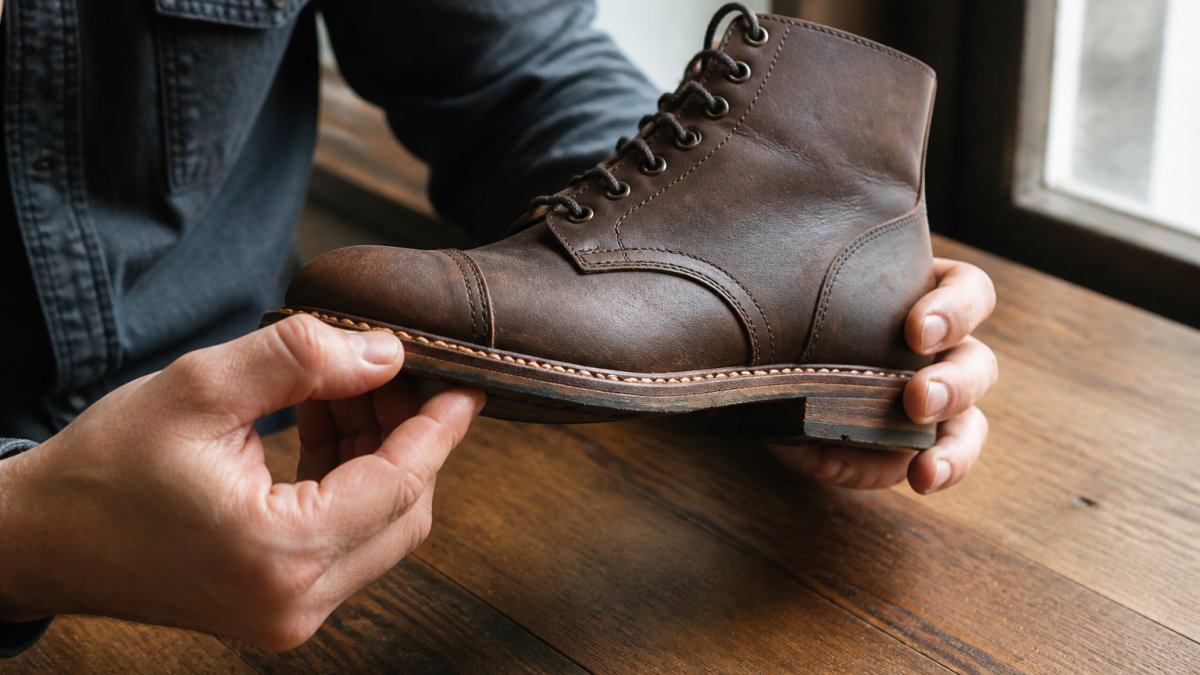
- Grain: natural pores and slight variation, not a repeating pattern
- Edges: cut edges look fibrous, or are neatly finished, not raw and flaking
- Stitching: even, tight, and straight, with no loose threads
- Backing: a suede-like underside, not a woven fabric or foam core
- Flexibility: bends easily and springs back without cracking
- Smell: earthy and warm, not plastic or chemical
Judging Quality by Product Type: Boots, Jackets, and Belts
The same material can be great in one product and wrong in another. A belt needs a thick, dense cut. A jacket needs softer, flexible leather that drapes. Boots need full-grain for structure and wear. Our Classic Top Layer Cowhide Leather Jacket uses top-layer cowhide for a soft, durable finish, which suits outerwear. For a belt, our Rustic Cowhide Leather Pin Buckle Belt uses thick full-grain cowhide for everyday wear.


| Product | Best Leather Grade | Why It Matters |
|---|---|---|
| Boots | Full-grain | Holds shape and resists wear |
| Jackets | Top-grain or full-grain | Drapes well, ages with character |
| Belts | Full-grain, thick cut | Resists stretching and cracking |
Care, Repair, and How Genuine Leather Quality Shows Over Time
Good leather gets better with age, and cheap leather falls apart. A full-grain hide develops a patina, a soft sheen that builds from oils and sunlight. Bonded and PU leather peel and crack instead.
To keep quality leather in shape:
- Wipe it with a dry cloth after wear
- Condition it a few times a year
- Keep it away from direct heat
- Store it on a shaped hanger or with support
A common mistake is over-oiling new leather. It clogs the pores and attracts dirt. A little conditioner goes a long way.
Conclusion: Buy Leather You Can Inspect and Trust
Spotting real quality takes a minute of inspection, not a leap of faith. Check the grain, the edges, the stitching, and the backing. Trust your nose and your hands, and read past the word "genuine" on the tag.
At Vinthentic, we build our pieces from real hides so you can inspect them yourself. Our footwear and outerwear are made with genuine leather craftsmanship, handcrafted precision, and a design built for everyday comfort. Over 20,000 happy customers have already made the switch.
Shop now with Vinthentic and step into leather you can trust.
Frequently Asked Questions
How can you tell if leather is genuine?
Start with the label and the surface. Real leather shows a natural grain pattern with slight variation, visible pores, and small imperfections across the hide. Faux leather repeats the same embossed pattern with no variation. Smell is a second clue: real leather has an earthy, animal scent, while synthetic options smell like plastic or chemicals. Finally, check the cut edge. Genuine leather shows a fibrous, layered structure, while faux leather shows a fabric backing under a plastic coating.
What is the difference between full-grain and top-grain leather?
Full-grain leather keeps the entire top layer of the hide, including the natural grain and any small marks. It develops a patina with wear and is the most durable option. Top-grain leather has the top surface sanded or corrected to remove imperfections, then finished with a uniform coating. It looks smoother and more consistent, but the surface layer is thinner, so it shows wear sooner. Both are genuine leather; the difference is how much of the natural hide remains.
Does real leather have imperfections?
Yes. Genuine leather comes from animal hides, so natural grain, pores, and small marks are normal and expected. A surface that looks perfectly uniform often signals corrected grain or synthetic material. When judging genuine leather quality, treat slight variation as a good sign, especially on full-grain pieces. Heavy scarring or large repaired areas are different: those reduce quality within genuine leather and are worth noting before you buy.
Can you test leather quality with a water drop?
A small water drop on unfinished or lightly finished leather will usually darken the spot and absorb slowly. On pigmented, corrected, or synthetic surfaces, the drop beads up and sits on top. The test has limits: coated genuine leather can also repel water, so a bead does not automatically mean fake. Use the water drop as one clue alongside grain inspection, smell, edge checks, and stitching, never as a single pass-or-fail test.
Read more
7 Best Comfortable Smart Casual Shoes for Men
Discover the 7 best comfortable smart casual shoes for men. Compare pricing, cushioning, and style for loafers, boots, and sneakers.
Read more
Vintage Footwear for Office Wear: 10 Styles That Work
Discover vintage-inspired office footwear that blends timeless style with professional comfort. Shop loafers, oxfords, boots, and more starting at $42.95.
Read more