7 Steps to Choose Shoes With Arch Support That Fit
Last Updated: November 19, 2026
Quick Summary
To choose shoes with arch support, first identify your foot arch type with the wet-foot test, then check that the midsole resists slightly under your thumb and the heel counter is firm. Fit the larger foot late in the day and confirm the shoe's arch contour sits under your arch, not ahead of or behind it.
- Press the midsole under the arch: it should resist slightly, not collapse.
- A wet-foot print showing almost the whole foot points to low arches or flat feet.
- For flat feet, prioritize a firm midsole and motion control over soft cushioning.
- Replace shoes when the heel counter softens enough to pinch flat.
- There should be a thumb's width, roughly half an inch, between your longest toe and the shoe's front.
Table of Contents
- Why Arch Support Changes How You Choose Shoes
- How to Identify Your Foot Arch Type Before You Shop
- Shoe Features That Deliver Real Arch Support
- Best Arch Support Shoes for Flat Feet
- Best Shoes for Arch Support With Plantar Fasciitis
- When Arch Support Insoles Make More Sense Than New Shoes
- Arch Support Shoes for Work: Picking a Pair for Long Days
- A Step-by-Step Shoe-Fitting Checklist and Warning Signs
- Frequently Asked Questions
Why Arch Support Changes How You Choose Shoes
Most men buy shoes by size and looks, then wonder why their feet ache by mid-afternoon. Arch support is not a feature you can judge from the outside: it is the shape and firmness of what sits under your foot, and it has to match your foot.
Arch support is the raised, shaped structure under the middle of your foot that holds up the arch and spreads your weight evenly across the sole. Without it, pressure collects in the heel and ball of the foot.
How to Identify Your Foot Arch Type Before You Shop
You cannot pick supportive shoes until you know your foot shape. There are three broad types, low or flat arches, neutral arches, and high arches, and each loads the foot differently, so each needs a different balance of cushioning and firmness underfoot.
The Wet-Foot Test and What Your Footprint Tells You
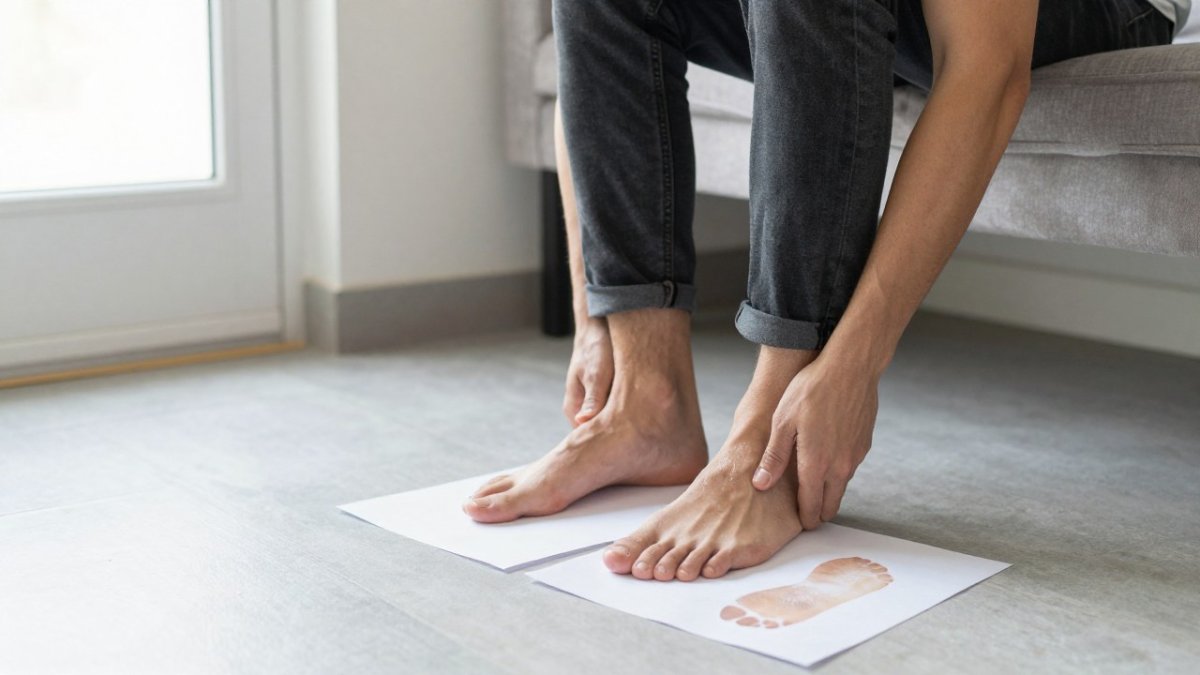
Wet the sole of your foot and step onto paper, then look at the shape left behind. A print showing almost the whole foot, with little curve on the inner edge, points to low arches or flat feet. A clear inward curve along the middle is a neutral arch. A print split into a heel mark and a ball mark, with a thin or missing band between them, signals high arches.
One Foot Is Often Different From the Other
Feet are rarely identical, and most men have one foot slightly flatter or larger than the other. Always fit the larger foot and note which side needs more support. If one footprint looks noticeably flatter, choose footwear that can accommodate extra under that arch, such as a shoe with a removable footbed.
Shoe Features That Deliver Real Arch Support
The features that matter are the ones you can feel with your thumb. Press the midsole under the arch: it should resist slightly, not collapse, because a firm midsole holds its shape under body weight and keeps the arch from rolling inward. Squeeze the heel counter, the stiff cup at the back; a solid one keeps the heel from sliding and steadies the whole foot.
Midsole, Heel Counter, and Shoe Last Explained
The midsole is the layer between your foot and the outsole, and it controls how the shoe absorbs impact. The heel counter is the reinforced back that locks the heel in place. The shoe last is the foot-shaped mold the shoe is built on, and it decides where the arch sits inside. Our wingtip derby brogues with arch support are built with a structured last and a supportive heel.
Best Arch Support Shoes for Flat Feet
For flat feet, the goal is stability rather than softness. A shoe with a contoured footbed, a firm midsole, and good motion control keeps the foot from rolling inward with each step. Avoid very flexible soles and pillowy cushioning, which let a low arch collapse further. Our orthopedic mesh walking shoes pair a memory foam cushioned insole with a high-traction rubber sole.
Best Shoes for Arch Support With Plantar Fasciitis
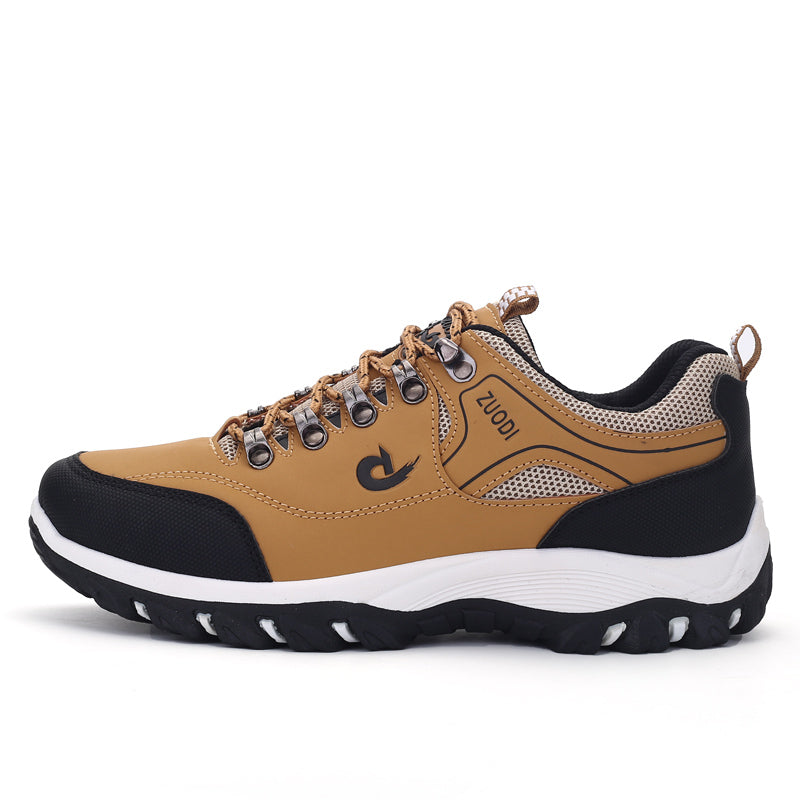
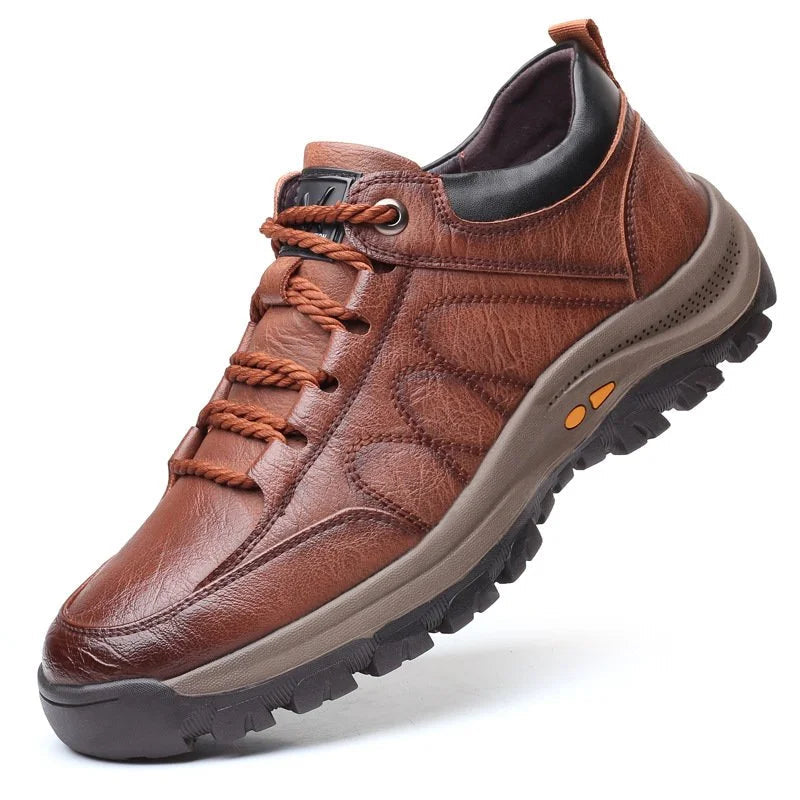
Plantar fasciitis responds best to shoes that cushion the heel and support the arch at the same time. A firm midsole limits the strain that pulls on the plantar fascia, while a cushioned heel softens the load at each step. Avoid flat, hard-soled shoes and worn-out sneakers, common triggers of morning heel pain. Our hand-stitched leather casual shoes offer an ergonomic cushioned insole.
When Arch Support Insoles Make More Sense Than New Shoes
Insoles are the smarter buy when the shoe itself is sound but the footbed is flat, thin, or compressed. The shoe's structure, midsole firmness, heel counter, last shape, does most of the work of supporting an arch, and an insole cannot fix a shoe that is structurally wrong for your foot. So the first question is not "insole or new shoe?" but "is this shoe worth keeping?"
A Decision Guide: Repair the Shoe or Replace It
Replace the shoe when any of these are true:
- The outsole is worn through at the heel or ball, or the tread pattern has flattened.
- The heel counter has softened and you can pinch it flat between your thumb and finger.
- The midsole creases deeply or feels mushy under the arch when you press it.
Keep the shoe and add an insole when the structure is intact but the footbed is the weak point: the factory insole is glued-in and flat, it has compressed into a shallow depression, or it offers no contour under the arch. You can browse an arch support height boosting insole to add shaped support inside a shoe you already own.
Built-In Support vs. Aftermarket Insoles
Built-in support is designed as part of the shoe, so the arch contour, heel cup, and midsole are tuned to work together, hard to beat for all-day wear. Aftermarket insoles win on adjustability: you can change the arch height, add heel cushioning, or replace a worn footbed without replacing the shoe.
The practical middle path is a shoe with a removable footbed. Pull the factory insole out, check that the cavity underneath is flat and deep enough, and swap in your insole.
Sizing and Compatibility Checks
- Volume: A thick insole takes up space. If the shoe fit snugly before, it will fit too tight after. Look for shoes described as having a removable footbed or extra depth.
- Length: Adding an insole can push your foot back, so recheck the thumb's width at the toe after insertion.
- Heel cup: The insole's heel should sit inside the shoe's heel counter, not on top of it.
When Professional Fitting Helps
Most people can choose an off-the-shelf insole by arch type and shoe volume. Professional fitting, a podiatrist, pedorthist, or trained fitter, is worth considering when you have diabetes or reduced sensation in the feet, when one foot is markedly different from the other, when you have had foot surgery, or when off-the-shelf insoles consistently cause pressure, numbness, or rubbing.
Watch out: an insole that feels aggressively supportive in the first minute is often too firm or too high under the arch. Expect contact and gentle pressure, not a hard lump; if it hurts in the store, it will hurt more after an hour of walking.
Arch Support Shoes for Work: Picking a Pair for Long Days
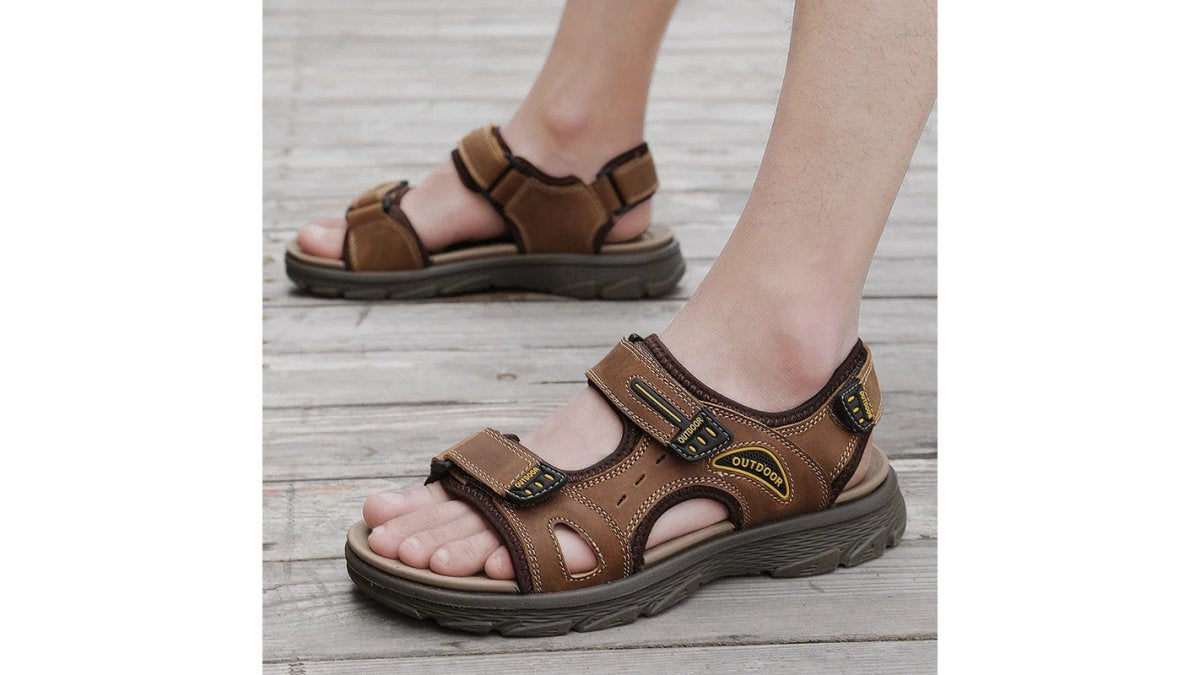
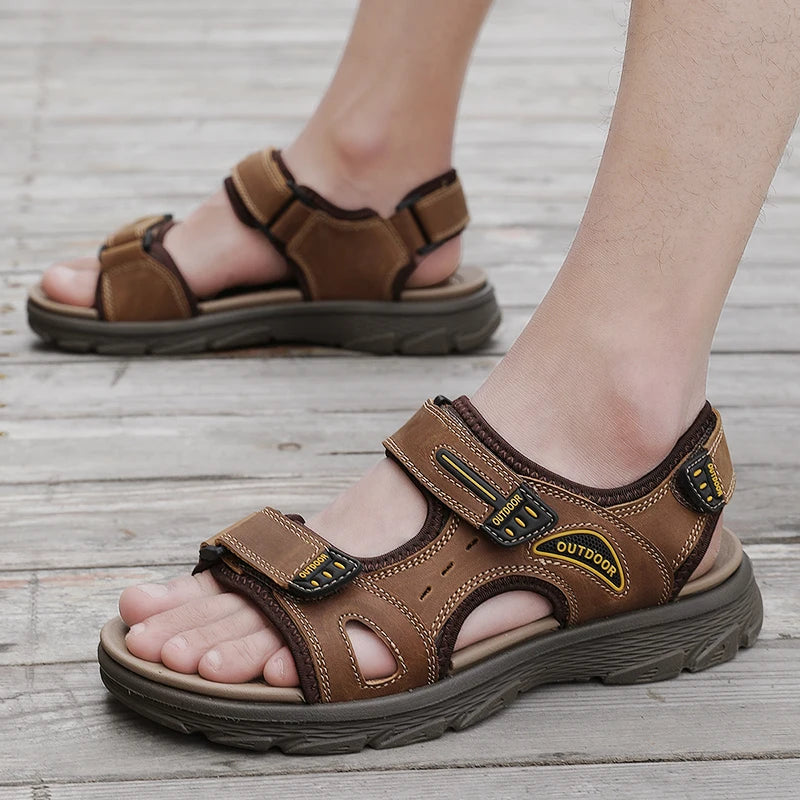
Long shifts on hard floors punish feet that lack support, and the fix starts with the sole. Choose a shoe with a firm midsole, a deep heel cup, and enough room in the toe box to let your toes spread when you stand. For warmer workplaces, our arch support leather outdoor sandals combine a cushioned arch with an anti-slip rubber sole.
| Foot Concern | What to Prioritize | What to Avoid |
|---|---|---|
| Flat feet | Firm midsole, motion control, contoured footbed | Soft, highly flexible soles |
| High arches | Cushioning, shock absorption, roomy toe box | Thin, hard soles |
| Plantar fasciitis | Heel cushioning plus arch support | Flat, worn-out shoes |
| Long workdays | Deep heel cup, breathable upper, firm sole | Loose slip-ons with no support |
A Step-by-Step Shoe-Fitting Checklist and Warning Signs
Fit is where good intentions fail. Arch type tells you what to look for; fit tells you whether a specific pair will actually work. Run this sequence every time you try a pair, and do it late in the day when your feet are at their largest.
Before You Try Anything On
- Measure both feet, standing, late in the day. Use a Brannock device if the store has one, or trace each foot on paper and measure heel to longest toe. Fit the larger foot.
- Bring the socks you will actually wear. A thick sock changes the fit by a half size or more. If you wear orthotics, bring them too.
- Know your arch type and your activity. A flat foot buying a neutral running shoe and a high-arch foot buying a firm stability shoe are both setting themselves up for discomfort.
In the Store: The Fit Sequence
- Heel: Slide your foot back until the heel touches the counter. The heel should feel locked, not loose; a deep heel cup and firm counter keep the foot from sliding forward.
- Toe box: There should be a thumb's width, roughly half an inch, between your longest toe and the front of the shoe. Wiggle your toes; they should spread without pressing on the sides.
- Width: The widest part of your foot should sit at the widest part of the shoe. If the upper bulges over the sole edge, the shoe is too narrow.
After Purchase: Break-In and Returns
Leather uppers give a little; soles and lasts do not. A shoe that is tight across the toes in the store will still be tight after a month. Break shoes in gradually, an hour at a time around the house or on short walks, and watch for hot spots, rubbing, or numbness. Keep the box and receipt, and check the return policy before you wear them outside.
Warning Signs That the Shoe Is Wrong
- Sharp pressure under the arch rather than broad contact.
- Numbness or tingling in the toes, which usually means the toe box or instep is too tight.
- Heel slipping up and down with each step.
Watch out: buying shoes that feel tight but "will stretch" is the most common fitting error. Try our suede Chelsea boots with arch support against this checklist before you commit.
Choosing the right pair comes down to matching the shoe to your own footprint, not to a label. Vinthentic builds footwear around genuine leather craftsmanship, handcrafted precision, and comfort-focused design, so support and style arrive in the same pair.
Frequently Asked Questions
How can I tell if a shoe actually has good arch support?
Press your thumb into the footbed where your arch sits. A supportive shoe resists pressure instead of collapsing, and the insole should feel contoured rather than flat. Check the heel counter too: it should be firm when you squeeze it, because a stable heel keeps the arch from rolling inward. Twist the shoe lengthwise; a firm midsole that resists twisting usually signals real structure. If the footbed lifts out, look underneath for a shaped base rather than a flat board.
Are arch support insoles better than buying new arch support shoes?
It depends on the shoe you already own. Arch support insoles cost less and let you keep footwear you like, which suits dress shoes and boots with removable footbeds. New shoes make more sense when the current pair has a worn, compressed midsole or a flimsy heel counter that no insole can fix. A practical middle path: buy a shoe with a firm midsole and a removable footbed, then add insoles if you need more contour.
What should I look for in arch support shoes for walking?
Prioritize a firm midsole, a contoured footbed, and a heel counter that holds your heel steady. A slight heel-to-toe drop helps the foot roll naturally, and a roomy toe box lets toes spread on push-off. Cushioning matters, but too much soft foam can let the arch collapse. Breathable uppers keep long walks comfortable. Try the shoes on late in the day when feet are at their largest, and walk on a hard surface to feel how the arch is supported.
Who should wear shoes with arch support?
Anyone who spends hours standing or walking, has flat feet or high arches, or notices foot fatigue by the end of the day benefits from supportive footwear. People with plantar fasciitis often find a firmer midsole and contoured footbed helpful, though persistent pain deserves a podiatrist's assessment. If your current shoes leave you sore or you feel your arch collapsing inward with each step, it is worth switching to a pair with proper structure.

Read more
How to Choose the Best Vegan Leather Shoes for Men
Finding the best vegan leather shoes for men means knowing what to check. Compare styles, materials, and care tips to pick a pair that lasts.
Read more
5 Steps to Style a Leather Jacket Smart Casual
Learn how to style a leather jacket for a smart casual look with outfit formulas, the right trousers and shoes, and fit tips for work and weekend.
Read more