Genuine Leather Boots for Men: Reviews & Guide
Table of Contents
- Genuine Leather Boots for Men: What These Reviews Cover
- Quick Comparison: 10 Pairs at a Glance
- How We Reviewed These Genuine Leather Boots
-
The Reviews: 10 Pairs Tested on Leather, Comfort, and Value
- Manuel Acevedo Genuine Leather Boots ($64.99)
- Leandro Bassano Genuine Leather Chelsea Boots ($69.99)
- Giovanni Santi Genuine Leather Brogue Boots ($67.99)
- Leonard Chiswick Leather Lace-up Boots ($69.99)
- Gualtiero Rinaldeschi Derby Work Boots ($79.99)
- Men's Classic Leather Boots ($84.95) and Classic Lace-Up Boots ($89.95)
- Men's Leather Chelsea Pull Tab Boots ($87.95)
- Bastien Cap-Toe Motorcycle Boots ($189.95) and Armand Motorcycle Boots ($369.95)
- Waterproof Leather Boots for Men: What Water Resistance Really Means
- Durable Leather Boots for Men: Construction, Soles, and Resoling
- How to Care for Leather Boots by Finish
- Long-Term Cost: What These Boots Cost to Own
- Frequently Asked Questions
Last Updated: October 18, 2026
Genuine Leather Boots for Men: What These Reviews Cover
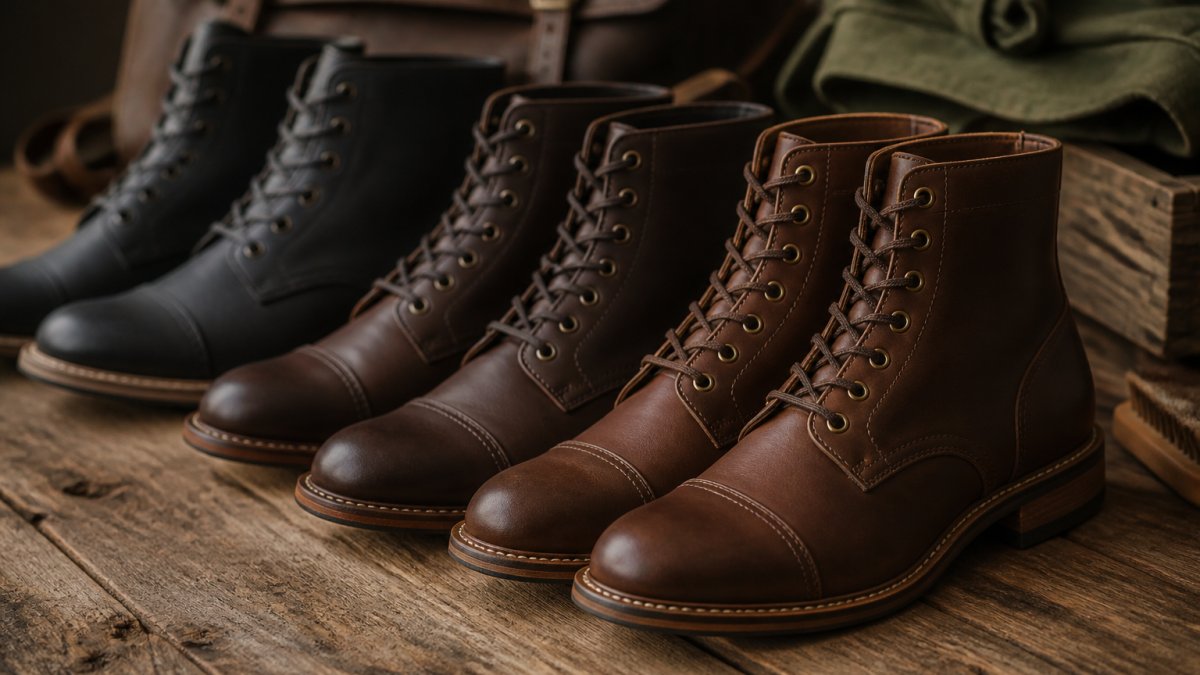
This guide to genuine leather boots for men reviews leather, fit, sole, and cost per year of wear across ten pairs, from a $64.99 entry boot to a $369.95 vintage motorcycle build.

Below, we break down leather grades, sizing, water resistance, resoling, and care by finish. Every pair comes from our own collection, so we know exactly what the leather is.
Quick Comparison: 10 Pairs at a Glance
| Boot | Price | Leather | Best For |
|---|---|---|---|
| Manuel Acevedo Genuine Leather Boots | $64.99 | Genuine leather | Best overall value |
| Leandro Bassano Chelsea Boots | $69.99 | Genuine leather | Best Chelsea under $70 |
| Giovanni Santi Brogue Boots | $67.99 | Genuine leather | Best dress boot |
| Leonard Chiswick Lace-up Boots | $69.99 | Full-grain leather | Best for traction |
| Gualtiero Rinaldeschi Derby Work Boots | $79.99 | Split leather | Best work boot |
| Men's Classic Leather Boots | $84.95 | Leather upper | Best everyday pair |
| Men's Classic Leather Lace-Up Boots | $89.95 | Premium leather | Best smart-casual |
| Men's Leather Chelsea Pull Tab Boots | $87.95 | Leather upper | Best slip-on |
| Bastien Cap-Toe Motorcycle Boots | $189.95 | Genuine leather | Best statement boot |
| Armand Vintage Motorcycle Boots | $369.95 | Genuine leather | Best heritage build |
How We Reviewed These Genuine Leather Boots
We handle every pair, scoring each on five weighted criteria that determine whether it survives its third winter.

The Five Scoring Criteria and Their Weights
- Leather grade and hide quality (30%). We identify the grade and check the grain under raking light for corrected surfaces, heavy pigment coating, and uniform embossing that masks a lower grade. We also note thickness at the vamp and whether the finish is aniline, semi-aniline, or pigmented.
- Construction and resoleability (25%). We inspect the welt or cement joint, the outsole attachment, the insole material, and the lining.
- Fit and sizing accuracy (20%). We measure internal length and width, check heel slip at the first wear, and note instep volume.
Wear Duration and Conditions
Each pair gets at least 40 hours of wear over two weeks before it earns a recommendation, split between indoor break-in and outdoor use on dry pavement, wet pavement, and a dirt-and-gravel path.
We photograph each boot at day one, seven, and fourteen to document creasing, scuffing, and sole wear.
Fit Checks We Actually Perform
- Heel slip: no more than a quarter inch at the first wear, tightening as the counter molds.
- Toe box: a thumb's width of clearance past the longest toe when standing.
- Instep: lace the boot snug and check for pressure across the top of the foot; a high instep needs a lace-up, not a Chelsea.
Durability Criteria
Durability is judged on sole attachment, leather finish, and lining and insole build.
What This Methodology Does Not Cover
We do not run lab abrasion or membrane waterproofness tests, and we do not call a boot waterproof unless it carries a membrane. Our water-resistance notes describe a light shower, not a rating.
The Reviews: 10 Pairs Tested on Leather, Comfort, and Value
Manuel Acevedo Genuine Leather Boots ($64.99)
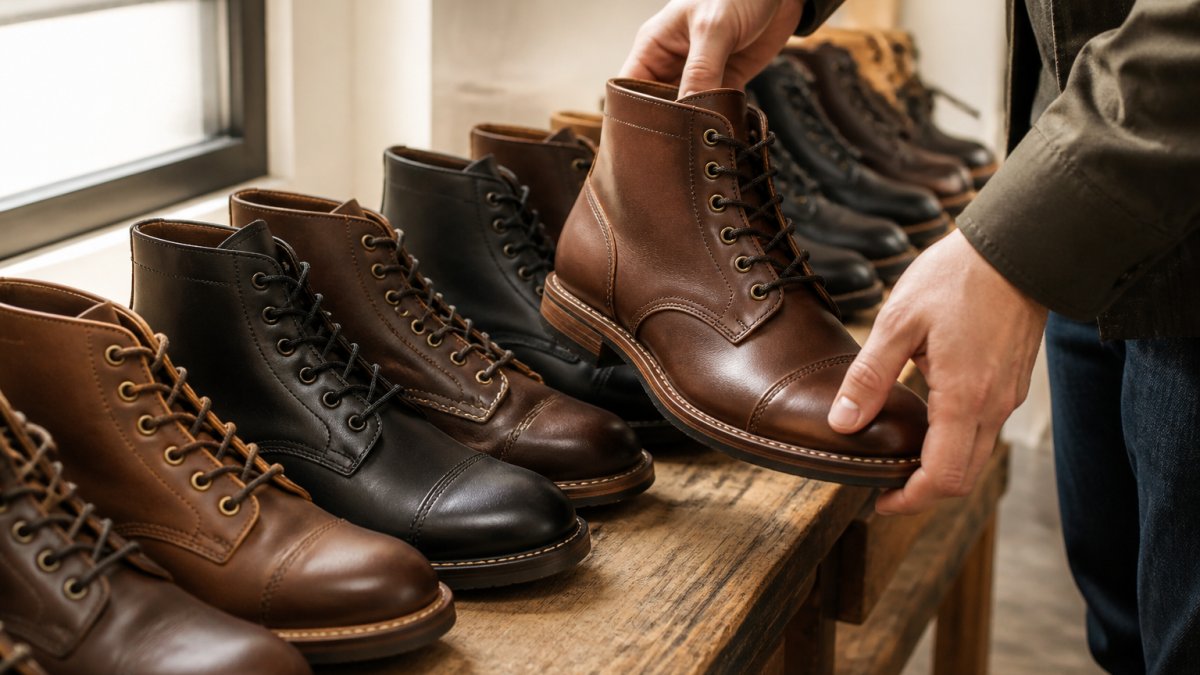
Our top pick for value: premium genuine leather, a timeless silhouette, and exceptional comfort for the price. It is not full-grain, so expect a smoother surface rather than deep patina.
Leandro Bassano Genuine Leather Chelsea Boots ($69.99)
A classic Chelsea in genuine leather with a sturdy outsole and elastic side panels that make it the easiest pair to pull on. It offers less instep adjustment, so try your usual size first.
Giovanni Santi Genuine Leather Brogue Boots ($67.99)
Handcrafted precision and an elegant brogue design make this the dress boot of the group. Pair it with trousers or a suit. The decorative perforations need a soft brush during cleaning, not a stiff one.
Leonard Chiswick Leather Lace-up Boots ($69.99)
The only pair here with a full-grain leather upper, plus a durable rubber outsole and cushioned insole. For the best leather quality at this price, this is the pair.
Gualtiero Rinaldeschi Derby Work Boots ($79.99)
Premium split leather, an anti-slip rubber outsole, and a cushioned insole. This is the work boot of the list: rugged, British-inspired, and built for grip on wet pavement. Split leather is tough but less refined, so keep it for casual and job-site wear.
Men's Classic Leather Boots ($84.95) and Classic Lace-Up Boots ($89.95)
Two everyday staples. The Classic Leather Boots bring a polished silhouette and sturdy sole for jeans, chinos, or trousers. The Lace-Up version, in brown, black, and light brown, adds a secure lace-up fit that softens over time.
Men's Leather Chelsea Pull Tab Boots ($87.95)
Simplified, slip-on, and finished with a rear pull tab and elastic side panels. These work for office outfits and dinners alike. Best for men who want a Chelsea with a dressier edge.
Bastien Cap-Toe Motorcycle Boots ($189.95) and Armand Motorcycle Boots ($369.95)
The statement pairs. The Bastien pairs a vintage cap-toe design with a chunky durable sole and high-top lace-up construction. The Armand steps up to a thick durable sole and rich leather texture. Both are genuine leather uppers built for years, not seasons.
Waterproof Leather Boots for Men: What Water Resistance Really Means
No leather boot is fully waterproof unless it carries a membrane, and none of these pairs claim one. Genuine leather offers natural water resistance that improves with care; a waxed or oiled finish sheds rain better than a polished one.
For wet weather, choose a pair with a rubber outsole for grip, like the Chiswick or the Rinaldeschi Derby. Then treat the leather before the season starts.
Manuel Acevedo Genuine Leather Boots →

Durable Leather Boots for Men: Construction, Soles, and Resoling
Durability comes down to the leather, the sole, and how the two are joined. A Goodyear welt is stitched, letting a cobbler replace the sole instead of discarding the boot.
Look at the outsole first: a rubber outsole with defined tread grips better and lasts longer than a smooth dress sole.
How to Care for Leather Boots by Finish
Care depends on the finish, not the brand. Match your routine to the surface:
- Full-grain and oiled leather: brush off dirt, then apply a leather conditioner every few months. This feeds the hide and keeps it supple.
- Polished and dress leather: use a cream polish and buff with a horsehair brush. Avoid heavy oils, which dull the shine.
- Split leather: a suede brush and a protective spray work best. Skip wax-based products.
Store boots with cedar shoe trees to hold their shape and absorb moisture. Rotate pairs so each has a day to dry. The Footwear Distributors and Retailers of America tracks footwear care and materials standards if you want to go deeper on leather types.
Long-Term Cost: What These Boots Cost to Own
Price tags hide the real number. The useful figure is cost per season, which depends on what you pay up front, what you spend keeping leather and sole alive, and how many seasons the construction allows.
The Cost-Per-Season Framework
Take the purchase price, add estimated care and repair costs over the boot's life, then divide by the seasons you expect to wear it. A season here means one cold-weather stretch of roughly four to five months of regular wear.
- Entry cemented boots ($64.99-$89.95 in this list): expect two to three seasons of regular wear before the sole wears through or the cement joint fails. Care is minimal, conditioner and a brush, but resoling is usually not economical, so the boot is replaced rather than repaired.
- Mid-range leather boots with a rubber outsole: three to five seasons with one conditioning routine per year. Some cobblers will resole a cemented boot with a stitched overlay, but the cost often approaches half the purchase price, which narrows the advantage.
- Resoleable welted builds (the Armand at $369.95 is the closest here): five to ten seasons with a resole every few years and conditioning twice a year. The up-front cost is high, but the boot is rebuilt rather than discarded.
What Care and Repair Actually Cost
Care costs are modest but not zero. Conditioner, a horsehair brush, and cedar shoe trees are one-time purchases that last years; the recurring cost is conditioner, replaced roughly once a year. Resoling is the larger variable: a cobbler's resole on a stitched boot runs a meaningful fraction of the original price.
Where Lower Cost Shows Up in the Materials
A lower price is not automatically a worse boot, but it usually shows up somewhere specific:
- Leather grade. Entry pairs are more likely to use top-grain or split leather with a heavier finish, which looks uniform but develops less patina and scuffs more permanently than full-grain.
- Sole attachment. Cemented soles dominate the lower price points; stitched welts cost more to build and are rarer below the mid-range.
- Lining and insole. Synthetic linings and foam insoles are common at entry prices; leather linings and shank-backed insoles appear as price rises.
Ranking the List by Long-Term Value
The Chiswick at $69.99 is a strong long-term buy here: full-grain leather with a rubber outsole at an entry price, and leather grade matters most for how a boot ages. The Armand at $369.95 costs the most up front but is built for a decade. The Manuel Acevedo at $64.99 wins on immediate value for a first pair.
Fit and Sizing, Stated Plainly
All pairs run US 6 to US 14, most true to size, with half sizes through the middle of the range. Order your normal size, break in with the socks you actually wear, and size up only for thick winter socks. Lace-ups give more instep adjustment than Chelseas, so a high arch should start there.
Frequently Asked Questions
How can you tell if men's boots are made from genuine leather?
Check the label wording first: full-grain, top-grain, and split leather are all real hide, while bonded leather is shredded scraps glued to a backing. Look at the cut edges, which should show a fibrous, uneven texture rather than a uniform plastic layer. Press the surface with your thumb; real leather creases in fine, irregular lines and springs back, while synthetic uppers crease in sharp, repeated patterns. Ask whether the listing names the leather grade, since vague 'premium leather' claims are the most common red flag.
Are genuine leather boots durable enough for everyday wear?
Yes, provided the leather grade and construction suit daily use. Full-grain and top-grain uppers hold up to repeated flexing, while split leather is tougher but less refined. The bigger durability factor is the sole and how it attaches: a stitched or welted boot can be resoled. Rotate pairs, let them dry away from direct heat, and condition two to four times a year. A cared-for pair typically lasts years of regular wear.
How should men's leather boots fit?
You want roughly a thumb's width of space between your longest toe and the front of the boot, with the heel locked and minimal lift. Leather uppers soften and stretch slightly across the width, so a boot that pinches hard at the widest part of your foot will not fix itself. Try boots on late in the day when feet are largest, and wear the socks you plan to pair them with. If you are between sizes, size up rather than down.
How do you care for genuine leather boots in wet weather?
Brush off dirt and salt as soon as you get in, then let the boots dry at room temperature, never on a radiator or in front of a heater, which cracks the leather. Stuff them with newspaper or cedar trees to hold the shape. Once dry, apply a conditioner suited to the finish, then a water-repellent cream or wax on smooth leather. Suede needs a brush and a dedicated protector instead. Reapply protection before each wet season rather than after the leather has already soaked through.
Do genuine leather boots stretch over time?
They give slightly, usually a few millimeters across the width, as the upper molds to your foot. Length does not change meaningfully. The break-in period varies by leather and lining: softer top-grain pairs may feel comfortable within a week, while thicker full-grain and structured boots can take several weeks of short wears. If a pair is painful at the toe box or instep, that is a sizing problem, not a break-in one, and stretching will not solve it.
Choosing genuine leather boots for men comes down to matching the leather grade and sole to how you actually wear them. At Vinthentic, we build every pair around genuine leather craftsmanship, handcrafted precision, and comfort-focused design, backed by more than 20,000 happy customers. Start with the full-grain Chiswick for traction and durability, or the Manuel Acevedo for everyday value. Shop the collection and step into a pair built to last.
Read more
10 Best Vintage Inspired Shirts for Men: 2026 Picks
Shop the 10 best vintage inspired shirts for men. Compare fits, fabrics, prices, and styling tips to find your next wardrobe staple.
Read more
Authentic Vintage Style Clothing Online: 7 Picks for 2026
Shop authentic vintage style clothing online with confidence. Compare 7 curated picks, prices, and tips on fit, condition, and reproduction.
Read more