
How to Repair and Maintain Business Suits at Home
Quick Summary
You can keep business suits looking sharp at home by brushing them after each wear, airing them before storage, steaming out wrinkles, and fixing small problems like loose buttons early. Hang suits on cedar or wooden hangers, rotate them so each one recovers between wears, and book a professional for stubborn stains or structural damage.
- Brush the suit after each wear, working with the fabric's nap from shoulders down to hem.
- Air the suit for 15 to 20 minutes before putting it away.
- Hold a steamer 4 to 6 inches from the fabric and move it slowly.
- Reattach loose buttons before they fall off, using matching thread and a small shank.
- Rotate your suits so each one gets time to recover between wears.
Table of Contents
- Why Suit Maintenance Matters More Than You Think
- What You'll Need: The Essential Suit Care Kit
- How to Clean a Suit at Home Without Damaging the Fabric
- Using a Suit Steamer to Remove Wrinkles and Refresh Fabric
- Minor Repairs You Can Handle Yourself: Buttons, Loose Threads and Small Tears
- How to Store a Suit Between Wears and While Traveling
- Booking Your First Professional Tailoring or Dry Cleaning Visit
- Frequently Asked Questions
How to Repair and Maintain Business Suits at Home
Last Updated: November 4, 2026
Why Suit Maintenance Matters More Than You Think
A good business suit is one of the biggest wardrobe investments most men make. Yet many of those suits get worn hard and cleaned rarely, so they lose their shape well before their time.
Regular care at home stretches a suit's life and keeps it looking sharp for the office. You don't need a tailor's workshop to do it. You need a few tools, a little patience, and a routine you actually follow.
Business suits deserve more care than most clothing.
- Suits rarely need a full clean. Airing and brushing handle most daily dirt.
- Rotating suits gives each one time to recover between wears.
- Small problems like loose buttons are cheap to fix early and costly to fix late.
What You'll Need: The Essential Suit Care Kit
You can care for a suit with a short list of tools. Buy quality over quantity.
- A suit brush with natural horsehair bristles. Soft bristles lift dust without scratching the weave.
- A wooden or cedar hanger with a contoured shoulder. It keeps the jacket's shape and absorbs moisture.
- A garment steamer. Steam relaxes fibers so wrinkles fall out without direct heat on the cloth.
Keep your kit in one place, close to where you dress. You're more likely to brush and steam a suit when the tools are within reach.
Here is a quick reference for the essential suit care kit and what each item is for.
| Item | Purpose | Note |
|---|---|---|
| Suit brush | Lifts dust without scratching | Natural horsehair bristles |
| Wooden or cedar hanger | Keeps jacket shape | Contoured shoulder; absorbs moisture |
| Garment steamer | Removes wrinkles | Avoid direct heat on the cloth |
| Breathable garment bag | Protects from dust and moths | Cotton or non-woven fabric |
| Lint roller and dry cloth | Quick touch-ups | Use before going out |
| Wool-safe stain remover | Treats stains | Labeled safe for natural fibers |
How to Clean a Suit at Home Without Damaging the Fabric
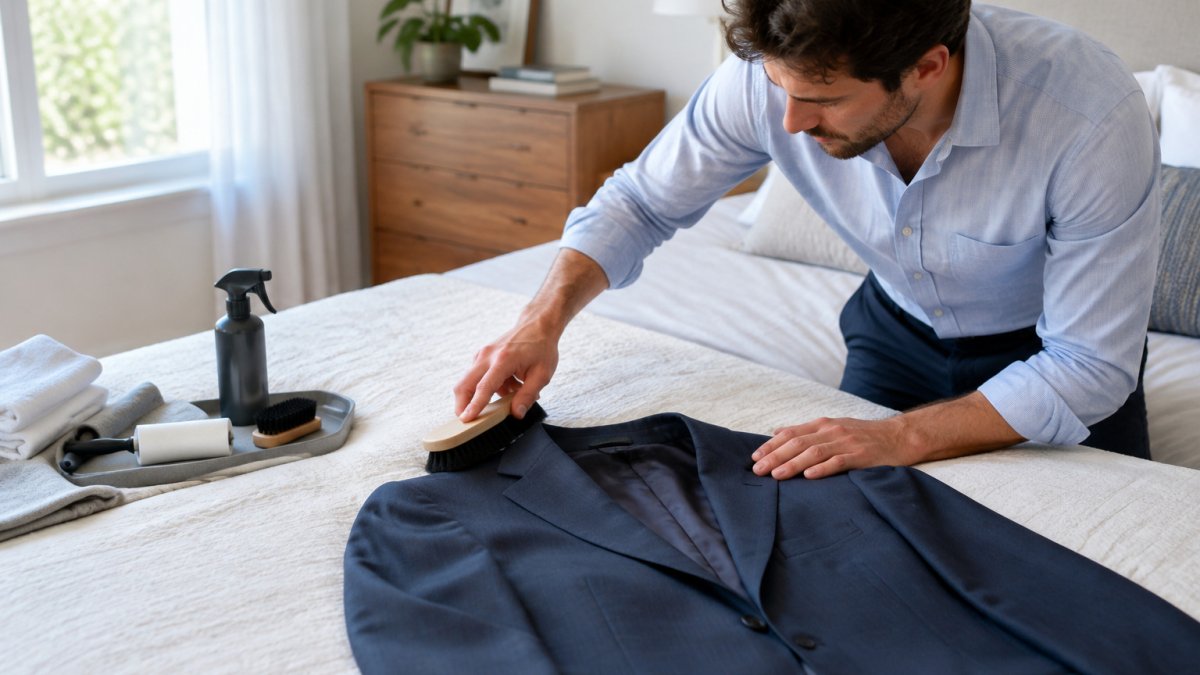
Most suits need spot care and airing more than a full wash. Many suits are labeled "dry clean only," and that label matters, so check the care tag before you try anything with water. Because each fiber calls for a different touch, care for expensive suits begins with knowing when gentle brushing and airing are safer than water or heat.
Read the Care Tag First
Look for the fiber content and the care instructions before you touch the suit. A tag that says "dry clean only" is not a suggestion; water and agitation can shrink wool and distort a tailored shoulder. If the tag lists a fiber blend, care for the most delicate fiber in the mix. When the tag is missing or unreadable, treat the suit as dry-clean-only and limit yourself to brushing and airing.
Brushing Technique by Fabric
Brushing is the safest routine clean you can do. Do it after each wear, or at least once a week for a suit in regular rotation.
- Hang the jacket on a cedar or wooden hanger.
- Brush in one direction, following the fabric's nap, from shoulders down to hem.
- Use short, light strokes. Don't scrub.
- Brush the trousers from the waistband down, following the crease.
- Air the suit for 15 to 20 minutes before you put it away.
- Wool and worsted wool: Use a natural horsehair brush and work with the nap. Wool recovers well from brushing because the fibers are crimped and springy; a light daily brush lifts dust and surface soil before it works into the weave.
- Linen: Linen wrinkles by design and has a looser weave, so use a softer brush and lighter pressure. Brushing hard can abrade the surface and create fuzz. Accept some creasing; pressing linen flat fights the fiber.
- Silk blends: Silk is smooth and fragile, so use the softest brush in your kit or a lint roller instead. Avoid stiff bristles, which can snag the surface and leave pulls.
Watch out: Brushing against the nap can roughen the surface and dull the finish. Always work with the grain, and never brush a wet or damp suit.
Spot Cleaning and Stain Removal by Fiber
Act fast on spills. Fresh stains lift more easily than dried ones.
- Blot the stain with a clean, dry cloth. Never rub.
- Use a small amount of wool-safe cleaner on a damp corner of the cloth.
- Work from the outside of the stain toward the center.
Fiber-specific cautions:
- Wool: Water can cause shrinkage and felting if you soak the area, so use the minimum moisture and blot rather than saturate.
- Linen: Linen tolerates water better than wool, but it can water-spot, so dampen the whole panel evenly rather than dabbing one spot and leaving a ring.
- Silk blends: Silk can water-spot and lose luster, so use a cleaner labeled safe for silk and test on an inside seam first.
If a stain doesn't lift after one attempt, stop. Repeated scrubbing can leave a ring or thin the fabric. A professional cleaner can often remove stains that resist home treatment.
Airing and Odor Control
Hang the suit where air can move around it for at least an hour after wear, and longer if you've been in a warm or smoky environment. Airing lets moisture evaporate and odor dissipate without water or heat. For odor between cleanings, a light steam pass (see the steamer section) is safer than fabric spray, which can leave residue that attracts soil.
Using a Suit Steamer to Remove Wrinkles and Refresh Fabric
A steamer is the fastest way to refresh a suit between cleanings. Steam loosens fibers so they lie flat again.
- Hang the suit on a sturdy hook or rod.
- Hold the steamer 4 to 6 inches from the fabric and move it slowly.
- Steam the jacket lining side as well as the outside.
Watch out: Don't let the steamer head touch the fabric for long. Direct contact can flatten the nap and leave shine marks on wool.
Bruno Mazzoni High-Waisted Business Suit Pants →
Steaming also freshens the suit, which helps with odor between wears. Pay extra attention to the collar, underarms, and trouser waistband.
Minor Repairs You Can Handle Yourself: Buttons, Loose Threads and Small Tears
Some repairs take only a few minutes and save a trip to the tailor. The key is to fix small problems before they become structural ones: a loose button that falls off in a meeting, a seam that opens at the pocket, or a pulled thread that unravels a panel. Keep a small repair kit at home and a compact version in your travel bag.
Build a Small Repair Kit
- A hand-sewing needle pack with a sharp and a fine needle
- Thread in navy, black, charcoal, and brown
- Small scissors or thread snips
Reattaching a Loose Button
- Thread a needle with matching thread and knot the end.
- Mark the button's original position with a pin before you remove it, so you sew it back in the same spot.
- Sew through the button holes several times, then wrap the thread around the shank (the thread bundle under the button) to create a small stem.
- Finish with a secure knot on the inside of the garment.
Watch out: Sewing the button too tight to the cloth flattens the fabric and makes the button hard to fasten. Leave a small shank so the button sits above the weave.
Fixing a Loose Thread
- Don't pull it. Pulling can unravel more fabric.
- Tuck the loose end back through the weave with a fine needle.
- If the thread is part of a seam that has opened, secure the end with a tiny knot on the inside before tucking it.
Closing a Small Tear
- Use a slip stitch on the inside of the fabric so the repair hides well.
- Work from the wrong side when you can, catching a few threads on each side of the tear.
- For tears larger than a fingernail, or any tear on a stress point like a pocket corner or elbow, book a tailor.
Watch out: A repair that pulls the fabric tight will pucker the panel and show from the outside. Keep stitches loose enough that the cloth lies flat.
Travel Repair: The Scenario Most Guides Skip
Suits get damaged in transit more often than in the closet: a button catches on a bag strap, a seam opens from being folded, or a hem drops after a long trip. Pack a compact repair kit with a needle, matching thread, small scissors, and a spare button, and know two field fixes:
- Fallen button: Use a safety pin on the inside of the placket as a temporary fix until you can sew it back. It holds the jacket closed without stressing the buttonhole.
- Opened seam: A few slip stitches on the inside will hold a seam until you get home. If you don't have a needle, a small piece of fabric tape on the inside can stabilize the area without touching the outside.
Keep spare buttons from each suit in a labeled envelope in your travel kit. You'll be glad you did when a button comes loose on the road.
How to Store a Suit Between Wears and While Traveling
Good storage protects the shape of your suit and keeps pests away.
- Hang it right away. Use a contoured wooden hanger and fasten the jacket button.
- Cover it. A breathable garment bag blocks dust and light without trapping moisture.
- Keep it dry. Store suits in a closet with airflow. Avoid damp basements and sealed plastic bags.
Traveling With a Suit
Packing a suit takes some care, and the route to your destination matters too.
- Roll the trousers and jacket loosely, or fold the jacket at the shoulders with the lining facing out.
- Pack the suit near the top of your bag so it doesn't get crushed.
- Carry the jacket on board when you can.
Booking Your First Professional Tailoring or Dry Cleaning Visit
Home care keeps a suit fresh, but some jobs need a professional. Book a visit when you see:
- Stains that don't lift after careful spot treatment
- A jacket or trousers that no longer fit well
- Torn seams, lining damage, or large holes
When you book, ask about experience with wool and tailored garments. A good cleaner will explain what they'll do and what the suit will cost before they start.
Bring your suit clean and dry, and point out any problem areas. If you're interested in the quality standards behind a well-made suit, see our how to spot high quality clothing guide to judge what's worth maintaining at home.
For the most important pieces, a professional fitting from a tailor can keep your suit looking its best for years. Some of our customers also choose to pair tailored pieces with classic shoes, such as our Michele Fabris suede loafers with tassels, and the Donatello men's business jacket is a useful reference point for the kind of tailored construction worth caring for.


Frequently Asked Questions
How do you clean a business suit at home?
Start by brushing the suit with a horsehair suit brush, working from the shoulders down and following the fabric nap. Spot treat stains right away with a damp cloth and a mild detergent, testing an inside seam first. Hang the suit on a wide wooden or cedar hanger to air out for 24 hours before wearing. Avoid soaking the fabric or scrubbing hard, since that can distort the shape and fade the dye. Anything that needs full washing or lining work should go to a professional cleaner, especially suits labeled dry clean only.
How often should you dry-clean a suit?
Most suits need dry cleaning only two to four times a year, or when they are visibly soiled or smell after heavy wear. Frequent dry cleaning breaks down fibers and wears out the fabric faster, so brushing, airing and steaming between wears will extend the time between cleanings. Spot clean small marks as they happen. Suits worn daily in humid weather or during travel may need cleaning a bit more often.
Can you steam a suit without damaging it?
Yes, as long as you keep the steamer moving and hold it a few inches from the fabric. Steam from the inside of the jacket and trousers where possible, and avoid pressing directly with a hot iron unless the care label allows it. Use a press cloth if you do iron, and never steam over glued interlinings or delicate linings for long periods. Let the garment hang and cool before wearing.
Can a tailor fix a small tear in a suit?
Yes. Small tears near seams, pockets or vents are usually simple for a tailor to close with a fine invisible mend. Repairing a tear quickly, before the fabric frays further, keeps the repair less visible and less expensive. Bring the suit in as soon as you notice the damage, and ask for an estimate before work begins.
Ready to build a suit wardrobe that lasts? Browse Vinthentic's collection of premium tailored pieces and start with the basics: the right fit, quality fabrics, and clothing built to be cared for.

Read more

5 Best Neutral Colors for Men's Fashion That Always Work
These neutral colors for men's fashion always work, with outfit formulas and a pairing chart. Learn the 5 shades and build a versatile wardrobe.
Read more
Can You Repair Worn Out Leather Boot Heels Yourself?
Repairing worn out leather boot heels starts with knowing the damage. Learn DIY steps, leather filler for boots, and cobbler heel replacement cost.
Read more